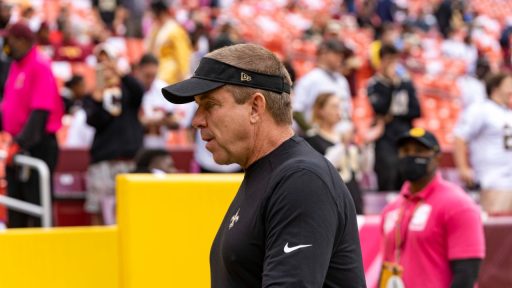
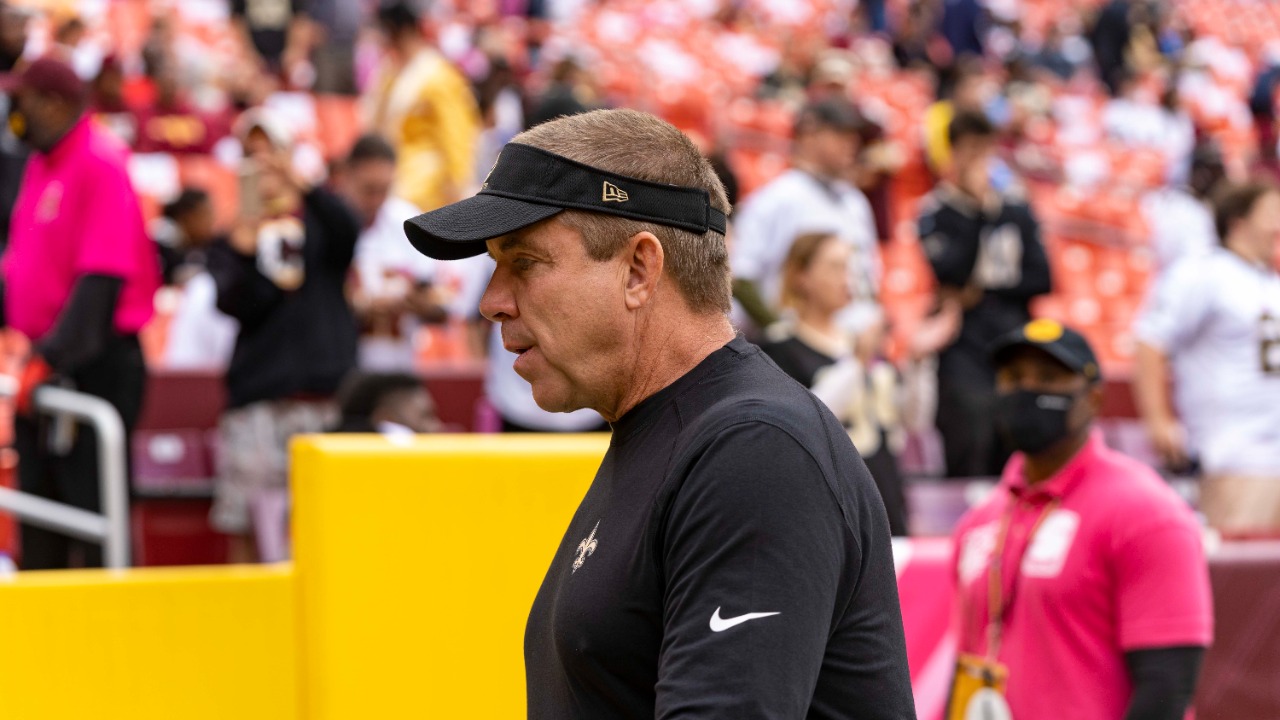

Sean Payton’s search for an offensive spark in Denver intersected with Joe Brady’s rapid rise in Buffalo, and the result is a fascinating what-if for two franchises trying to keep pace in a shifting AFC. While the Buffalo Bills were elevating Brady into the big chair, Payton was eyeing his former assistant as a potential offensive coordinator and even considering handing him play‑calling control. The Bills’ decision to promote Brady to head coach closed that door for Denver and underscored just how coveted his offensive mind has become.
The story is not just about one missed hire. It is about how the Broncos’ offensive reset, the Bills’ internal promotion, and Brady’s own résumé converged at the same moment, shaping the futures of Russell Wilson’s successor in Denver and Josh Allen in Buffalo. It also highlights how aggressively coaches like Payton are willing to pursue trusted play designers when their own jobs and reputations are on the line.
Payton’s pursuit of Brady and the play‑calling question
From the Broncos’ perspective, the most striking detail is that Sean Payton did not simply want Joe Brady as another voice in the room, he wanted him to run his offense and was open to letting him call plays. Reporting around the league has made clear that Payton targeted Brady to be his offensive coordinator in Denver, a role that would have represented a significant vote of confidence in a coach who is still in his thirties. One account notes that Payton was so interested in Brady that he was willing to give up some of his own play‑calling authority, a rare concession for a coach whose offensive system has long been his calling card, and that context helps explain why Brady’s decision to stay in Buffalo and become the Bills’ head coach was such a pivotal moment for both teams, especially now that he is the Bills head coach.
That level of interest did not come out of nowhere. Payton and Brady have a shared history from their time together in New Orleans, where Brady worked under Payton and absorbed the offensive structure that helped define the Drew Brees era. A detailed Story by Scotty Payne describes how Sean Payton’s admiration for Brady’s work with the Bills’ offense the past two seasons fed into Denver’s interest. For a coach as detail‑oriented and scheme‑driven as Payton, the willingness to cede potential play‑calling duties is a clear indicator that he saw Brady not just as a promising assistant, but as a strategic partner capable of modernizing and energizing the Broncos’ attack.
Brady’s rise in Buffalo and why he stayed
Joe Brady’s decision to remain in Buffalo and accept the head coaching job instead of pursuing coordinator opportunities elsewhere reflects both his value to the Bills and the broader market for his services. Before the promotion, Brady had drawn strong offensive coordinator interest from multiple teams, including the Broncos and Ravens, as clubs looked for fresh ideas to unlock their quarterbacks. One report notes that Joe Brady was firmly on the radar for those roles before the Buffalo Bills moved to secure him as their next head coach, a move that effectively took him off the coordinator carousel and signaled Buffalo’s commitment to continuity with Josh Allen.
Inside the organization, Brady’s trajectory has been steep. The Buffalo Bills agreed to terms with him to be the team’s head coach after he had already been steering the offense and working closely with Allen, and internal profiles have emphasized both his age and his upside. Team material notes that Joe Brady will be 37 in September, underscoring how quickly he has climbed from position coach to coordinator to head coach. For Buffalo, promoting a young offensive mind who already understands the locker room and the quarterback was a way to change leadership without tearing up the system that has kept the team in the AFC mix.
What the Bills saw in Brady’s offense
Buffalo’s willingness to elevate Brady rather than look outside is rooted in what he has already delivered on the field. As offensive coordinator, he helped stabilize an attack that had wobbled at times, sharpening the Bills’ passing concepts while leaning into Josh Allen’s dual‑threat ability. The organization’s own announcement that Joe Brady agrees to terms to be the next Buffalo Bills head coach highlighted how his offense in 2024 broke records, a concrete sign that his approach was not just theoretically appealing but statistically productive. For a franchise that has built its identity around explosive offense, handing the reins to the architect of that recent surge was a logical step.
There is also a philosophical component. Brady’s background blends college spread concepts with pro‑style structure, and that mix has meshed well with the Bills’ personnel. League analysis has already raised the question of whether Buffalo’s choice to promote from within represents enough of a departure from the previous regime, noting that it is fair to wonder if Buffalo veered far enough into a new direction to justify its coaching change. From my vantage point, that tension is exactly what makes Brady’s promotion so intriguing: he is both a continuity candidate and a potential pivot, someone who can keep the core passing game intact while tweaking tempo, formation usage, and situational aggression in ways that could push the Bills over the top.
Denver’s reset and the cost of missing on Brady
While Buffalo was locking in its future, Denver was tearing up part of its past. The Denver Broncos announced that Sean Payton had fired offensive coordinator Joe Lombardi along with two other assistants, a sweeping move that underscored how dissatisfied Payton was with the direction of his offense. Reporting from Denver makes clear that Broncos coach Sean after the unit struggled to find consistency, and that context explains why Payton was so aggressive in targeting Brady as a potential replacement. For a coach who arrived in Denver with a reputation as a quarterback whisperer, the need to overhaul his staff so quickly was a clear admission that the initial plan had not worked.
The timing of the firings and Brady’s promotion in Buffalo made the situation even more dramatic. As one detailed breakdown of the Broncos’ coaching shake‑up noted, the fact that the Denver Broncos had just dismissed three coaches, including their offensive coordinator, at the same time Brady was being elevated in Buffalo made the connection between the two situations impossible to ignore. That piece emphasized that all noteworthy because Payton had wanted Brady to be his offensive coordinator and perhaps even call plays, and that Denver’s search for an alternative could be an interesting process. From my perspective, missing out on Brady not only forced the Broncos back to the drawing board, it also highlighted how competitive the market has become for top offensive minds, especially those with proven quarterback development chops.
Payton’s reaction and what it reveals about Brady’s standing
Sean Payton’s public response to Brady taking the Bills’ head coaching job added another layer to the story. Rather than expressing frustration, Payton acknowledged Brady’s ascent and the reality that his former assistant had earned a shot to run his own team. Coverage of Payton’s comments noted that Sean Payton reacts to Joe Brady taking the head coach job with the Bills by referencing their shared history, including when he first hired him in New Orleans, and by framing Brady’s promotion as a natural next step. That tone matters, because it reinforces the idea that Payton’s pursuit was rooted in genuine respect rather than desperation.