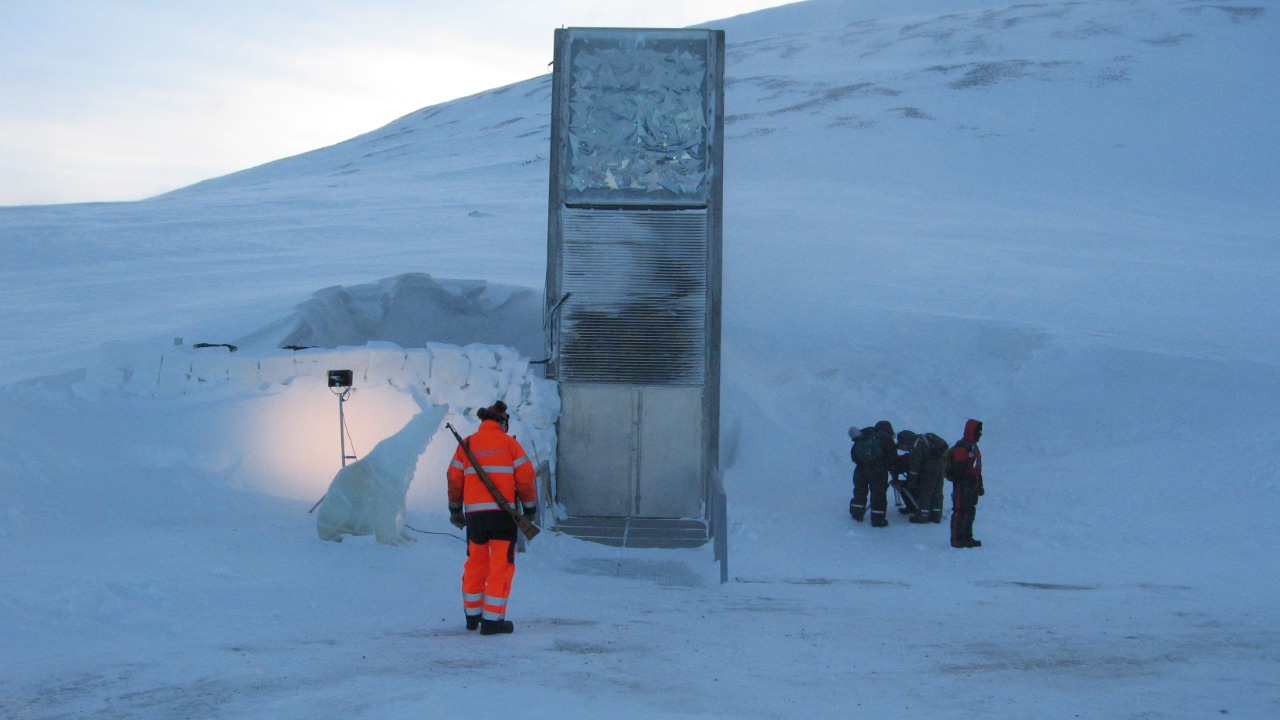

Hidden in Arctic rock and ice, the world’s largest “doomsday vault” has finally opened its doors to a small group of scientists, revealing a treasure that looks nothing like the bunkers of apocalyptic fiction. Instead of weapons or rations, they found shelves of carefully labelled boxes, each one packed with seeds that could restart harvests after catastrophe. What they saw inside confirms that this remote facility has quietly become one of the most important pieces of infrastructure on the planet.
At its core, the vault is a back‑up hard drive for global agriculture, designed to outlast wars, pandemics and climate shocks. By peering inside for the first time, researchers are not only cataloguing what is stored there, they are also testing whether this ambitious bet on long term preservation can keep pace with a rapidly changing world.
Inside the Arctic stronghold
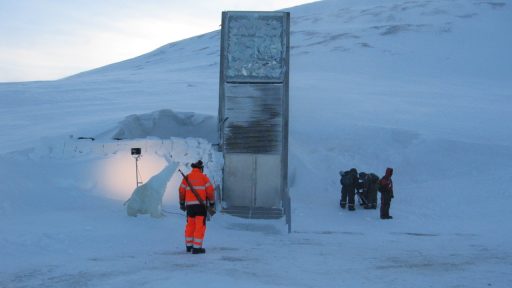
The facility sits on the archipelago of Svalbard, a cluster of islands in the far north that belongs to Norway and lies between mainland Norway and the North Pole. The entrance, a sharply angled concrete portal lit in icy blue, leads into a tunnel carved into Platåberget, the plateau mountain above the settlement of Longyearbyen. From there, visitors walk roughly 400 feet into the mountain to reach the secure storage chambers, where the natural permafrost and mechanical cooling keep temperatures far below freezing.
Norwegian authorities describe the complex as a kind of Arctic safety deposit box for the planet’s crops, a Welcome sign at the entrance greeting the few who are allowed inside the Svalbard Global Seed Vault. The official site for the project, hosted at seedvault.no, presents it as a global service rather than a national bunker, while government material stresses that the site lies “Way up north, in the permafrost, 1300 kilometers beyond the Arctic Circle,” chosen precisely because of its geological stability and cold.
What scientists actually found on the shelves
When researchers stepped into the main storage halls, they were met not by loose jars of grain but by long rows of metal shelving stacked with sealed boxes. Each container holds packets of seeds from national and regional collections, part of a system that one partner organisation simply calls The Seed Vault. According to its technical description, The Seed Vault has the capacity to store 4.5 m varieties of crops, with Each packet of seeds consisting of an average number of individual grains that can be regenerated into full plants when needed.
The samples themselves are remarkably diverse. Reporting on the opening notes that the world’s biggest “doomsday vault” now holds seeds from cereals, legumes, vegetables and fruits, with some species represented by dozens of distinct varieties and some by millions of individual seeds. A detailed feature on Planet Earth The project explains that some of these seeds are so small that several thousand can fit across the width of a human hair, yet each packet is logged and barcoded so that depositors can reclaim their material if disaster strikes their own collections.
How the “black box” system works
What makes this vault different from a conventional genebank is that it does not own the seeds it stores. In genebank terminology, the arrangement is described as a “black box” system in which Each depositor signs a Deposit Agreement with NordGen, acting on behalf of Norway, and retains full ownership and control over its material. The Seed Vault itself, described in official technical notes under the heading How, is essentially a passive storage facility that can only release seeds back to the original depositor.
NordGen’s overview of the system notes that the Svalbard Global Seed Vault offers secure, long term storage for duplicates of seeds that are conserved in genebanks worldwide, and that Globally there are about 1 700 genebanks which, just as NordGen, work to conserve and promote the sustainable use of plant genetic resources. The FAQ explains that the seed boxes are stored on metal shelves and handled using equipment adapted from Norway‘s offshore oil and gas industry, a reminder that this is a piece of heavy infrastructure as much as a scientific archive.
Security, secrecy and why the public cannot visit
The mystique around the vault has been fuelled by the fact that almost nobody is allowed inside. Travel features on forbidden destinations point out that Strict Security Protocols are a crucial factor preventing public visits, with Strict controls on who can approach the entrance and multiple locked doors leading inside the mountain. For most people, the closest view comes from photo tours that show the entrance and the long access tunnel, such as one that begins with the line Located approximately 400 feet deep inside a mountain on a remote island between mainland Norway and the North Pole.
Officials in Doomsday coverage have repeatedly stressed that the site is not a tourist attraction but a piece of critical infrastructure, a Vault Where World Seeds Are Kept Safe behind a single, heavily reinforced door leading inside the mountain. A separate government description begins with the words Way up north, underlining that the remoteness itself is part of the security design, while a Fox News tour notes that The Vault is dug into Platåberget near Longyearbyen, Svalbard, and is designed to hold a half‑million seed varieties in conditions that are extremely difficult for intruders to reach.
Why the world needs a backup for its crops
The logic behind this project is simple: if local seed banks are damaged by war, budget cuts or climate disasters, there needs to be a backup somewhere cold and stable. A National Geographic explainer on Mar notes that the vault does not store the seeds of endangered wild plants, but instead protects the genetic material of the foods we see on our plates every day, with samples representing 5,000 plant species. That same reporting recalls how seeds were withdrawn after war in Syria damaged a regional genebank, a real world test of the system’s promise.
Climate change has only sharpened the stakes. A recent analysis of Svalbard Global Seed notes that the facility, in the far reaches of northern Norway, is meant to be humanity’s last resort, and invites readers to Imagine it as the world’s backup drive for crop diversity. The same piece reports that new countries and institutions made their first contributions during a recent deposit event, underscoring how the vault is becoming a focal point for global responses to climate‑driven crop failures.