
Across several scientific fields, the tidy timelines that once underpinned textbooks are starting to buckle under the weight of new data. From the deep past of early humans to the near future of climate thresholds and even the mechanics of global timekeeping, recent findings suggest that key milestones arrived earlier, moved faster, or unfolded differently than official narratives long claimed. I see a pattern emerging: the story of humanity and its planet is not just being updated, it is being reordered.
Archaeologists are uncovering older and more sophisticated behavior than expected, climate researchers are revising when global warming truly began, and modelers are warning that the convergence of these shifts could make the next few years unusually volatile. The result is a quiet but profound admission from experts that the old chronological scaffolding is no longer enough to explain what the evidence now shows.
Ancient humans keep showing up too early, and too advanced
In human origins research, the most destabilizing trend is not a single spectacular find but a drumbeat of discoveries that collectively push complex behavior further back in time. On the Philippine island of Mindoro, excavations have revealed a coastal community whose Food remains, tools, and sea-focused Diet point to a surprisingly sophisticated maritime culture. Layers from this site show bulk harvesting of marine resources and a toolkit adapted to shifting shorelines, suggesting early humans there had already mastered the logistics of island life and developed technology that could handle changing Coastal conditions, a pattern documented in new work on Mindoro.
What makes Mindoro so disruptive is not just its age, but its maturity. The evidence indicates that early humans somehow learned and adopted a fully formed maritime lifestyle much earlier than standard histories of seafaring allow, implying that navigation, seasonal planning, and social coordination were already in place. Researchers examining Mindoro and the human timeline argue that this island record forces a rethink of when people first organized complex supply chains and transport systems across water, because the site shows a community that had already solved the logistics of life on islands rather than tentatively experimenting with them, as highlighted in new analysis of Mindoro and the.
Art, tools, and genomes that rewrite the human story
The same chronological creep is visible in the record of human creativity and technology. In a cave on a small Indonesian island, Archaeologists have identified a hand stencil that they estimate to be about 67,800 years old, a figure that aligns with separate reporting that describes a 67,800-year-old hand stencil in Indonesia that looks almost like a claw. This image, created with red, brown, and sometimes black pigment, is now considered the world’s oldest known rock art and offers new clues about early human cognition and the routes that people took on their way toward Austral regions, according to detailed work on the 67,800-year-old stencil.
Toolmaking tells a similar story of premature sophistication. In Kenya, archaeologists studying Oldowan tool-makers have found that communities living there at least 2.6 m years ago were already transporting high quality raw materials across significant distances to produce better cutting edges. For more than a million years, Oldowan technology was thought to be simple and local, but the new evidence from Kenya shows deliberate selection and movement of stone, behavior that implies planning, memory of distant sources, and perhaps even shared knowledge about landscapes, as described in recent research on Oldowan sites in Kenya.
How old is Homo sapiens, really?
As these finds accumulate, the very age of our own species is being reopened. Emerging evidence now suggests Homo sapiens may be far older than the conventional figure of roughly 300,000 years, with some researchers arguing that our lineage could stretch back nearly 2 million years in some form. This does not mean that fully modern humans were walking around 2 million years ago, but it does indicate that traits once considered uniquely recent, such as advanced tool use and complex social structures, may have deeper roots in a tangled human family tree, a possibility explored in new work on Homo origins.
Genetic research is adding another layer to this chronological shakeup. Specialists who have sequenced the first full ancient Egyptian genome are using it to trace population movements and intermixing that do not always line up neatly with traditional historical periods. Shared tags like anthropology, neanderthal, cleopatra, and losthistory in discussions of this genome underscore how ancient DNA is blurring lines between categories that once seemed firm, and a widely shared update on this work has highlighted how such genomes can overturn assumptions about who lived where, and when, as seen in recent coverage of the ancient Egyptian genome.
Climate science confronts its own broken clocks
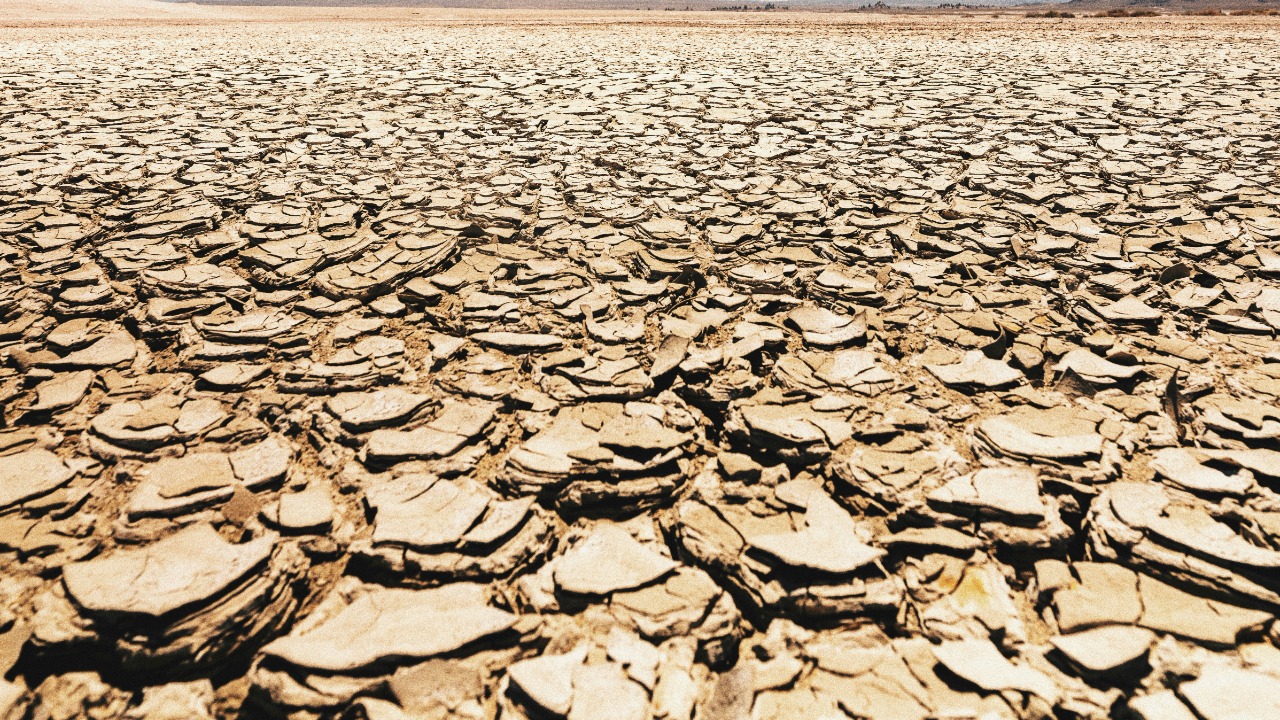
The sense that official timelines are slipping is not confined to archaeology. Climate researchers are now revisiting the basic question of when modern global warming truly began. A new study concludes that the world started warming roughly 80 years before the IPCC’s estimates, implying that industrial-era impacts on temperature began earlier and have been compounding longer than policymakers assumed. The same work argues that we have already surpassed 1.7 degrees of warming in at least one region of the world, a finding that, if confirmed, would mean that some communities are living in a climate future that global averages have not yet fully registered, according to analysis that suggests scientists may have miscalculated 80 years of warming and the 1.7 threshold.
Looking ahead, climate experts warn that 2026 could be the year when global temperatures hit a critical benchmark known as the 1.5 C rise, a level that governments have repeatedly cited as a guardrail in international agreements. Forecasts suggest that 2026 is most likely to be hotter than any year on record so far, and that public interest in climate change will spike as extreme heat, drought, and other impacts become harder to ignore, according to projections that frame 2026 as a potential 1.5 moment.
When the calendar itself starts to wobble
Even the literal ticking of the clock is being reshaped by planetary change. Geophysicists tracking Earth’s rotation have warned that Melting polar ice is redistributing mass across the globe, subtly altering the planet’s spin and, with it, the length of a day. These shifts are small, measured in milliseconds, but they matter for global timekeeping systems that rely on precise alignment between atomic clocks and Earth’s rotation, and they could affect the timing of the planet’s next leap second, the occasional adjustment used to keep Coordinated Universal Time in sync with astronomical time, as explained in new reporting on how Melting ice is changing time itself.
At the same time, modelers are using large scale simulation techniques to explore how social, economic, and environmental stresses might converge in the near future. One widely discussed simulation suggests that 2026 might be the year the system starts to break down because existing issues like resource pressure, demographic shifts, and climate impacts begin to reinforce one another instead of remaining separate problems. The point is not that a single model can predict the future with certainty, but that the very tools scientists use to forecast risk are now flagging 2026 as a potential inflection point, as seen in a recent simulation of 2026.