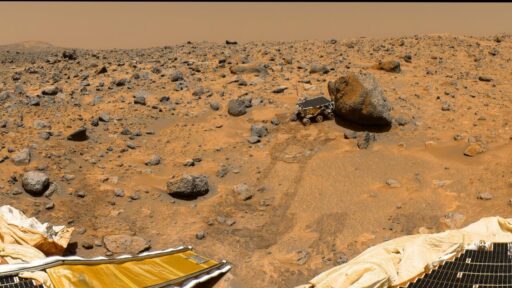
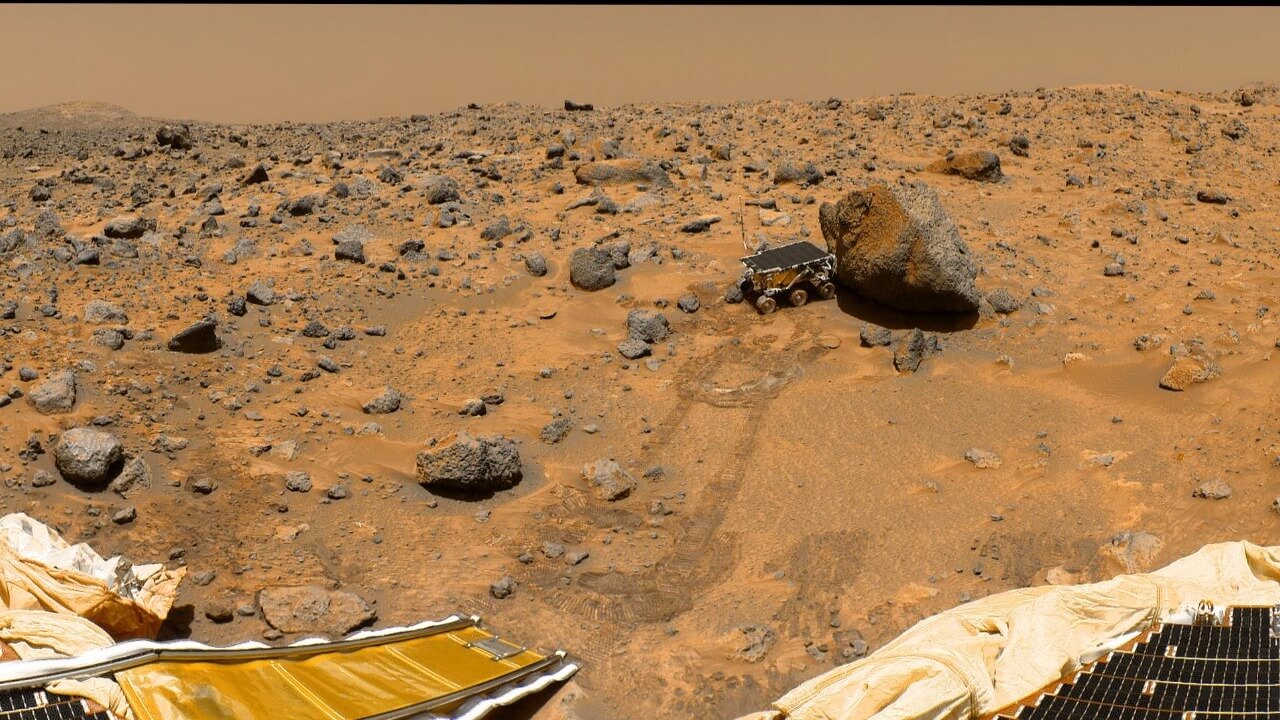

When NASA’s Perseverance rover dropped through the thin Martian atmosphere and settled into Jezero Crater, it did more than stick the landing. For the first time, microphones rode along, turning a distant world into a place we can literally hear in real time. In a single leap, Mars went from a silent movie to a soundscape.
That shift matters far beyond the novelty of alien wind noise. By capturing audio of everything from dust devils to rover wheels, Perseverance is giving scientists a new way to probe the Red Planet’s environment and giving the rest of us an intimate, almost eerie sense of presence on a world millions of kilometers away.
The rover that arrived ready to listen
Perseverance was designed from the start as more than a rolling geology lab. Engineers built the rover to hunt for signs of ancient life, cache rock cores for a future sample return, and test technologies that could support human explorers, but they also tucked in a new sensory capability: sound. On the chassis, mission planners installed two dedicated microphones so that, as The Perseverance rolled across Jezero, it could turn pressure waves in the thin air into data.
Those microphones are part of a broader instrument suite that includes cameras, spectrometers, and even a small helicopter named Ingenuity, which scouts ahead and tests flight technology that will inform future missions to Titan. Before launch, mission teams emphasized that hearing Mars would not just be a public engagement stunt. They expected audio to reveal how wind interacts with rocks, how dust moves, and how the rover itself behaves mechanically in the harsh environment, all of which feed into the long term goal of understanding whether the Red Planet could once have supported life.
Touchdown, then the first Martian sounds
When the Mars Perseverance rover hit the atmosphere and descended on its sky crane, microphones were primed to capture the chaos. Mission planners had previewed this capability in a briefing that explained how, once the parachute deployed and the descent stage fired, the microphones would record everything from buffeting air to the crunch of landing, turning the “seven minutes of terror” into an acoustic event. That expectation was laid out before arrival, when officials noted that When the Mars rover touched down, it would be ready to listen as well as look.
After landing, the microphones quickly delivered. On Feb. 19, 2021, just about 18 hours after touchdown, the SuperCam instrument recorded what became known as the first audio from the surface, a short clip in which a faint breeze brushes the microphone and the rover’s own systems click and pop in the background. That early recording, captured by Perseverance Mars, confirmed that sound could travel through the thin air and that the microphones were working as designed.
Wind, wheels, and dust devils in the Martian soundscape
Once the rover settled into its routine, the microphones began to build a library of everyday Martian noises. One of the earliest and most evocative clips captured the wind sweeping across Jezero Crater, a low, ghostly rush that, as Mark Kaufman, then Science Editor at Mashable, put it, felt “overwhelming” in its immediacy. Soon after, the team released a longer sequence in which NASA’s Perseverance rover recorded 60 seconds of Martian sound on a Saturday, just two days after its picture perfect arrival, letting listeners hear the Red Planet’s breeze in real time through Martian air.
The microphones also turned the rover itself into a subject. During a 90-foot, 27.3-meter drive, Perseverance recorded the clank and crunch of its wheels biting into the soil, a mechanical symphony of metal on rock that revealed how the suspension and wheel treads behaved on real terrain. Engineers studied that 90-foot audio track to check for anomalies, while the public heard, for the first time, what it sounds like when a robot drives across another planet. Later, the microphones picked up the patter of dust grains hitting the rover as a passing vortex swept overhead, letting scientists analyze a dust devil’s structure from the inside using Perseverance audio.
From Mars Microphones to possible lightning
The idea of listening to Mars predates Perseverance, but it took this mission to finally make it work. Advocates had pushed for microphones on earlier spacecraft, and by 2021 that long running effort, sometimes referred to as Mars Microphones, finally paid off when NASA’s Perseverance carried working audio hardware to the surface. Thanks to that hardware, we now know what Mars sounds like, from the hiss of wind to the crackle of dust, and researchers can compare those recordings to models of how sound should travel in the thin, cold atmosphere.
The scientific payoff has already gone beyond basic acoustics. By carefully analyzing the whirling wind captured by NASA’s rover, a French led team of Scientists reported that they had detected what they believe to be lightning on Mars, a crackling signature buried in the noise that hints at electrical activity inside dust storms. That claim, based on data from Mars, suggests that the microphones are not just novelties but tools that can probe atmospheric physics in ways cameras and weather stations alone cannot.
How to hear Mars from home
For all the scientific value, the emotional impact of these recordings may be just as significant. NASA and JPL have launched an interactive website that lets anyone hear the wind and the crunch of rover wheels on the Red Planet, turning raw data into an experience that feels almost like standing next to the rover. That portal, built by NASA and JPL, complements the official mission site, where, as one behind the scenes account put it, At Mars.nasa.gov, you can see some of the incredible pictures and videos the Perseverance has taken and even listen to sounds recorded on another world through At Mars.
The audio is also widely available in more familiar formats. NASA hosts a curated playlist of Perseverance Rover Sounds from Mars, where listeners can stream clips of wind, wheels, and instrument zaps as if they were songs. That collection, labeled with tags like #Perseverance Rover and #Science, is easy to access through a page that invites users to Listen and another that highlights how to Stream NASA audio directly. Individual clips, such as the first audio recording of sounds on Mars captured by SuperCam on Perseverance Mars, sit alongside later tracks that showcase the evolving Martian soundscape.