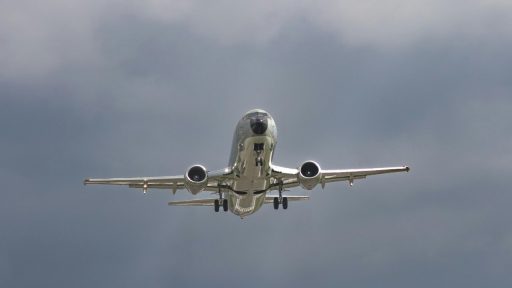
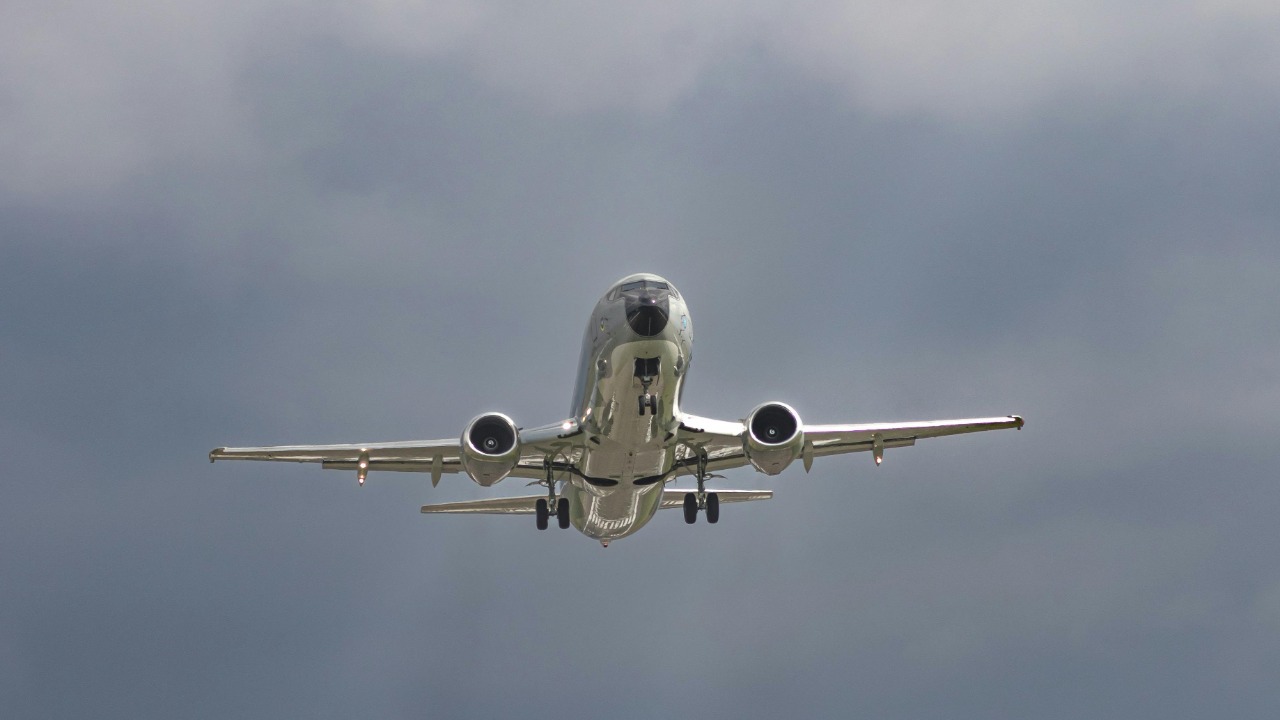

South Korea’s Parata Air is on the cusp of joining the crowded transpacific market, with regulators in Washington signaling that its long-haul low-cost experiment will soon reach American runways. The tentative approval gives the upstart carrier a chance to test whether budget fares can work on some of the longest routes in commercial aviation, linking Seoul with major leisure and business hubs across the Pacific.
The move also underscores how quickly Asia’s airline landscape is shifting after years of restructuring and consolidation, as new players try to muscle into markets long dominated by legacy giants. If Parata Air executes its plan, travelers could see fresh competition on routes that connect the United States and Northeast Asia just as demand for international travel continues to rebuild.
What the tentative green light actually allows
Regulators in the United States have issued a preliminary decision that would let South Korea’s Parata Air launch scheduled passenger services across the Pacific, subject to final confirmation after a standard comment period. The carrier is described in official filings as a South Korean low-cost operator that has applied to the Department of Transportation for authority to begin long-haul flights, a step that effectively opens the door to commercial operations once the decision is finalized. In the agency’s own language, the application is framed as consistent with open business principles and as a way to expand services available to the public while strengthening aviation ties between South Korea and its North American counterpart, a point highlighted in a filing that notes the move would “foster the relationship” between the two countries’ markets.
The tentative decision is not a blank check, but it is a clear signal that Washington is comfortable with Parata Air’s ownership structure, safety oversight and financial fitness to operate transpacific services. Reporting from South Korea’s Parata approval process notes that the Department of Transportation reviewed the carrier’s plans and signaled its intent to grant the requested authority, subject to any objections. Another section of the same filing, attributed By Tae and Kim, underscores that the decision is still technically provisional, but that Parata Air is already positioning itself as “poised” to start flying once the green light becomes final.
The routes Parata Air wants to fly
Parata Air’s initial focus is on connecting its home base in Seoul with high-profile destinations on the U.S. West Coast, particularly Los Angeles and the desert tourism hub of Las Vegas. Earlier filings describe how the airline sought authority to operate from Seoul to Los Angeles International Airport and to Harry Reid International Airport, positioning itself as a new entrant on routes that already see heavy traffic from full-service competitors. Industry coverage of those filings notes that Parata Air is a newly restructured South Korean carrier that plans to use widebody aircraft to serve these long sectors, with an eye on both Korean outbound travelers and inbound tourists heading for California and Nevada.
The U.S. approval documents go further, explaining that Parata Air has drawn up plans to commence long-haul services in March for the 2026 summer season, linking South Korea not only with American gateways but also with destinations in Japan and Vietnam as part of a broader network strategy. One section of the filing, highlighted in a report on March for the launch, spells out that the carrier intends to time its entry with peak summer demand. Parallel coverage on a travel news platform, which also cites the same regulatory language about Parata Air and its summer schedule, reinforces that the Seoul based airline is planning a multi-country network that uses U.S. routes as the anchor for a wider Asia-Pacific offering.
A low-cost challenger with a complex backstory
Parata Air is not entering this market as a blank-slate startup, but as a South Korean Low-Cost Carrier that has emerged from restructuring and is trying to reposition itself as a long-haul specialist. Aviation analysts describe Parata Air as a new South Korean Low-Cost Carrier, or LCC, that has filed an application with the Department Of Transportation, or DOT, to secure transpacific rights, with some reports noting that the airline is linked to a previous brand identity, formerly T’Way Air. A detailed profile of Parata Air as a South Korean Low, Cost Carrier, LCC, Department Of Transportation, DOT, sets out how the company is pitching itself as the latest entrant in a line of low-cost airlines that have tried to crack the U.S. market with cheaper fares and denser cabin layouts.
The airline’s transformation has been framed as a shift “From Bankruptcy to Strategic Rebirth,” with management investing in a new widebody fleet tailored for long-haul low-cost flights. A technical overview of Parata Air Plans, Expansion, New Widebody Fleet for Long, Haul Low, Cost Flights, From Bankruptcy, explains that the carrier has ordered or leased Airbus widebodies and lined up maintenance support with approved partners to keep operating costs in check. Another industry report, credited to Share and David Casey January with Credit and Rob Finlayson, notes that South Korea’s Parata Air intends to use Airbus A330-200 aircraft on its U.S. flights, a model that has become a workhorse for many long-haul low-cost operators because of its balance between range and seat capacity.
Fleet, network strategy and how Parata fits into Korean aviation
Parata Air’s fleet strategy is central to its U.S. ambitions, and it is already operating a mix of narrowbody and widebody jets that can be flexed across different markets. One fleet overview describes how the airline uses Airbus A320-200 aircraft for short-haul services and Airbus A330-200 aircraft for longer routes, a combination that allows it to feed regional traffic into its long-haul network. A detailed piece on route filings explains that Parata Air is a newly restructured carrier that plans to fly from Seoul to Los Angeles and Las Vegas using Airbus widebodies, while another technical summary of its fleet strategy, under the heading Fleet Strategy and International Expansion, notes that the airline is working with Airbus and other approved maintenance partners to support its long-haul operations.
Within South Korea’s aviation ecosystem, Parata Air is positioning itself as a challenger to established full-service and hybrid carriers that already fly to the U.S. market. Regulatory filings and commentary point out that the application “fosters open business” and allows additional services to be rendered to the public, while also fostering the relationship between South Korea and the U.S. market, language that appears in a summary of the Department of Transportation’s reasoning linked through the phrase Moreover. That same analysis notes that Parata Air will be competing with incumbents such as Asiana Airlines and Air Premia on transpacific routes, adding another layer of competition in a market that already includes Korean Air and other global players. A separate backgrounder on South Korea’s aviation sector, which identifies South Korea as a key Northeast Asian hub, underscores how important these long-haul links are for tourism, trade and diaspora travel.
Can long-haul low-cost finally work across the Pacific?
Parata Air is entering a segment that has seen both bold experiments and painful failures, as airlines try to make low fares pay on flights that can last more than a dozen hours. The carrier’s own messaging, amplified in a feature titled New Widebody Fleet, Haul Low, Cost Flights, suggests that management believes a carefully chosen fleet and tight cost control can make the model viable. Social media chatter has also picked up on the story, with one widely shared post describing how a new Korean airline is eyeing the U.S. skies and calling Parata Air South Korea’s latest low-cost carrier, a sentiment captured in a Facebook update that refers to the Korean and South Korea, Parata Air, as a brand-new low-cost airline.