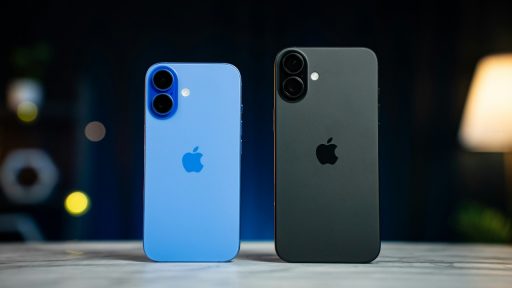
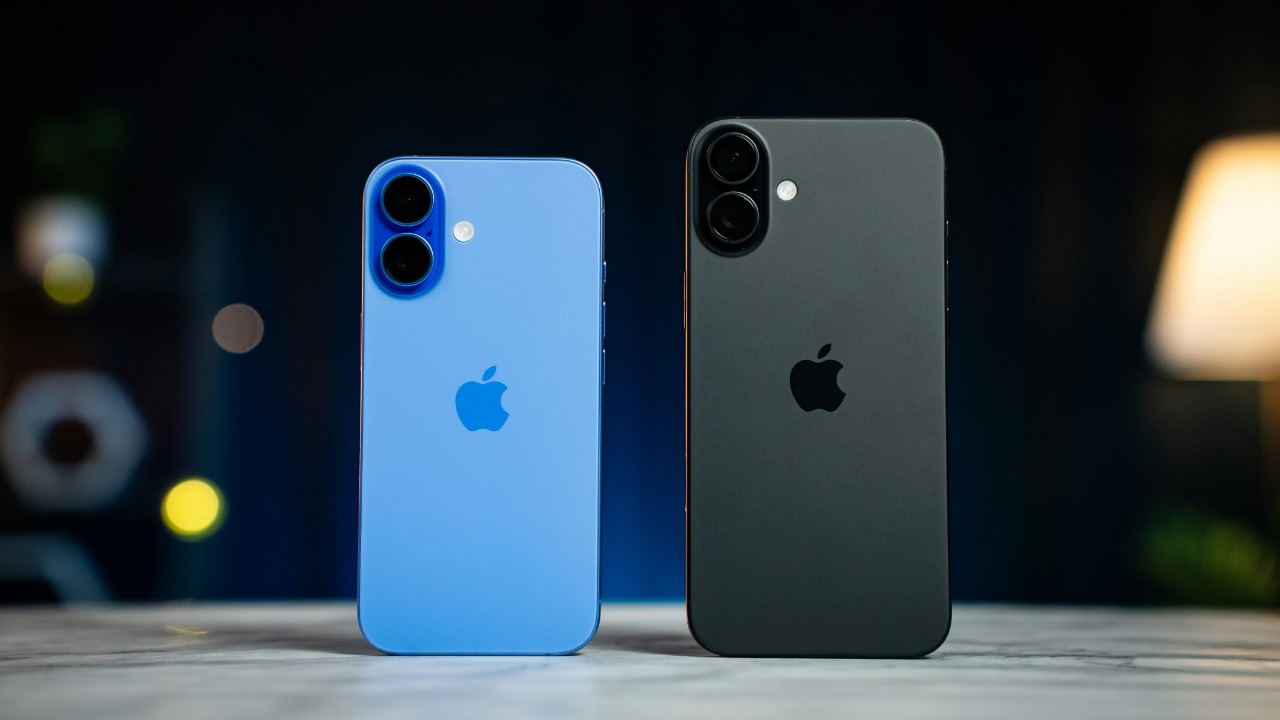

Apple has turned 2025’s smartphone leaderboard into a showcase for its own catalog, with iPhone 16 emerging as the single most popular handset on the planet. New rankings of individual models put Apple devices in seven of the ten top-selling slots, a level of concentration that even long-time industry watchers did not expect.
That dominance is not just about one flagship. The iPhone 16 sits at the top of the charts, but it is flanked by a supporting cast that stretches from entry models to premium variants, and by the newer iPhone 17 series that is already reshaping Apple’s sales mix. Together, they signal a market where one company’s design and pricing decisions increasingly define the mainstream smartphone experience.
iPhone 16’s run to the top
The clearest headline from the latest rankings is simple: iPhone 16 is the world’s best-selling smartphone of 2025. Multiple datasets converge on the same conclusion, with one analysis describing how the iPhone 16 led global unit sales and became the primary entry point into Apple’s ecosystem, a pattern echoed in separate rankings. A separate breakdown of 2025’s best-sellers reinforces that Apple’s iPhone 16 ranks first among all phones, with Galaxy S25 Ultra only managing ninth place, underscoring how far ahead Apple’s mainstream flagship sits in terms of volume compared with even the most hyped Android premium device, the Galaxy Ultra.
The momentum behind iPhone 16 did not appear overnight. Earlier quarterly data already showed the device as the best-selling smartphone globally in Q3 2025, with one research firm noting that it held that position for the third consecutive quarter and that Apple and Samsung each captured five spots in the top ten best-sellers. By year’s end, new data shared by Apple-focused outlets confirmed that the iPhone 16 was the best-selling phone of 2025 and that Apple’s models accounted for seven of the top ten devices, a pattern highlighted in separate New data posts and reiterated in coverage that described how Apple’s iPhone 16 topped the list of the world’s best-selling smartphones in 2025, according to reporting by Tim Hardwick.
Seven out of ten: Apple’s grip on the rankings
Once you look beyond the number one slot, the scale of Apple’s dominance becomes even starker. Across the full 2025 leaderboard, Apple sold seven of the ten best-selling smartphones globally, a lopsided distribution that one technology community described as evidence of how thoroughly the company has captured the high-volume end of the market, noting that Apple sold seven of the ten best-selling smartphones globally in 2025. A separate analysis framed the same reality in consumer terms, stating that Seven out of ten of the most popular phones were iPhones and asking bluntly whether Android is headed for extinction as seven Out of ten smartphone buyers chose Apple in 2025.
Those rankings are backed by more granular lists that show how Apple’s portfolio stacks up model by model. One breakdown of 2025’s best-selling phones notes that seven of last year’s most popular devices were iPhones, with only a handful of Android models, including Galaxy S25 Ultra, breaking into the top ten best-selling phones. Another report, focused on the broader smartphone buyer base, repeats that Seven out of ten smartphone buyers chose Apple in 2025 and that the iPhone 16 led by a wide margin, a framing that appears in a separate Smartphone Buyers Chose analysis.
iPhone 17’s premium push and rising ASP
While iPhone 16 anchors the volume story, the newer iPhone 17 series is reshaping Apple’s revenue mix at the top end. A market intelligence report cited by Apple-focused coverage explains that Apple dominated the best-selling smartphone rankings for 2025 and that the base model iPhone 17 was a standout, with some analysts calling it the best overall iPhone in years, a view reflected in reporting that highlights how Apple dominated best-selling smartphone rankings with the base iPhone 17 a standout. Another summary notes that Apple secured seven of the top ten smartphone sales spots in 2025 and that the iPhone 17 series recorded a 16% sales increase, driven by upgrades and strong demand, according to a report that credits Apple with that performance.
That premium tilt is visible in Apple’s pricing metrics. One detailed financial report states that iPhone ASP Surpasses US$1,000 for the First Time in Q4 2025 and that Global Smartphone Shipments Hit 1.26 Billion in 2025 as Apple’s premium iPhone 17 mix drives growth, with the document explicitly noting that ASP Surpasses US, First Time and Global Smartphone Shipments Hit Share and Billion. A companion summary of the same research notes that Apple iPhone ASP Taps US$1000 Mark in Q4 2025 as Premium iPhone 17 Mix Drives Growth, and that Apple iPhone ASP Taps US$1000 Mark in Q4 2025 as Premium iPhone 17 Mix Drives Growth, with the table content explicitly referencing Apple, ASP, Taps US, Mark and Premium in the context of that Mix Drives Growth. A separate financial write-up reiterates that Apple iPhone ASP Taps US$1000 Mark in Q4 2025 as Premium iPhone 17 Mix Drives Growth and highlights that ASP Taps US and Mark are central to the company’s pricing story, while also noting a related figure of $100 in the ASP discussion.
Market share, Android pressure and Samsung’s response
Apple’s model-level dominance sits within a broader shift in global market share. One industry report notes that Apple leads global smartphone market with 20% share in 2025, according to Counterpoint, and that global smartphone shipments were essentially flat as Apple consolidated its position at the top of the vendor rankings, a trend summarized in a Global overview. Another analysis of consumer behavior puts a sharper point on it, stating that 7 Out of 10 Smartphone Buyers Chose Apple in 2025 and explicitly asking Is Android Headed For Extinction as Seven out of ten of the most popular phones were iPhones, a framing that appears in a 7 Out of hub.
Android is far from disappearing, but the rankings highlight how much pressure its hardware partners face. One detailed list of 2025’s best-selling phones notes that 7 Out of 10 Best-Selling Phones in 2025 Are Apple’s and that Samsung Holds the Rest, with the analysis pointing out that Samsung’s Galaxy S25 Ultra finished ninth and that the remaining Android entries were concentrated in specific price bands, a pattern described in an Are Apple breakdown. A companion piece reiterates that 7 Out of 10 Best-Selling Phones in 2025 Are Apple’s and that Samsung Holds the Rest, emphasizing that Samsung’s share of the top ten is limited to three models and that the rest of the Android ecosystem is effectively shut out of the highest-volume tier, a point repeated in a second Selling Phones summary.
How Apple’s lineup strategy underpins its lead
Behind the rankings is a deliberate product ladder that stretches from older, lower-priced models to the latest flagships. Retail listings show how Apple keeps prior-generation devices in circulation at reduced prices, with one catalog entry highlighting an earlier iPhone configuration that still attracts buyers looking for a cheaper way into the ecosystem, as seen in a product listing. Additional product pages for other iPhone variants, including midrange and compact options, illustrate how Apple covers multiple price tiers while maintaining consistent design language and software support, as reflected in separate catalog and Best listings.
Even within the 2025 cohort, Apple’s range is broad. Online stores feature multiple iPhone 16 and iPhone 17 configurations, from standard models to larger and more premium variants, each occupying a specific price and feature niche. Examples include product entries that showcase different storage tiers and finishes for recent iPhones, such as those highlighted in online catalogs and in additional listings that cover accessories and color variants, such as retail pages and device-specific entries for newer models that appear in device and catalogid references. Additional product records for related accessories and regional variants, such as those in gpcid, headlineOfferDocid and productDocid, round out a lineup that gives Apple a device for nearly every mainstream buyer.