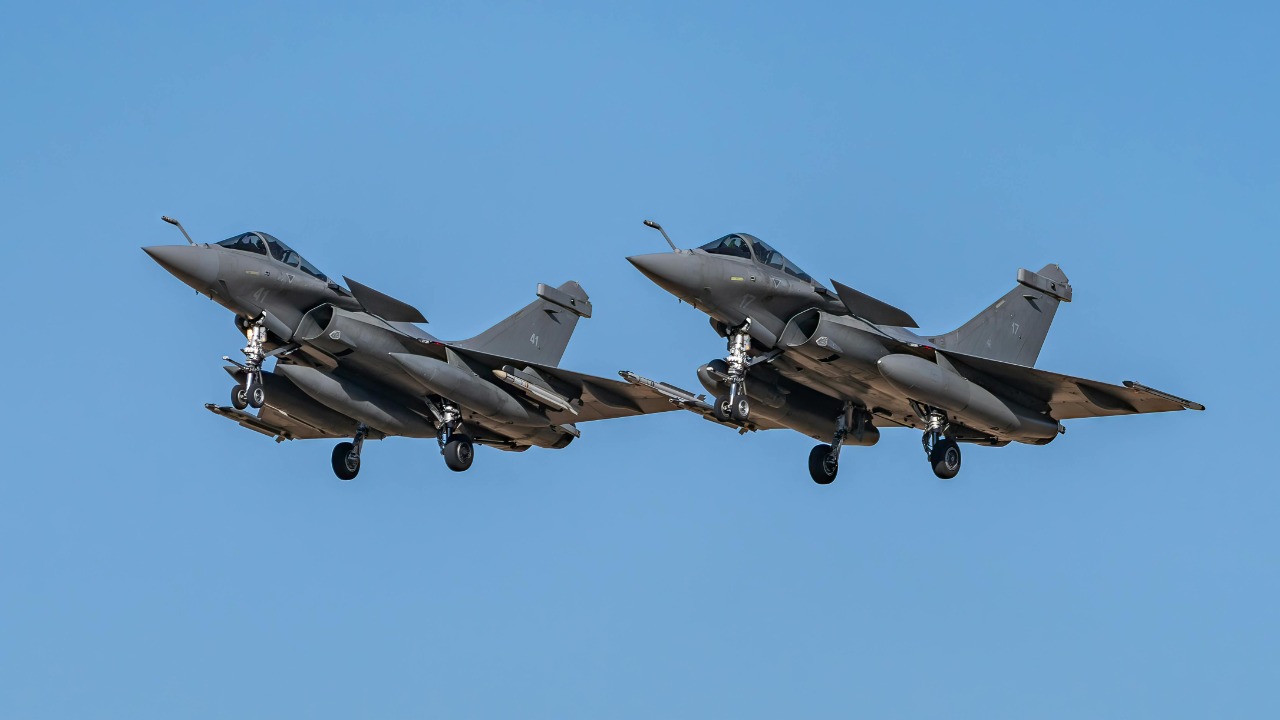

Indonesia has formally entered the Rafale era, with the first three French-built fighter jets touching down as the opening tranche of a 42-aircraft order that will reshape the country’s air combat fleet. The delivery, rooted in a multibillion-dollar agreement between Jakarta and Paris signed in 2022, signals that a long-planned modernization drive for the Indonesian Air Force is now moving from contract paperwork to operational reality. It is a milestone that carries implications not only for Indonesia’s defense posture, but also for the balance of air power and arms partnerships across Southeast Asia.
The arrival of these initial Rafales, part of a package worth around $8 billion, gives Indonesia a new generation of multirole capability at a time when regional skies are increasingly crowded and contested. It also deepens a strategic relationship with France that extends beyond fighter jets to submarines and other high-end systems, positioning Jakarta as a key customer in Europe’s push to expand its security footprint in the Indo-Pacific.
How the Rafale deal took shape between Jakarta and Paris
The Rafale purchase is the product of a deliberate courtship between Jakarta and Paris, as Indonesia sought to diversify its suppliers and France looked for a flagship customer in Southeast Asia. The agreement, reached between Jakarta and Paris in February 2022, committed Indonesia to a long-term partnership that includes the delivery of Rafales and cooperation on other advanced systems such as attack submarines from Naval Group, anchoring a broader defense-industrial relationship that goes beyond a single platform. The arrival of the first three Rafales is explicitly described as part of this agreement, underscoring how the contract was structured from the outset as a phased program rather than a one-off buy, according to Jakarta and Paris.
Financially, the Rafale package is substantial by any measure of Indonesian defense spending. One report notes that Indonesia has taken delivery of the first Rafales from France under a deal valued at about $8 billion, with additional aircraft to be delivered later this year as production and training pipelines mature, a figure that highlights the scale of Jakarta’s commitment to modern airpower and is detailed in coverage of the $8 billion agreement. Another account specifies that the jets form part of an $8.1 billion deal agreed in 2022 by then defence minister Prabowo Subianto to purchase 42 French-made Rafales, tying the financial figure directly to the full fleet size and to the political leadership that championed the acquisition, as laid out in reporting on the $8.1 billion package.
What the first three Dassault Rafales bring to Indonesia’s air force
Operationally, the first three Dassault Rafales give Indonesia an immediate leap in capability, even before the full fleet arrives. The aircraft, described as Dassault Rafale fighter jets supplied by France, are designed as multirole platforms that can handle air superiority, deep strike, and maritime missions, allowing the Indonesian Air Force to consolidate roles that previously required multiple legacy types. One detailed account notes that Indonesia has received its first three Dassault Rafale fighter jets from France, marking the start of deliveries under Jakarta’s long-term plan to field 42 aircraft, and emphasizes that these initial jets will anchor pilot conversion and tactics development for the broader fleet, as explained in coverage of the first three Dassault Rafale aircraft.
The Indonesian Air Force, formally known as Tentara Nasional Indonesia Angkatan Udara, is treating the Rafale as a central pillar of its modernization program rather than a niche addition. Reporting on the handover stresses that the Indonesian Air Force is integrating the Rafale into a broader effort to upgrade its combat fleet and command systems, positioning the new jets as a high-end complement to existing assets and future acquisitions, a point underscored in analysis of the Indonesian Air Force modernization program. Officials have framed the aircraft as “advanced fighter jets” that will significantly enhance national defense, with one report explicitly describing the delivery as Indonesia receiving its first Rafale advanced fighter jets from France, a characterization that reflects both the platform’s technology and its symbolic weight in Jakarta’s strategic planning, as noted in coverage titled Indonesia Receives First.
The 42-aircraft order and Indonesia’s broader modernization path
The Rafale acquisition is not a token purchase but a fleet-level transformation, anchored in the decision to buy 42 aircraft as part of a single, coherent program. One report on the French-made fighters states plainly that the jets are part of an $8.1 billion deal agreed in 2022 by then defence minister Prabowo Subianto to purchase 42 Rafales, linking the exact number of aircraft to the financial outlay and to the political figure who signed off on the contract, as detailed in coverage of Prabowo Subianto’s 42 aircraft decision. Another account, focused on diplomatic angles, reiterates that Indonesia’s Rafale program covers 42 jets, underscoring that the first delivery is only the opening phase of a multi-year rollout that will eventually give Jakarta several squadrons worth of new-generation fighters, as highlighted in reporting that references the figure 42.
The Rafale order also sits alongside other modernization efforts, including new transport aircraft and potential upgrades to surveillance and command systems. The Indonesian Air Force chief has previously outlined a delivery timeline not only for Rafales but also for the Airbus A400M, describing the A400M as designed to provide the Indonesian Air Force with the ability to respond rapidly to crises and deliver heavy loads in challenging conditions, a capability that complements high-end fighters by ensuring logistics and mobility keep pace with combat power, as described in analysis of the A400M role. Taken together, the 42 Rafales and supporting platforms signal that Indonesia is moving toward a more networked, expeditionary air force, capable of projecting power across its vast archipelago and contributing more credibly to regional security arrangements.
Training, basing, and the path from delivery to combat readiness
Receiving advanced fighters is only the first step; turning them into operational capability requires training pipelines, basing infrastructure, and doctrinal shifts. On the industrial side, Dassault Aviation’s Mérignac facility has already handed over the first three of the 42 Rafales ordered by Indonesia, with the Ministry of Defense confirming that Indonesian personnel are undergoing Rafale training in France, a detail that illustrates how pilot and maintainer preparation has been built into the early phases of the program, as reported in coverage of the Mérignac handover and Rafale training. That training pipeline is crucial, because the Rafale’s avionics, weapons integration, and mission systems represent a significant step up from Indonesia’s older platforms, demanding new skills and tactics.
On the home front, Indonesian officials have been explicit that the aircraft are not just symbolic arrivals but are ready for operational use. A Defense Ministry spokesperson, Rico Ricardo, has been quoted saying that the aircraft have been handed over and are ready for use by the Indonesian Air Force, a statement that signals both the completion of acceptance procedures and the start of domestic integration into squadrons, as detailed in remarks from the Defense Ministry spokesperson. At the same time, the Indonesian Air Force will need to adapt its basing, maintenance, and supply chains to support a sophisticated French-built platform, a process that will unfold over several years as more aircraft arrive and as local crews transition from legacy types such as Lockheed Martin F-16 jets to the Rafale.
Regional stakes and France’s growing role in Southeast Asia
Strategically, Indonesia’s Rafale acquisition is about more than national prestige; it alters the regional balance of airpower and deepens Europe’s role in Southeast Asian security. Indonesia is described as France’s largest arms customer in Southeast Asia, a status that reflects not only the Rafale deal but also Jakarta’s interest in other French-made systems and underscores Paris’s ambition to be a long-term security partner in the Indo-Pacific, as noted in reporting that identifies Jakarta as France’s key customer. For Indonesia, partnering with France offers a way to diversify away from overreliance on any single supplier, balancing relationships with the United States, Russia, and others while still securing access to cutting-edge technology.