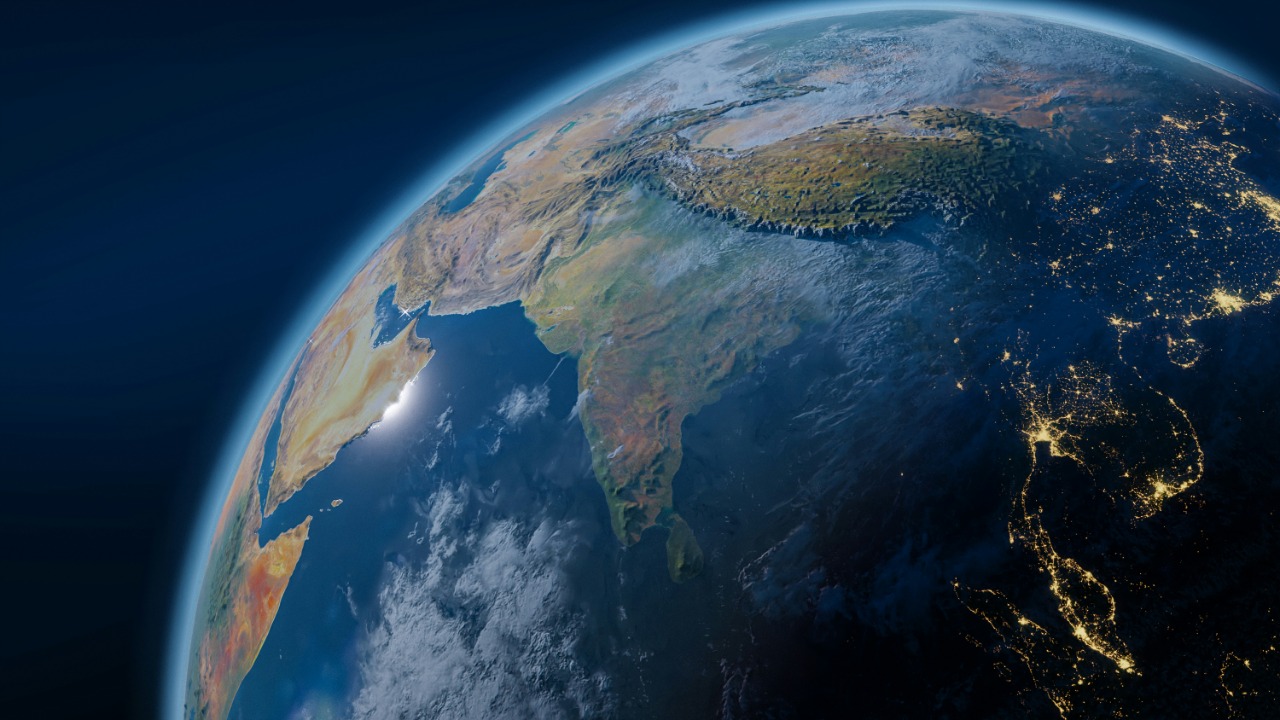

Long before anyone talked seriously about geoengineering, routine radio traffic from Earth was already reshaping near space. As scientists mapped the radiation belts that wrap the planet, they stumbled on a strange, human-made cocoon that appears to be pushing dangerous particles farther away. In a world now searching for ways to blunt climate change and solar threats, that accidental shield has become a case study in how our technologies can alter the planet’s environment in ways we never intended.
I see that discovery as more than a curiosity. It is a preview of the ethical and technical questions that surround deliberate plans to build vast space umbrellas, frozen “bubbles,” or asteroid-mounted shades to protect Earth from a hotter Sun. The invisible barrier already circling us shows that planetary-scale engineering is not science fiction. The real question is whether we are ready to control what we have so far done by accident.
How radio waves wrapped Earth in a protective bubble
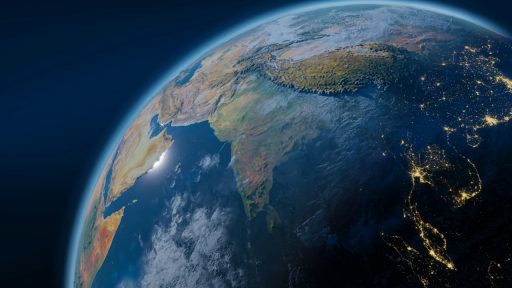
When scientists sent probes into the harsh zone of charged particles around Earth, they expected to see the inner edge of the radiation belts dipping close to the atmosphere. Instead, they found a sharp boundary that looked almost like a wall. Detailed measurements showed that this edge lined up with the reach of very low frequency radio transmissions, or VLF, that humans beam into space from powerful ground stations to communicate with submarines and other systems. In effect, those signals have inflated a kind of electromagnetic bubble around the planet that appears to be nudging high-energy particles outward, away from the region where satellites and crewed spacecraft spend most of their time, a pattern described in early reporting on scientists tracking the belts.
NASA researchers traced this boundary using the twin Van Allen Probes, which were designed to study electrons and ions in what they called our new-space environment. The spacecraft showed that the inner edge of the belts had moved outward compared with historical data, and that the shift matched the region filled by human-made VLF signals. Those same VLF transmissions leak into space from stations on the ground and interact with charged particles, scattering them into the atmosphere where they dissipate. The result is a protective bubble that no one planned, but that now shapes how radiation flows around Earth.
The strange role of VLF in shaping near-Earth space
Very low frequency systems were never designed with space weather in mind. Engineers built VLF hardware primarily to communicate with submarines, often to send simple, one-way messages that confirm everything is still normal. Yet the sheer power of those transmitters means their signals do not stop at the sea surface or the ionosphere. Instead, they fan outward into space, where they can resonate with electrons trapped in the radiation belts and change their orbits. Over decades, that constant background hum has carved out a region that looks, from orbit, like a human-made boundary layered on top of the natural magnetic field.
Some researchers now talk about this region as part of a broader, human-shaped “technosphere” that extends far beyond the atmosphere. Analyses of the Protective Bubble Around argue that if VLF were suddenly switched off, the radiation belts might creep inward again, exposing satellites to harsher conditions. That possibility has prompted some space physicists to ask whether we should treat these transmissions as a kind of informal shield that now needs to be managed, rather than an accidental side effect of Cold War communications.
From accidental shield to deliberate sunshades
The existence of a human-made barrier in near space has sharpened debates over whether we should build intentional shields on a much grander scale. One family of proposals would place a vast structure between Earth and the Sun at a gravitational balance point known as L1, where a modest push can keep an object aligned with the planet. Concept studies have explored catching or towing an asteroid to that point and attaching a gigantic reflective “umbrella” to it, creating a permanent shade that blocks a small fraction of incoming sunlight. Advocates argue that such a sun shield could be adjusted over time, buying the world breathing room while emissions fall.
One recent concept imagines a massive, lightweight screen anchored to a captured rock, with the combined system tuned to deflect just enough solar energy to matter. In theory, a large-enough solar shield at L1 could block around 1.7 percent of solar radiation, which modelers say might be sufficient to prevent a catastrophic rise in Earth’s temperatures. That idea has been described as a way to fight global warming without altering the atmosphere directly, but it would still amount to a planetary thermostat controlled from space, with all the political and technical risks that implies.
The “space bubbles” idea and its risks
Other researchers are exploring more modular, reversible approaches. A team linked to MIT has floated the idea of deploying a swarm of thin, frozen “space bubbles” at or near the same L1 point. Instead of a single monolithic shade, the concept imagines countless small elements that could be manufactured in space and arranged into a semi-transparent shield. Because the bubbles would be made of a thin film and could in principle be deflated or repositioned, supporters argue that the system might be easier to adjust or even dismantle if something went wrong.
Designers of the Space Bubbles research project stress that they want to avoid the side effects associated with injecting particles into the stratosphere, which can alter regional weather patterns and ozone chemistry. A video explainer from Massachusetts Institute of researchers frames the idea as a way to combat the “shitass” effects of climate change while keeping the intervention outside the atmosphere itself. Yet even a reversible shield would still shift sunlight across the globe, raising questions about who decides how much dimming is acceptable and how to handle countries that might be harmed by even small changes in rainfall or temperature.
Geoengineering from space and the ethics of a planetary shield
As these concepts move from sketches to serious feasibility studies, critics warn that space-based geoengineering could become the “final frontier” of planetary manipulation. A detailed assessment of geoengineering from space notes that an increasing number of research projects aim to develop the control systems, materials, and deployment strategies needed for large-scale interventions. The same analysis, in a later Nov update, highlights Critical questions about governance, scalability, and potential side effects, from altered monsoon patterns to the risk of sudden warming if a shield failed or was switched off. Those concerns echo long-standing fears that any technological “fix” could sap political will to cut emissions, locking the world into permanent dependence on orbital hardware.
For me, the accidental VLF bubble is a reminder that we are already geoengineering, even when we pretend not to be. Educational videos that slice Earth open on screen to show its layers, noting that the inner core is about 40 times hotter than the inside of your oven, now sit alongside explainers on Earth orbiting inside a human-made radiation shield. Another video on a potential sunshade in space frames these ideas as part of a broader search for ways to keep the planet from overheating. Together, they show a species that has learned to see its home not just as a blue marble, but as a system that can be tuned, for better or worse, by technology.