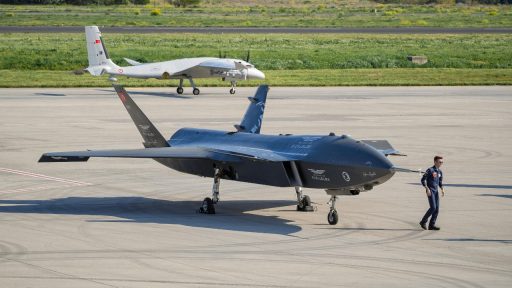
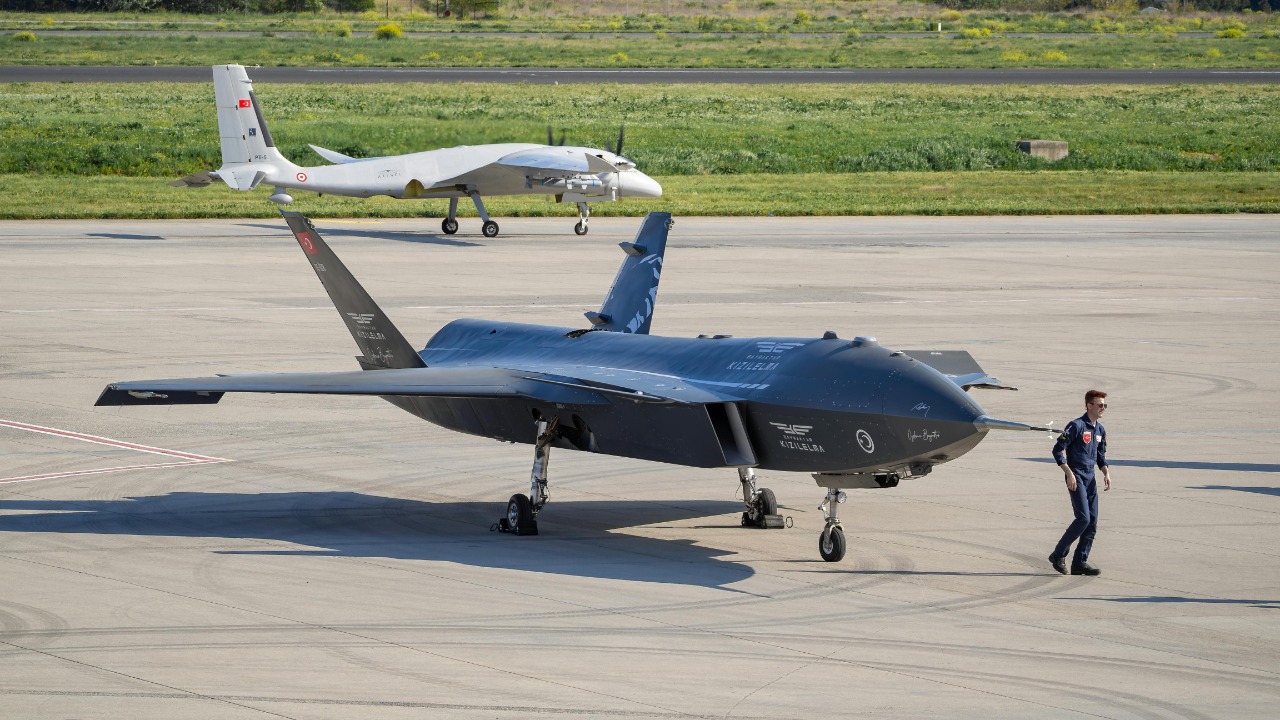

Germany’s push to field a reusable strike drone for the Luftwaffe by 2029 was sold as a fast-track answer to a rapidly worsening security environment. Instead, the hunt is already slowing as requirements harden, industrial lobbying intensifies, and a still-fluid shortlist begins to emerge. The stakes are high: the choice will shape German airpower for decades and determine whether the country remains a buyer of foreign concepts or becomes a shaper of next-generation combat aviation.
Behind the scenes, officials are trying to reconcile an urgent need for long-range strike with the political imperative to nurture domestic startups and the practical limits of budget and technology. That tension is visible in parallel moves, from a 536 m euro deal for attack drones to a more ambitious effort to field a jet-powered uncrewed combat aircraft that can keep pace with manned fighters.
The 2029 Jagdbomberdrohne vision meets bureaucratic drag
The Luftwaffe’s ambition centers on a reusable, jet-powered uncrewed aircraft that can carry significant weapons loads deep into contested airspace and operate alongside fighters in a networked force. German Air Force planners have described this as a Jagdbomberdrohne, a fighter-bomber UAV concept that blends strike and escort roles and is intended to complement, not replace, crewed jets. Reporting on the program indicates that the goal is to have such a system ready for operational use around 2029, a timeline initially framed as aggressive but achievable if acquisition could be streamlined and political backing held firm.
That optimism is now colliding with the realities of German procurement culture, where risk aversion and complex oversight can slow even politically favored projects. Early signals of a slowdown appear in assessments of the Luftwaffe’s search for a 2029-ready uncrewed combat jet, which describe a fast-track effort that is already showing signs of losing momentum as requirements mature and competing industrial interests press their case. Visual material and commentary linked through Luftwaffe drone imagery underscore how far the concept still has to travel before it becomes a fielded capability rather than a design brief.
Shortlist signals and the role of Kratos Defense
Even as the process slows, the contours of a shortlist are beginning to take shape, with several foreign and domestic players vying for influence. Reporting on the German effort highlights engagement with Kratos Defense and Security Solutions, a United States based company known for high-speed, expendable and reusable target and tactical drones. References to Kratos Defense, Security Solutions and a German interest in jet-powered uncrewed combat aircraft point to a scenario in which Berlin weighs whether to adapt an existing foreign platform, co-develop a variant, or push harder for a homegrown solution that keeps more intellectual property and jobs inside Europe.
The involvement of Kratos Defense, Security Solutions sits alongside interest in other international concepts as the Luftwaffe refines its requirements. A detailed review of the 2029 strike drone search explains that the fast-track initiative is already slowing as the German side evaluates cooperation options with companies such as Kratos and tests how far it can stretch its own industrial base. That same analysis, which names Clement Charpentreau in connection with coverage of the effort, notes that the Luftwaffe’s evolving wishlist is shaping which foreign partners are taken seriously and how a potential teaming arrangement might look in practice, with German talks with emerging as one of the clearer markers of the shortlist’s direction.
Domestic startups, the 536 m deal and industrial politics
Parallel to the 2029 combat jet effort, Germany is committing serious money to nearer term strike drones that can be fielded more quickly, even if they fall short of the Jagdbomberdrohne vision. Earlier this year, Germany moved to acquire attack drones worth over 536 m euros, a package that prominently involves German startups Helsing and other partners. That 536 m figure is not incidental; it signals both the scale of Berlin’s willingness to invest and the political desire to seed a domestic ecosystem around uncrewed systems rather than rely solely on imported designs.
Coverage of the deal describes Germany preparing to purchase flying attack drones valued at about 536 m euros, equivalent to about $638 m, with the total order framed at $638 million and deliveries planned for early 2027. The arrangement, which again highlights Helsing and other German companies, is structured over a term of seven years and is intended to give the armed forces a credible strike option while the more advanced 2029-ready jet-powered project matures. The figures of 536 m euros and $638 m, repeated across financial and defense reporting, underline how the government is already committing substantial funds to uncrewed strike capabilities, with Germany’s 536 m and the parallel description of a $638 million order in $638 m drone providing a clear picture of the scale.
From latecomer to potential trailblazer in fighter-bomber UAVs
Strategically, the Jagdbomberdrohne effort is about more than a single aircraft; it reflects a broader attempt by the German Air Force and the Luftwaffe to move from a perceived latecomer status in uncrewed combat aviation to a position where it can shape standards and concepts. Analysis of Germany’s pursuit of a fighter-bomber UAV notes that press reports suggest the German Air Force, the Luftwaffe, has already drawn up requirements for a Jagdbomberdrohne and is examining how such a platform would operate either in a stand-alone manner or as part of a larger system of systems. The same assessment points out that the concept would have implications for how the Luftwaffe employs its expanding Heron TP fleet and how it coordinates with future manned fighters.
In that context, the 2029-ready strike drone is a test of whether Germany can pivot from buying off-the-shelf systems to helping define a new category of fighter-bomber UAVs. The analysis of Germany’s pursuit of this capability highlights that such a concept, if it is to operate in a stand-alone manner, will drive specific requirements for range, payload and survivability, which in turn influence the shortlist of potential industrial partners and the balance between domestic and foreign technology. That same line of reasoning, captured in assessments of Germany’s fighter-bomber UAV and in follow-on discussion of how such a concept would operate if it had to act alone or in concert with other platforms, shows that the Jagdbomberdrohne is as much about doctrinal change as it is about hardware, with Such a concept directly influencing the Luftwaffe’s future force mix.
Global benchmarks and the pressure of foreign examples
Germany’s planners are not working in a vacuum; they are acutely aware of how other air forces are fielding uncrewed combat aircraft and loyal wingman systems that could serve as benchmarks or competitors. In Australia, Boeing Defence Australia has pushed its MQ-28 Ghost Bat program through a significant test phase, with the Ghost Bat loyal wingman platform achieving 100 test flights in a major milestone that demonstrates both technical maturity and sustained government support. That progress is reinforced by broader coverage of Collaborative Combat Aircraft style concepts in which Australia, working with Boeing Australia, is rapidly advancing the MQ-28 Ghost Bat as one of several leading platforms to watch beyond major trade shows, illustrating how quickly allied nations are moving.
For Germany, those foreign examples raise the pressure to deliver on the 2029 strike drone promise rather than let the program sink into the kind of delay that has plagued past projects. The United States Air Force is already planning to bring its first iterations of Collaborative Combat Aircraft into service ahead of its next-generation crewed fighter, signalling that uncrewed teammates are no longer theoretical. Analysts mapping the Luftwaffe’s 2029-ready uncrewed combat jet effort argue that other signals, such as the weight class being considered and the balance between reusable and expendable designs, help reveal where the German shortlist is heading and how it compares with allied programs, a point underscored in detailed discussion of other signals that the emerging choices.