
The Samsung Galaxy Z TriFold is likely priced around $2,800, according to recent leaks that provide the device’s first look. That initial glimpse shows visible display creases on its tri-fold screen, along with support for DeX mode and other features highlighted in a new video, giving a more concrete sense of the foldable’s design and functionality ahead of its expected launch.
Initial Reveal and Design Insights
The first detailed look at the Galaxy Z TriFold focuses on its exterior and the way its tri-fold mechanism transforms from a compact slab into a larger tablet-like device. In the leaked video, the hardware folds along two separate hinges, creating three distinct panels that stack neatly when closed and then extend outward into a wide, continuous display when opened. The footage shows a chassis that appears closer to a premium tablet than a phone once fully unfolded, signaling that Samsung is treating this model as a productivity-first form factor rather than a simple extension of its existing foldable phones.
That same video, highlighted in the latest first-look reporting on the Galaxy Z TriFold, also offers early clues about build quality and hinge engineering. The dual-hinge system appears reinforced at both folding points, with a spine that looks thicker than the single hinge on the Galaxy Z Fold series, suggesting that Samsung is prioritizing structural rigidity to handle the added stress of a tri-fold design. For buyers, the way those hinges distribute pressure across three panels will be critical, because durability concerns have historically shaped confidence in foldables and will likely influence whether this device is seen as a reliable daily driver or a niche showcase product.
Display and Screen Features
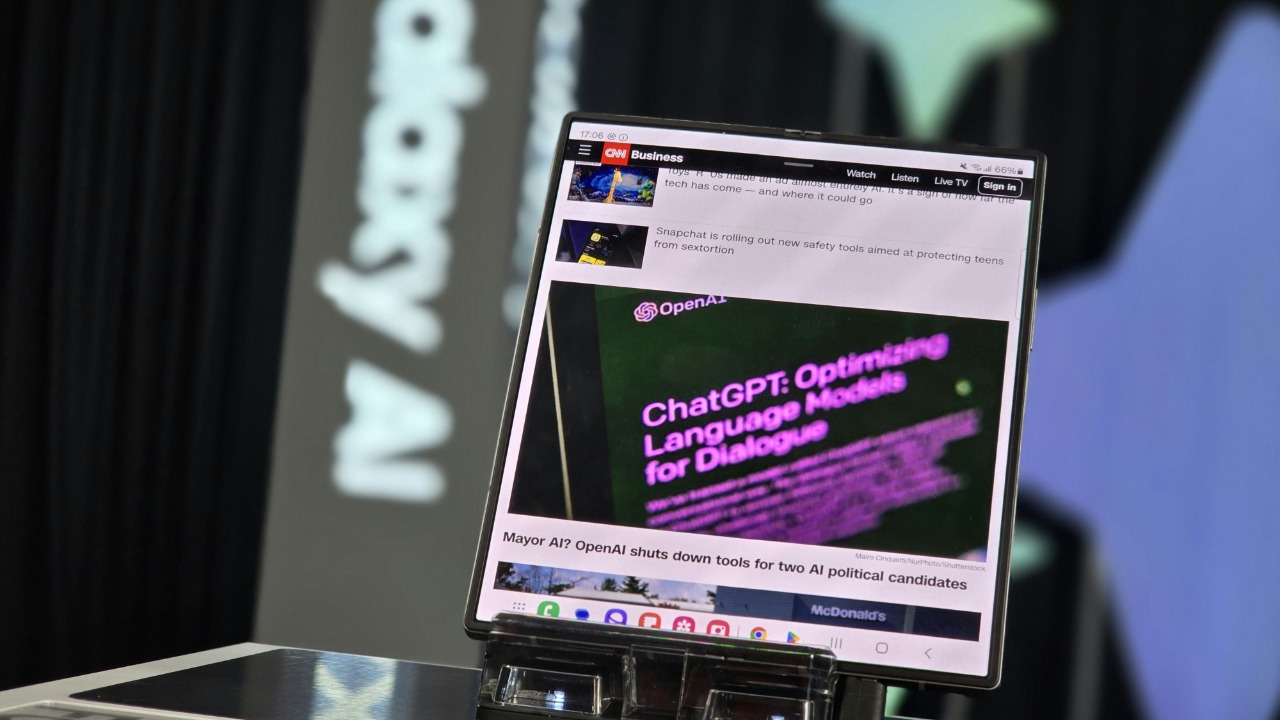
The centerpiece of the Galaxy Z TriFold is its tri-fold display configuration, which uses three connected panels that expand into a single, tablet-sized screen when fully opened. In the leaked video, each segment appears to align edge to edge, creating a broad canvas that is significantly larger than the unfolded Galaxy Z Fold, yet still able to collapse into a more pocketable footprint. Across both folding lines, however, the footage clearly shows visible creases on the inner screens, a visual reminder of the mechanical complexity that comes with bending glass or plastic substrates multiple times in a single device.
Those creases are more pronounced when the device is unfolded, and the latest leak notes that they stand out more than the smoother appearances seen on some previous dual-fold models and prototypes. While the exact resolution and aspect ratio are not confirmed, the extended layout in the video suggests a wide, landscape-friendly orientation that would favor multitasking and media consumption, with the creases running vertically across the viewing area. For users, that means the visual interruption of two fold lines could affect everything from watching full-screen video to editing documents, and it raises the stakes for Samsung’s software optimization, since effective UI adaptation will need to steer key content away from the most noticeable crease zones whenever possible.
DeX Integration and Productivity Tools
One of the most significant revelations in the leak is that the Galaxy Z TriFold supports DeX mode, turning the foldable into a desktop-like interface when connected to an external monitor, keyboard, and mouse. In the video, DeX appears to launch in a familiar windowed environment, with apps like Chrome, Microsoft Office, and messaging tools arranged in resizable windows that mimic a traditional PC layout. That capability positions the TriFold as a potential laptop replacement for some users, especially those who already rely on DeX with devices like the Galaxy S series or Galaxy Z Fold and want a larger on-device canvas when they are away from a desk.
The tri-fold form factor also opens the door to more ambitious multitasking on the internal display itself, and the leak points to productivity enhancements that build on earlier foldable software. With three panels available, the interface can show multiple apps side by side, such as a video call on one segment, a document editor on another, and a note-taking app on the third, without forcing cramped layouts. For professionals and power users, that kind of layout flexibility could change how they approach mobile workflows, but it also raises expectations for new gestures and input methods tailored to the tri-fold design, since standard Galaxy Z gestures may not be sufficient to manage three distinct yet connected workspaces efficiently.
Pricing and Market Positioning
The leak pegs the Galaxy Z TriFold at a likely price point of around $2,800, placing it at the very top of Samsung’s foldable lineup in terms of cost. That figure represents a clear premium over previous high-end models in the Galaxy Z Fold series, which already occupy the upper tier of smartphone pricing, and it reflects the added complexity of a tri-fold hinge system, a three-panel display, and the engineering required to keep such a device relatively thin and portable. For consumers, the $2,800 range signals that Samsung is not positioning the TriFold as a mass-market upgrade, but rather as a flagship showcase for its most advanced foldable technology.
Compared with earlier Galaxy Z Fold devices, which targeted early adopters and enthusiasts while gradually moving toward broader appeal, the Galaxy Z TriFold’s expected price suggests a stronger focus on enterprise buyers and luxury consumers who prioritize cutting-edge hardware over cost. The combination of DeX integration, a tablet-scale internal display, and a tri-fold form factor aligns with use cases like mobile professionals who want a single device that can function as a phone, tablet, and lightweight desktop. That strategy fits recent trends in the foldable market, where manufacturers have increasingly used their most expensive models to test new form factors and software paradigms, with the understanding that lessons learned at the $2,800 tier could eventually filter down into more affordable devices if the technology proves durable and compelling enough for wider adoption.