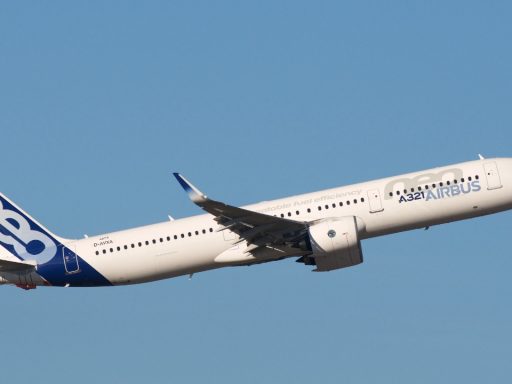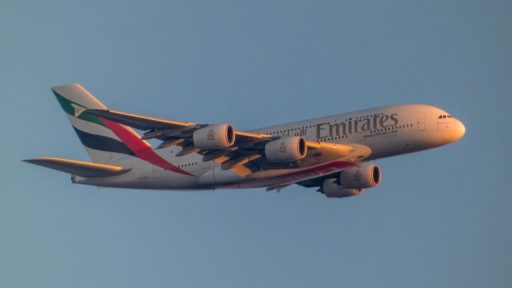
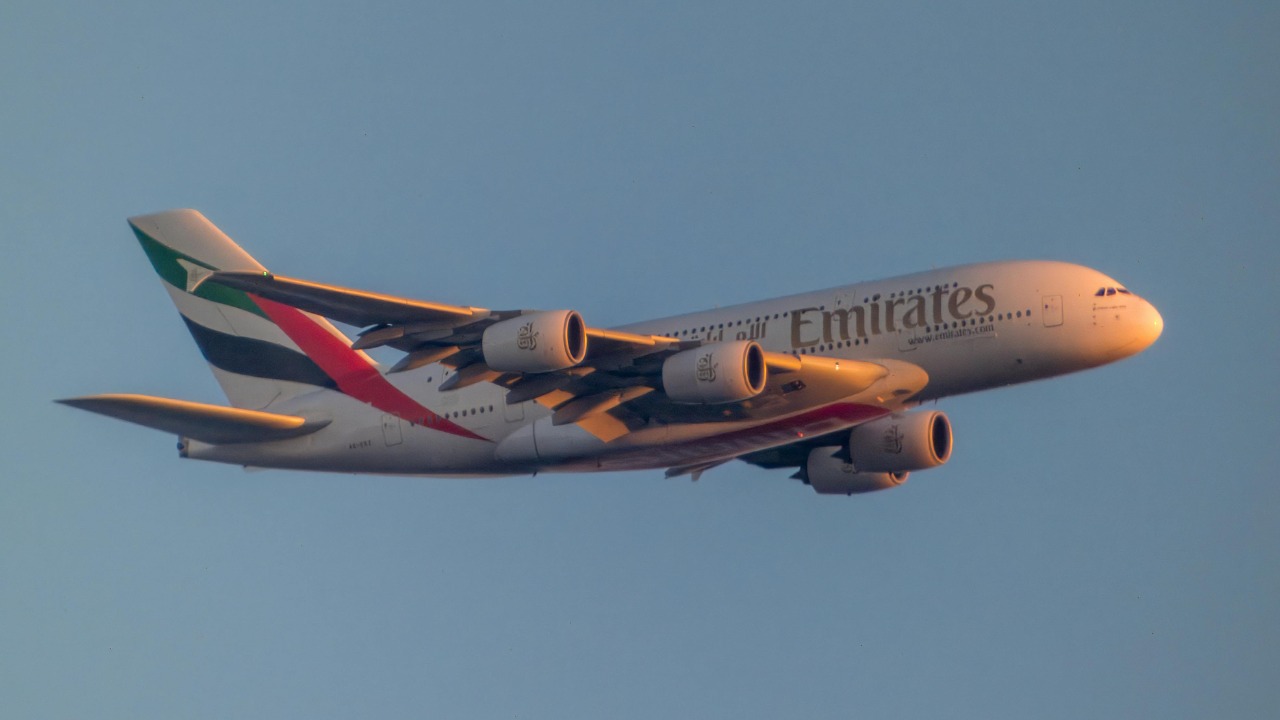

Passengers on a packed Emirates Airbus A380 arriving in Toronto expected the usual shuffle from runway to gate. Instead, they found themselves trapped in a frozen tableau, sitting for more than three hours on the tarmac while a record-breaking snowstorm buried the airport around them. The episode turned a long-haul journey into a test of patience and highlighted how even airports built for winter can be pushed to the edge.
The ordeal, which unfolded during a powerful winter system that hammered southern Ontario, was not an isolated inconvenience but a window into how fragile the choreography of modern air travel becomes when weather overwhelms infrastructure. I see it as a case study in what happens when a giant aircraft, a congested hub and extreme conditions collide.
How a routine arrival turned into a three-hour freeze
The Emirates Airbus A380 at the center of this saga had already completed a marathon journey from Dubai when it ran into trouble on arrival. Tracking data from Flightradar24 showed that flight EK241 departed from Dubai International Airport, listed as DXB, on a Thursday, bound for Toronto Pearson. After the long transatlantic leg, the aircraft touched down as scheduled, only to find that the final few hundred meters to the gate would be the hardest part of the trip.
Instead of rolling straight to a stand, the Emirates Airbus was forced to wait on the taxiway as snow piled up and ground operations struggled to keep pace. According to operational accounts, the aircraft ended up waiting three hours and 18 minutes after landing in Toronto due to heavy snow, an extraordinary delay for an aircraft that had already been in the air for more than 13 hours. For those on board, the runway lights outside the window barely moved, a visual reminder of how quickly a routine arrival can stall when weather overwhelms the system.
A record-breaking storm that buried Toronto Pearson
The A380’s predicament did not happen in isolation. It unfolded as a powerful snowstorm swept across southern Ontario, hammering Toronto Pearson Internatio with some of the heaviest snowfall of the season. Video shared from the airfield showed plows and sweepers struggling to keep up as a powerful snowstorm swept across Ontario and crews struggled to keep runways clear. Visibility dropped, taxiways disappeared under drifts and the usual rhythm of arrivals and departures broke down.
On the ground, Toronto Pearson Sees Major Flight Delays, Imposes Slowdown Toronto Pearson Airport as it tried to dig out from the storm. Airport updates described how the hub was “digging out” as snow continued to fall, with a deliberate slowdown imposed on operations to keep movements safe. The result was a cascade of disruption, with major delays and cancellations rippling through the schedule as the storm peaked before tapering off. In that context, the A380’s extended wait was a symptom of a much larger weather shock that temporarily overwhelmed one of Canada’s busiest airports.
Snow clearing, frozen gates and a gridlocked apron
Canadian airports are used to winter, but even robust systems can be stretched when snow falls faster than it can be removed. During this storm, Snow Clearing Operations In Full Force Canadian teams were deployed across the airfield, focusing first on keeping at least one runway open and then working outwards to taxiways and gates. Reports from the field described snow clearing operations in full force, with some aircraft reportedly waiting for more than five hours as crews tried to carve safe paths through the drifts.
At the same time, the apron itself became a bottleneck. All the aircrafts at the gate were frozen and took several hours to be de-iced, which meant arriving jets had nowhere to park. One eyewitness account noted that all the aircraft at the gates were effectively stuck, forcing arrivals like the Emirates A380 to hold on the taxiway until stands could be cleared and ground crews could safely approach. In that environment, even a well-resourced airline had little choice but to wait for the airport’s wider recovery to catch up.
Inside the Emirates A380: a long-haul flight that would not end
For passengers, the operational explanations did little to soften the experience of being confined to a double-deck aircraft for hours after landing. Social media posts captured the mood on board, with one widely shared update asking, “Did you know that during the record breaking winter snow storm snowfall, Airbus A380 Emirates got stuck of over 3 hours in the tarmac?” The post, which referenced the record-breaking conditions and tagged #snowday and #torontopearson, underscored how the record breaking snowfall turned a standard arrival into a story passengers felt compelled to share.
From an operational perspective, the airline had to manage a full cabin on an aircraft designed for long-haul comfort, not extended ground holds. The Emirates Airbus A380 is built to move hundreds of people across continents, yet in this case it became a static shelter while crews waited for a safe gate. I see this as a reminder that even the most advanced aircraft are at the mercy of ground conditions, and that passenger experience in such moments depends as much on communication and care as on the hardware itself.
What the Toronto tarmac nightmare reveals about winter resilience
Once the snow eased, Airport Recovers After Brutal Snowstorm The Emirates and other carriers slowly resumed more normal operations as Toronto Pearson, often shortened to Toronto Pearson Airport, clawed back capacity. The recovery highlighted how quickly a hub can move from near-standstill to steady flow once runways, taxiways and gates are cleared. Yet the images of the A380 marooned on the taxiway lingered, raising questions about how airports and airlines can better anticipate such choke points in an era of increasingly volatile weather. The fact that the airport recovered relatively quickly once the storm passed does not erase the hours of discomfort for those stuck on board.
For me, the Toronto snow nightmare underlines a broader tension in aviation between efficiency and resilience. On a normal day, tight gate utilization and rapid turnarounds keep costs down and schedules humming. In a storm like this, the same density leaves little slack when gates freeze, de-icing backlogs build and taxiways clog with waiting aircraft. The experience of the Emirates Airbus, which had to endure a prolonged wait after landing in Toronto due to heavy snow, shows how a single weather event can ripple from the runway to check-in and security queues, and why winter planning now has to account not just for typical storms but for the kind of extremes that turned one A380’s arrival into a three-hour test of endurance.