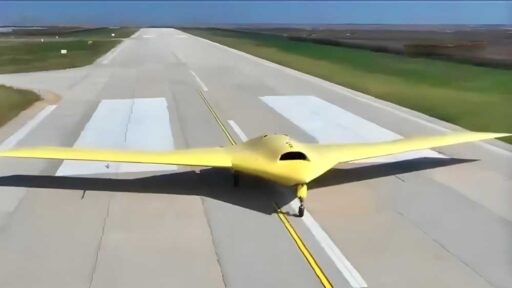
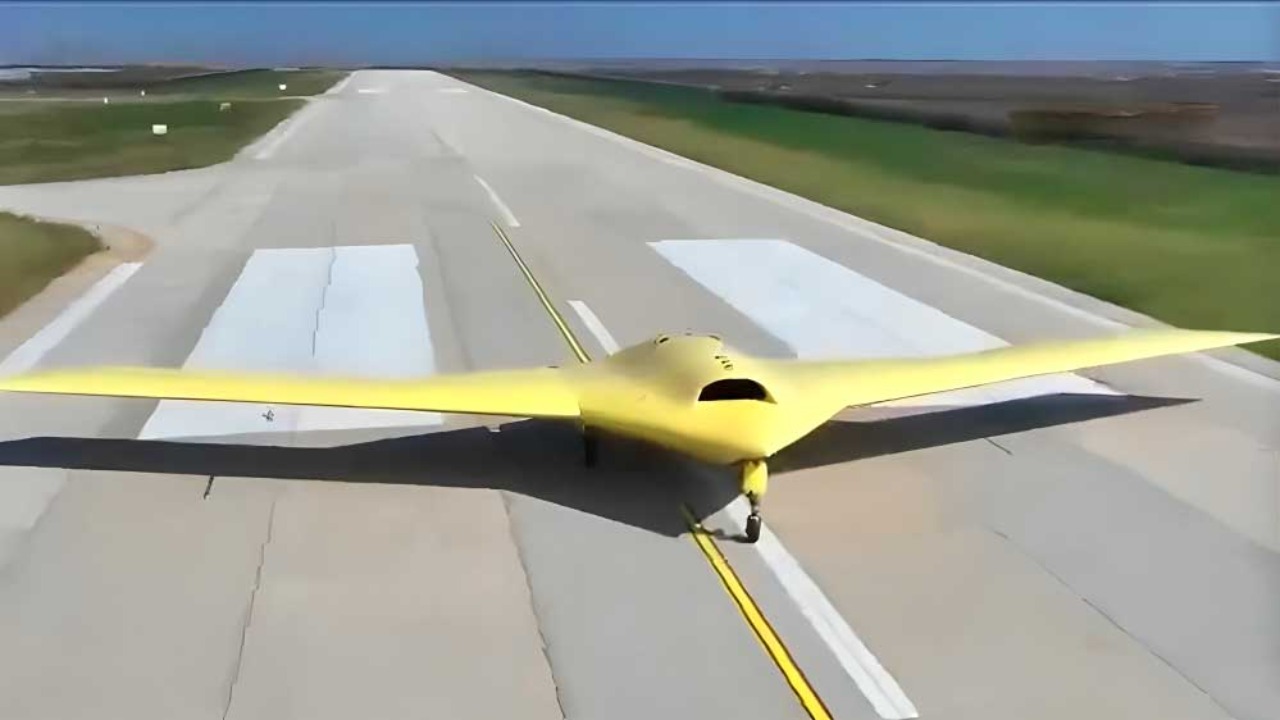

China’s state-owned China Aerospace Science and Technology Corporation has confirmed that its CH-7 stealth uncrewed flying-wing drone has completed its first flight in China, marking a major milestone for the country’s long-endurance, low-observable UAV program. The event advances a design that has been showcased in model form at air shows since at least 2018 and signals that the concept has now moved into full-scale flight testing.
CH-7’s First Flight and Official Confirmation
The CH-7 stealth uncrewed flying wing has completed its maiden flight in China, transitioning from a long-running development effort into active flight testing, according to reporting that describes the aircraft’s move from concept to operational prototype as a pivotal step for the program. Coverage of the event notes that the first flight confirms the existence of a full-scale airframe after years in which only models and mock-ups were visible, indicating that the project has cleared a major technical and organizational hurdle for China’s unmanned aviation sector.
China Aerospace Science and Technology Corporation’s CH-7 stealth drone is described as having successfully carried out this first flight as part of its test program, with Chinese media reports stating that the aircraft has now advanced to further trials that will expand its flight envelope and validate its systems. The South China Morning Post reports that China’s latest stealth endurance drone, the CH-7, has completed its maiden flight and underscores that this is the first time the full-scale aircraft has been publicly acknowledged as flying, a disclosure that signals growing confidence in the platform and carries implications for regional militaries tracking China’s emerging long-range strike and surveillance capabilities.
Design, Configuration, and Stealth Features
The CH-7 is described as a stealth uncrewed flying wing, indicating a tailless planform that is optimized for a low radar cross-section and long endurance, a combination that aligns it with other high-end unmanned combat air vehicles. Reporting from AeroTime on the CH-7 stealth uncrewed flying wing highlights that the aircraft’s configuration is intended to reduce its visibility to radar while supporting extended missions, a pairing that would make it a valuable asset for operations in heavily defended airspace where survivability and persistence are at a premium.
Additional analysis notes that the aircraft is a stealthy, long-endurance drone with a flying-wing configuration that visually echoes other low-observable designs, a point emphasized in The War Zone’s report on the CH-7, which situates the drone within a broader family of global stealth UAVs. Defence-focused coverage further stresses that the CH-7 is a stealth drone, with Defence Blog describing the CH-7 stealth drone as having low-observable characteristics that are central to its intended operational role, while reporting from the South China Morning Post on China’s latest stealth endurance drone underscores that extended time on station is a core design feature alongside its radar-evading shape, a combination that could complicate air defense planning for neighboring states.
Program Origins, Development Path, and Public Debut
Coverage of the CH-7’s development notes that the aircraft has been under work in China for years prior to this maiden flight, with earlier appearances in model form at aviation events that hinted at Beijing’s ambitions for a strategic flying-wing UAV. Reporting from Aviacionline on China’s strategic flying-wing UAV program links the CH-7’s first flight to a broader long-term plan rather than a one-off demonstrator, indicating that the drone is part of a structured effort to field operational systems that can perform high-value missions such as deep reconnaissance and penetration of air defenses.
Earlier in its life cycle, the CH-7 had been revealed as a concept and in mock-up form before confirmation that the full-scale drone is now flying, a progression detailed in multiple accounts that recall how the stealth drone was showcased in non-flying configurations at air shows. That multi-year path from display model to flight-capable prototype, described in Air Data News coverage of the CH-7 stealth UAV’s first flight, illustrates how China has moved from signaling intent to demonstrating tangible capability, a shift that will be closely watched by defense planners assessing the pace and direction of Chinese unmanned systems development.
Intended Roles, Capabilities, and Operational Concepts
Analysts identify the CH-7 as a long-endurance drone, implying potential roles in persistent surveillance, electronic warfare, or strike missions that can be sustained over extended periods without exposing crewed aircraft to risk. In its assessment, The War Zone characterizes the CH-7 as a stealthy, long-endurance platform that could be tasked with tracking naval groups, mapping air defenses, or providing targeting data for other assets, roles that would significantly enhance China’s ability to conduct complex, multi-domain operations far from its shores.
Other reporting frames the CH-7 as part of a strategic UAV program, suggesting that the aircraft is intended for high-value missions such as deep reconnaissance or penetrating air defenses that would be too dangerous or politically sensitive for crewed aircraft. Aviacionline’s description of the CH-7 as a strategic flying-wing UAV, combined with references to its endurance and stealth in Chinese media, indicates that Beijing is seeking capabilities that can keep an uncrewed platform on station for long durations while remaining difficult to detect, a combination that could support deterrence by signaling that key targets can be monitored or held at risk without warning.
Implications for China’s UAV Portfolio and Regional Balance
The CH-7’s first flight is positioned as a significant step in China’s efforts to field advanced uncrewed aircraft, adding a stealth flying-wing type to an already diverse drone portfolio that includes high-altitude reconnaissance platforms and armed medium-altitude systems. Reporting from AeroTime on China’s CH-7 stealth drone maiden flight notes that the event marks a key milestone in the development of advanced unmanned combat aircraft, reinforcing China’s status as a leading developer of unmanned aerial vehicles and signaling that its industry can now produce designs that compete in the stealth and long-endurance segments traditionally dominated by a small number of countries.
Analysts also underscore that the CH-7’s emergence as a flying prototype signals a maturing Chinese capability in long-endurance, low-observable UAVs that could influence regional airpower dynamics by narrowing the gap with nations that already field similar flying-wing unmanned platforms. As the CH-7 advances through further trials and moves closer to potential operational service, its combination of stealth, endurance, and strategic mission focus is likely to factor into regional defense planning, prompting neighboring states to invest in improved air and missile defenses, counter-UAV technologies, and their own long-range unmanned systems in response to China’s expanding ability to project power and gather intelligence across the Asia-Pacific.