
Archaeologists working in northern China have uncovered an 8th century Tang dynasty tomb whose walls are alive with color, movement and detail, yet one figure has eclipsed all the others. Among scenes of banquets, servants and animals, a single blond man with distinctly foreign features appears, a presence so unexpected that it has forced specialists to rethink how cosmopolitan this corner of the empire really was. The discovery of this fair haired stranger in an ancient Chinese tomb has become a vivid case study in how art, trade and identity intersected along the Silk Road.
The murals, preserved for more than 1,200 years, offer a rare glimpse into daily life in a Tang elite household and into the diverse people who moved through it. The blond figure, interpreted by several researchers as a Westerner or Central Asian merchant, is not a marginal doodle but a carefully rendered participant in the scene, suggesting that foreign traders were woven directly into the social fabric of the time rather than hovering at its edges.
The tomb that stopped archaeologists in their tracks
The burial chamber that set off this debate is an 8th Century Tang Dynasty Tomb Unearthed during a rescue excavation in Taiyuan, Shanxi Province, where construction work first exposed the underground structure. Archaeologists in Taiyuan documented a brick built chamber whose walls were covered from floor to ceiling with paintings of attendants, musicians and animals, a composition so elaborate that one report described it as China Reveals Vivid Murals and a Blond Foreigner offering a Rare Glimpse of Daily Life. The layout, with a sloping passage leading to a domed chamber, fits the pattern of high status Tang burials in north China, and the artistry suggests a family with money to spend on the afterlife.
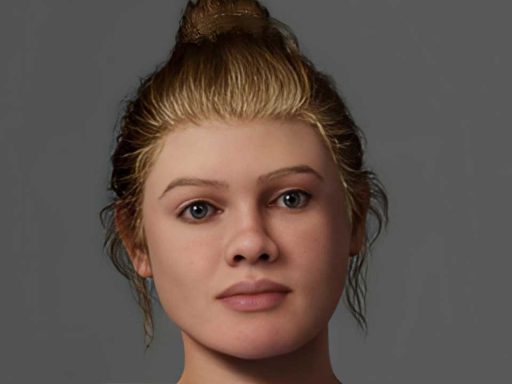
What set this tomb apart was not only the quality of the painting but the presence of a mysterious blond haired foreigner among the figures. In one mural, a man with light hair, a prominent nose and a full beard appears in profile, his features sharply distinguished from the surrounding Chinese attendants. Archaeologists noted that the pigments and brushwork around this figure match the rest of the decoration, confirming that he was part of the original program rather than a later addition, a detail that has been emphasized in analyses of the Tang Dynasty murals.
A Westerner in paint: decoding the blond figure
From the moment images of the murals circulated, specialists zeroed in on the foreign looking man, whose hair is painted a pale yellow and whose beard and facial structure differ from the surrounding figures. Archaeologists in northern China described the image as a Stunning Tang depiction that may portray a Westerner man with blond hair, noting that his clothing and posture resemble known representations of Central Asian traders. The figure’s boots, belted tunic and slightly turned stance echo other Tang era images of visitors from far to the west, details that have been highlighted in technical studies of the Stunning Tang mural.
Some commentators framed the discovery in more dramatic language, describing the scene as He Didn Belong There and casting the Mysterious Blond Man Discovered in a 1,200 Year Old Chinese Tomb as an outsider who somehow slipped into an otherwise Chinese space. Yet the broader context of Tang art suggests the opposite, that such foreigners were familiar presences in the cities and courts of the period. Scholars who see the man as a Sogdian from Central Asia point to similar faces in other tombs and reliefs, arguing that the blond hair and beard in this Tang painting are visual shorthand for a specific merchant community that had long standing historical connections with Central Asia, a view echoed in analyses of the Mysterious Blond Man motif.
Daily life on the Silk Road, frozen on a wall
Beyond the single foreign figure, the tomb’s paintings are a dense record of how an elite Tang household wanted to be remembered. Vivid murals of everyday life show servants carrying trays, grooms leading horses and women engaged in music and conversation, scenes that match descriptions of Vivid murals of everyday life Inside the Tang tomb found in Shanxi. One wall appears to depict a banquet, with low tables, food vessels and entertainers, while another shows animals that may symbolize status or auspicious wishes for the afterlife. The overall effect is less a solemn funerary tableau than a snapshot of a bustling estate, complete with staff and guests.
In that context, the blond man is not an anomaly but part of the household’s social world, perhaps a visiting trader or envoy whose presence signaled the family’s reach along the Silk Road between Asia and Europe. Reports on the excavation note that the tomb lies in a region that prospered from traffic along this route, and that the murals’ mix of Chinese and foreign elements reflects that cosmopolitan reality. When archaeologists Discovered a Mural Of a Western Man With Blonde Hair And Beard In An otherwise typical Tang setting, they underscored how such images confirm textual accounts of foreign merchants active in the region at that time, a point reinforced in studies of the Mural Of the Western Man.
From Sogdian merchants to Tarim mummies: a wider Eurasian web
Interpreting the blond figure as a Sogdian merchant fits a growing body of evidence that Central Asian traders were deeply embedded in Tang China’s economy and culture. One analysis framed the scene as The Unexpected Appearance of a Sogdian Merchant, arguing that the man’s features and dress align with known depictions of Sogdians who managed caravans along this ancient trade route. These merchants, based in cities like Samarkand and Bukhara, acted as intermediaries between China and regions as far as the Mediterranean, and their presence in tomb art suggests that their role was recognized and valued by Tang elites, a conclusion supported by research into Unexpected Appearance of such figures.
The idea of a blond or light haired person in ancient China is not unprecedented. In 1980, archaeologists discovered perfectly preserved mummies in the Tarim Basin whose hair colors ranged from brown to blond, providing concrete evidence of long distance travel and cultural exchange across Central Asia far earlier than previously assumed. These finds, documented by teams from the Chinese Academy of Sciences, showed that populations with European like features had been present in what is now western China for millennia, a pattern that contextualizes the later Tang era murals and is summarized in discussions of Central Asia and the Tarim discoveries.
Why one blond man matters for Tang history
For archaeologists, the power of this discovery lies in how it collapses abstract ideas about globalization into a single, concrete image. The Tang dynasty is often described as a golden age of openness, yet that characterization can feel vague until a viewer confronts a painted wall where a Chinese host and a foreign guest share the same space. Analyses of the Century Tang Dynasty Tomb Shows Ancient China Daily Life and a Blond Foreigner Who Stands Out emphasize that the murals do not exoticize the foreigner with monsters or fantastical beasts, but instead place him among servants and animals in a realistic setting, a choice that suggests familiarity rather than fear, as highlighted in studies of the Blond Foreigner Who.
The broader debate over the Tarim Basin mummies shows how such finds can reshape narratives far beyond a single tomb. Discussions of Such mysteries around The Tarim Basin mummies note that these remains have sparked debates about migration, trade and the shared human story stretching across continents, with some researchers using genetic and textile evidence to trace connections from western China to Europe and the Middle East. In the same way, the blond man in the Tang mural has become a touchstone for conversations about identity and belonging in early medieval East Asia, reminding viewers that categories like “Chinese” and “Westerner” were already entangled more than a thousand years ago, a point underscored in reflections on The Tarim Basin finds.