
United Launch Alliance’s Atlas V rocket is slated to loft 27 of Amazon’s Project Kuiper internet satellites to low Earth orbit from Cape Canaveral Space Force Station early on Dec. 15, marking a key deployment step for the tech giant’s planned broadband megaconstellation. The mission, known as LEO 4, will continue Amazon’s transition from initial prototype tests toward building out operational satellite capacity in orbit.
Launch plan and how to watch
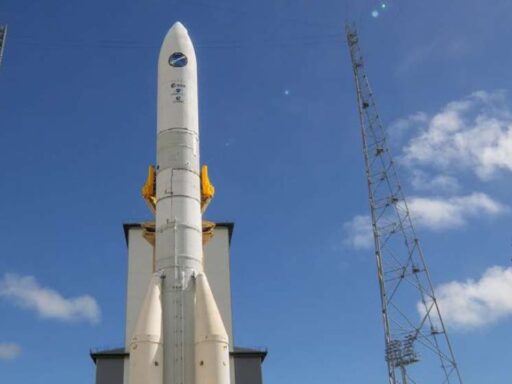
The LEO 4 mission will rely on a proven workhorse, with United Launch Alliance assigning its Atlas V rocket to carry Amazon’s latest batch of satellites into space. Liftoff is planned from Cape Canaveral Space Force Station in Florida during an early Dec. 15 launch window, a timing that positions the vehicle for a direct climb into low Earth orbit tailored to Project Kuiper’s needs. For viewers, that schedule means a pre-dawn or early-morning spectacle along Florida’s Space Coast, with the familiar bright exhaust plume of Atlas V rising over the Atlantic as the mission gets underway.
United Launch Alliance typically provides a live webcast for Atlas V flights, and the LEO 4 launch is expected to follow that pattern so that audiences far from Cape Canaveral can follow each major milestone in real time. The broadcast will track the countdown, ignition of the first-stage engine, booster separation and upper-stage burns that shape the trajectory toward the targeted orbit. For Amazon, widespread coverage of the launch is not only a public showcase of its hardware but also a way to signal progress to customers, regulators and investors who are watching how quickly Project Kuiper can move from concept to operational infrastructure.
What the LEO 4 mission is carrying
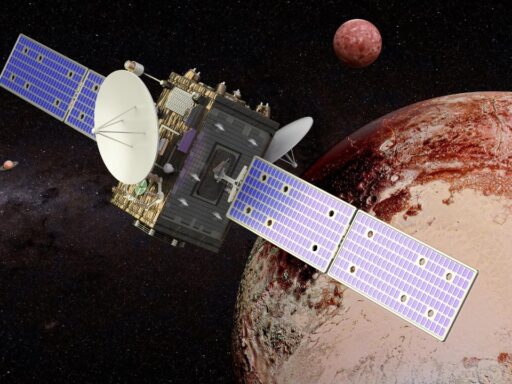
At the heart of the LEO 4 flight is a payload of 27 of Amazon’s Project Kuiper internet satellites, a cluster that significantly expands the number of spacecraft the company has in orbit. According to the Atlas V mission overview, these 27 spacecraft are part of Amazon’s planned low Earth orbit broadband constellation under Project Kuiper, which is designed to deliver high-speed internet connectivity to users on the ground. Each satellite in this batch is built to integrate into a larger network architecture that will eventually span multiple orbital planes and provide overlapping coverage across wide geographic regions.
The LEO 4 launch profile calls for Atlas V to deploy the satellites into low Earth orbit, placing them at altitudes suited for low-latency communications and efficient handoffs between spacecraft and user terminals. Once released, the satellites will undergo initial checkouts, orbit-raising maneuvers and network integration steps that prepare them to support future commercial internet service, as described in the LEO 4 launch outline. For communities that lack reliable terrestrial broadband, the eventual activation of these satellites represents a potential new option for connectivity, while for Amazon it marks tangible progress toward turning Project Kuiper into a revenue-generating platform that can compete with other satellite internet providers.
Project Kuiper’s progress and what’s new
The LEO 4 mission represents a continued build-out of Amazon’s Project Kuiper constellation beyond earlier prototype test flights that focused on validating core technologies. Earlier in the program, Amazon used smaller missions to test satellite buses, communications payloads and ground segment integration, gathering data on how its designs performed in the real space environment. By contrast, LEO 4 is structured as an operational-scale deployment, signaling that the company is confident enough in its hardware and software to begin populating the constellation with satellites intended for long-term service rather than short-lived experiments.
Placing 27 additional satellites into orbit marks a clear scale-up in hardware deployment compared with prior smaller test missions, a shift that underscores Amazon’s urgency in building out Project Kuiper. The LEO 4 launch is framed as a key step toward Amazon’s goal of offering space-based broadband service through Project Kuiper, moving the company closer to the threshold where it can begin limited regional coverage and pilot offerings. For stakeholders such as rural internet users, enterprise customers and government agencies, this acceleration suggests that more competition and capacity could arrive in the satellite broadband market in the coming years, potentially driving improvements in pricing, performance and resilience.
Role of United Launch Alliance and Atlas V
United Launch Alliance is the launch provider responsible for flying the Atlas V rocket on the LEO 4 mission, extending a long-running partnership between the company and commercial satellite operators. Atlas V has built a reputation for reliability across a wide range of missions, and for this flight it is being used to deploy Amazon’s 27 satellites on the specific LEO 4 trajectory from Cape Canaveral Space Force Station. That choice reflects Amazon’s interest in pairing its emerging constellation with a launch system that has a strong track record of delivering payloads to precise orbits, a factor that can reduce the time and fuel needed for satellites to reach their operational slots.
The LEO 4 mission also continues Atlas V’s record of launching commercial and government payloads from Cape Canaveral Space Force Station, reinforcing the site’s role as a central hub for U.S. orbital access. Over its career, Atlas V has supported national security missions, interplanetary probes and commercial communications satellites, and the addition of Project Kuiper to that manifest highlights how legacy launch vehicles are being used to seed new space-based infrastructure. For United Launch Alliance, successful execution of LEO 4 demonstrates its ability to support large-scale constellation deployments, while for Amazon it provides a dependable path to orbit as the company ramps up the cadence of Kuiper launches.
What viewers can expect during the launch
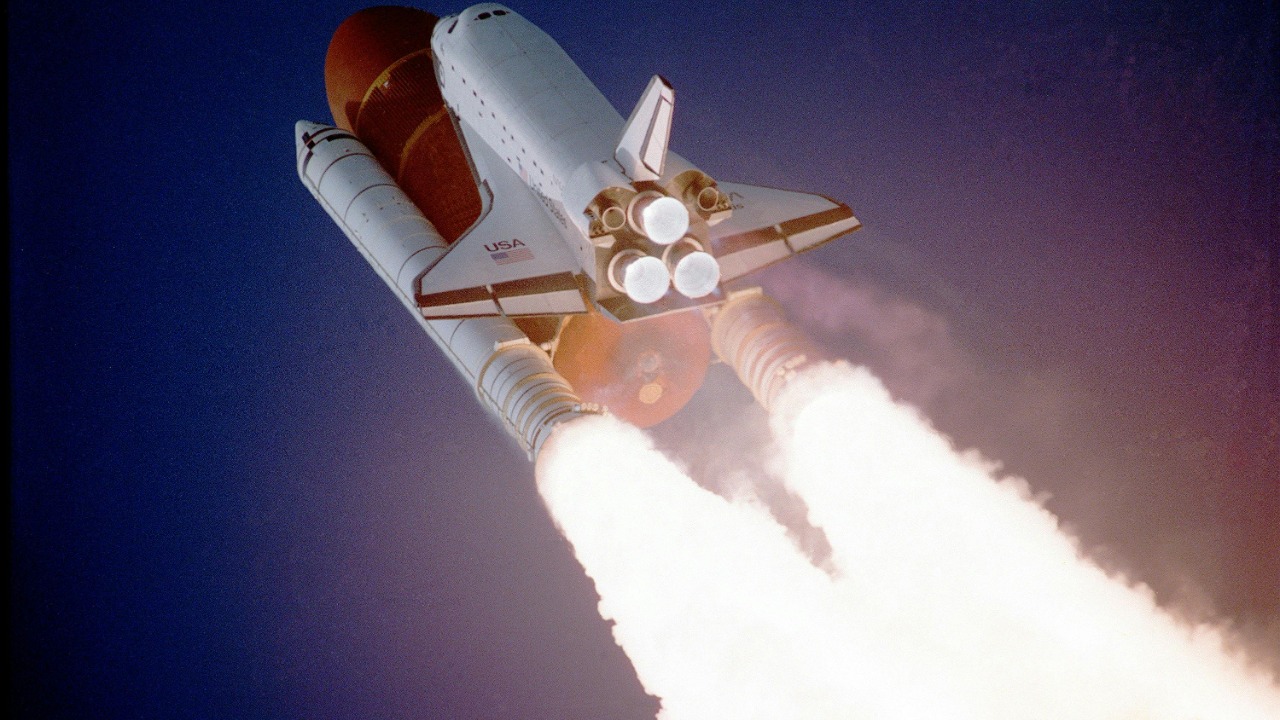
Viewers tuning in during the early Dec. 15 launch window will see Atlas V ignite on the pad at Cape Canaveral Space Force Station and begin a steep climb through the lower atmosphere, with the rocket’s first stage providing the initial thrust needed to clear the tower and build speed. As the vehicle ascends, the webcast will typically highlight key events such as max-Q (the point of maximum aerodynamic pressure), booster engine cutoff and stage separation, followed by ignition of the upper stage that carries the 27 Project Kuiper satellites toward low Earth orbit. For those watching from the Space Coast, the combination of the rocket’s bright exhaust trail and the pre-dawn sky should make for a visually striking ascent that underscores the scale of the mission.
According to the LEO 4 mission outline, the flight profile includes liftoff, ascent to low Earth orbit and a carefully timed sequence of deployments that release the 27 satellites into their planned orbital paths. The broadcast is expected to focus on both the performance of Atlas V and the significance of adding 27 satellites to Amazon’s Project Kuiper constellation, emphasizing how each successful deployment contributes to the network’s eventual coverage and capacity. For the broader space industry, the sight of a heavy manifest of broadband satellites riding a single rocket illustrates how launch providers and constellation operators are coordinating to maximize each flight, a trend that is reshaping how infrastructure in low Earth orbit is built and expanded.