
A pinpoint flash on the Moon, captured in real time by a robotic telescope in Ireland, has given astronomers a rare look at a high-speed impact as it happened. For a fraction of a second, a tiny object slammed into the lunar surface, releasing enough energy to briefly outshine the surrounding landscape and leave a fresh crater in the dust.
Events like this occur frequently on the Moon, but almost never when a camera is already trained on the right spot with the right sensitivity. That is what makes this recording so valuable: it turns a fleeting glint into hard data about how often the Moon is hit, how fast impactors travel, and what that means for future spacecraft and human explorers.
How a split-second flash became a historic first
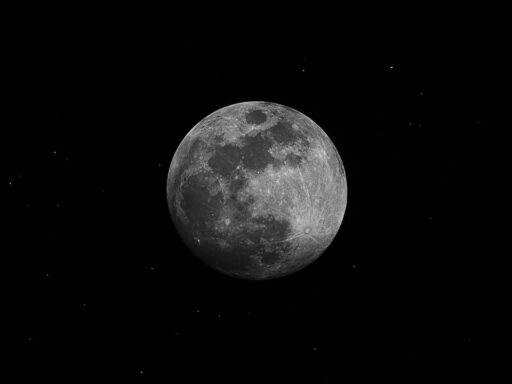
The new footage comes from an astronomer working at Armagh Observatory and Planetarium, who was monitoring the night side of the Moon when a sudden burst of light appeared on the unlit surface. The observer was using the Armagh Robotic Telescope, known as Armagh Robotic Telescope or ART, which can be programmed to track subtle changes in brightness across the lunar disk. The resulting clip shows a crisp, isolated flash on the darkened surface, believed to be the first video recording of a lunar impact flash from the island of Ireland, and one of only a small number ever captured from Earth.
Lunar impact flashes are notoriously elusive because they are both brief and faint, typically lasting less than a second and occurring on the Moon’s night side where contrast is highest. The Armagh astronomer, identified as Mr Marshall-Lee in some reports, described these events as rare and difficult to detect, since the incoming objects are usually no bigger than a golf ball and leave only a tiny scar on the surface. Yet the flash he recorded was bright enough to stand out clearly on video, confirming that a small meteoroid, likely debris left behind by comets or asteroids, struck the Moon at high speed and vaporized on impact, as detailed in coverage of the rare footage.
What actually hit the Moon
To understand what produced the flash, it helps to remember that the Moon has no atmosphere to slow down incoming rocks. Instead of burning up as meteors, objects slam straight into the surface, converting their kinetic energy into heat and light at the moment a crater forms. As one researcher, identified as Fujii, put it, “Since the moon has no atmosphere, meteors cannot be seen, and it lights up at the moment a crater is formed,” a description shared in an analysis of mysterious flashes. That is exactly what the Armagh video appears to show: the instant a new crater was carved into the regolith.
Follow-up analysis suggests the impactor was a small meteoroid traveling at tens of thousands of miles per hour, consistent with other recorded lunar strikes. A detailed breakdown of how the Armagh team spotted the event notes that the object likely hit at about 78,000 miles per hour, fast enough to vaporize rock and generate a visible burst of light even if the impactor itself was only a few centimeters across. That speed estimate comes from reconstructions of similar events described in a technical account of how the lunar impact flash was spotted, which outlines the typical velocities of meteoroids that produce such flashes.
Inside the Armagh campaign to watch the Moon
The recording did not happen by accident. Armagh Observatory and Planetarium, often referred to as AOP, has been building up a program specifically designed to catch these fleeting events. Astronomers at the site use ART to monitor the unlit portion of the Moon, cycling through fields of view and using software to flag sudden spikes in brightness that could indicate an impact. The institution has described the observer simply as an Astronomer at Armagh Observatory and Planetarium, underscoring that this was part of a broader scientific effort rather than a lucky amateur snapshot.
Reports on the observation emphasize that the flash was captured on a Friday during a scheduled run of the robotic system, not during a one-off experiment. Mr Marshall-Lee explained that these flashes are normally too faint to see with the naked eye and that the odds of catching one improve only when telescopes are watching for long stretches of time. He also pointed out that the objects involved are usually fragments left behind by comets and asteroids, which intersect the Moon’s orbit and occasionally collide with the surface. That context, including his comments about the size of the impactors and the role of long-term monitoring, is laid out in coverage of how the event was recorded using ART at AOP.
Why a brief flash matters for future missions
At first glance, a tiny flash on a distant world might seem like a curiosity rather than a breakthrough. In reality, each recorded impact helps refine models of how often the Moon is hit and how dangerous that environment is for spacecraft and, eventually, human habitats. Mr Marshall-Lee has noted that a lot of missions are now targeting the lunar surface, including projects linked to the European Space Agency, and that understanding the frequency and energy of impacts is essential for designing landers, rovers, and protective shielding. His comments on the growing number of missions and the need for better impact statistics are highlighted in the same detailed account of the lunar impact flash.
There is also a scientific payoff that goes beyond engineering. By measuring the brightness and duration of a flash, astronomers can estimate the mass and speed of the impactor, then compare those figures with models of how debris from comets and asteroids is distributed through the inner Solar System. Over time, a catalog of such events can reveal whether certain meteor streams pose a greater risk to the Moon or whether impact rates change with the seasons. The Armagh observation feeds into that larger dataset, complementing other recorded events and helping to calibrate the global network of telescopes that watch for these flashes, as described in technical discussions of meteorite flashes.
A growing global effort to catch lunar impacts in real time
The Armagh recording is part of a broader shift in how astronomers monitor the Moon. Around the world, observatories and dedicated amateurs are building coordinated campaigns to watch the lunar night side, often using automated systems that can run for hours without human intervention. One recent report described how a small object crashed into the Moon at breakneck speed and was captured in full by a team that later shared the footage with science communicators such as Katy, who has a BA in Humanities and Philosophy and has spent more than 20 years in online and print publishing. Her write-up of how something crashed into the Moon at high speed underscores how these events are now being documented and shared with a wide audience almost as soon as they are detected.
In Ireland, the new flash has already been framed as a stroke of good fortune for the astronomer involved, who has spoken about his surprise at witnessing such a rare event in real time. Coverage of the observation notes that he recognized his fortune at seeing the flash and capturing it on video, a sentiment echoed in reports that describe the event as a rare lunar impact flash. That sense of wonder is part of what makes these recordings so compelling: they turn an abstract idea about space rocks and craters into a visible, time-stamped moment that anyone can watch.
From a single flash to a map of the Moon’s hazards
As more of these events are logged, astronomers are beginning to see patterns that could shape how future missions are planned. By combining impact flash data with detailed maps of the lunar surface, researchers can identify regions that appear to receive more hits, perhaps because of their position relative to common meteor streams. Those maps can then be layered onto high resolution imagery from orbiters and landers, including datasets accessible through tools such as interactive lunar viewers that let scientists and the public explore craters, maria, and landing sites in detail.
The Armagh flash, recorded in a video that has been shared widely online, is already being folded into that emerging picture. Clips of the event, including versions circulated through platforms that also carry unrelated headlines such as “Mortgage Rates Fall Off a Cliff to a 3-Year Low. Finally Time to Refi?”, show the unmistakable pinpoint of light on the Moon’s dark limb, confirming that the detection was not a camera glitch or stray reflection. That footage, highlighted in a segment on a lunar impact flash detected by Armagh, gives mission planners one more data point as they weigh where to send landers, how to orient habitats, and what level of shielding to build into long term lunar infrastructure.
For now, the flash is a reminder that the Moon is not a static, dead world but a place still being shaped, grain by grain, by the Solar System around it. Each new recording, whether from Armagh or from other observatories, adds another pixel to our understanding of that ongoing bombardment. As I watch the clip of the tiny burst of light, I see not just a single impact but the outline of a future in which we track these events as routinely as we monitor weather on Earth, using them to keep astronauts safe and to read the history written into the Moon’s scarred surface.