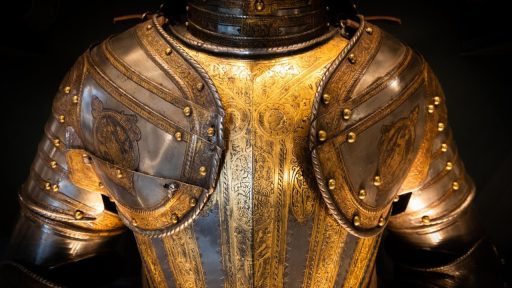
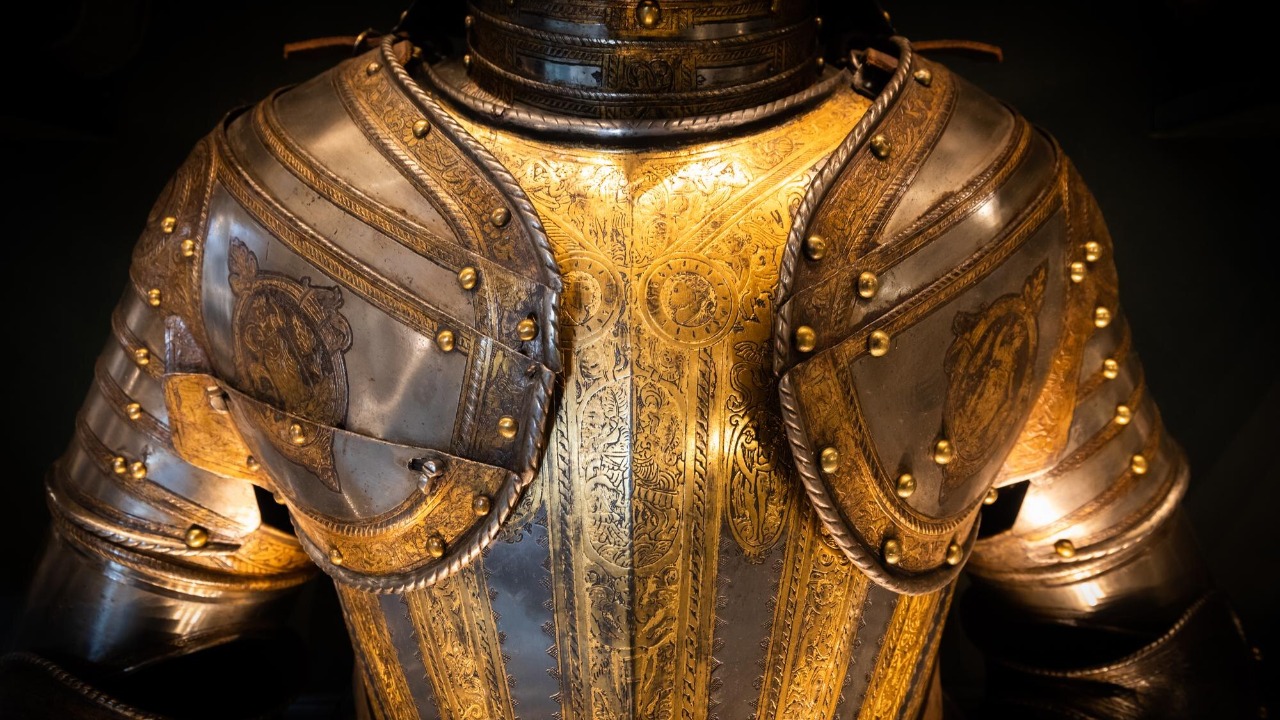

Archaeologists working high on the Tibetan Plateau have uncovered a suit of gilded armor that many specialists long dismissed as a courtly exaggeration. The find, sealed in a royal tomb for roughly 1,200 years, turns a fragmentary legend of “golden armour” into a tangible object that researchers can finally study. For the first time, scholars can compare centuries of written descriptions with a complete, reconstructed suit that once wrapped the body of an elite Tang dynasty warrior.
The discovery is already reshaping how I think about power, technology, and cultural exchange in early medieval Asia. What had sounded like poetic hyperbole now appears as a calculated display of wealth and military prestige, forged in metal and buried with a ruler whose identity is still being pieced together. The armor’s journey from myth to museum specimen shows how quickly a single excavation can redraw the boundaries between story and history.
The tomb on the Tibetan Plateau that changed the debate
The breakthrough began with the excavation of a royal burial complex on the Tibetan Plateau, where Chinese archaeologists identified a 1,200-year-old tomb linked to the Tang dynasty’s expansion into the region. The chamber, cut into the high-altitude landscape, held the remains of a high-status individual surrounded by grave goods that signaled both political authority and military command. Among ceramics, weapon fittings, and fragments of textiles, conservators started to notice thin, shimmering plates that did not match the usual bronze or iron finds from similar sites.
As the team carefully lifted and catalogued the corroded pieces, it became clear that they were dealing with a full suit of armor rather than scattered ornaments. The plates, once stitched or laced together, had been laid over the deceased in a way that mirrored how the suit would have been worn in life. That context, combined with the tomb’s location on the Tibetan Platea, pointed to a frontier aristocracy that fused imperial Chinese styles with local power structures. For a long time, China’s historians had only texts and paintings to work from when discussing such armor, with no real example to examine in three dimensions.
From scattered plates to a reconstructed “golden armour”
Turning a collapsed burial into a recognizable suit required years of conservation work, and that process is as important as the discovery itself. Specialists in metal preservation first stabilized the fragile plates, many of which had fused to soil or organic remains, then used microscopy and chemical analysis to confirm that the surfaces were gilded rather than solid gold. The pattern of holes and lacing channels on each piece allowed researchers to map how the armor once wrapped around the torso, shoulders, and thighs, revealing a flexible lamellar design that balanced protection with mobility.
Once the layout was understood, conservators mounted the plates on a neutral backing to recreate the armor’s original silhouette. The result is a full-body suit that gleams under museum lights, its gilded surfaces catching the eye in a way that explains why contemporaries singled it out in their writings. Chinese archaeologists have described it as the only surviving example of the fabled “golden armour” associated with Tang elite soldiers, a claim supported by the painstaking reconstruction documented in detailed reports. The work shows how modern science can literally stitch a legend back together from fragments that earlier looters and erosion had nearly erased.
Why golden armor was long dismissed as a myth
Before this tomb came to light, many historians treated references to golden armor in Tang texts as symbolic rather than literal. Court poetry and official histories often used gold as shorthand for glory, divine favor, or imperial generosity, and without physical evidence it was easy to assume that descriptions of fully gilded suits were exaggerations. Artistic depictions from the period show richly decorated armor, but pigments and stylized motifs left room for doubt about how much actual precious metal was involved.
That skepticism was reinforced by the archaeological record, which had yielded iron and steel armor, some with decorative inlays, but nothing approaching a complete gilded suit. Scholars argued that if such spectacular equipment had existed in any number, at least one example should have survived in a major burial or hoard. The absence of finds, combined with the high cost of gold, led many to conclude that the stories were metaphorical. The new armor, recovered from a royal tomb and now preserved as a coherent set, directly challenges that assumption and forces a reassessment of how literally to read those earlier descriptions of “gold armour”.
What the armor reveals about Tang power and frontier politics
With a complete suit finally in hand, researchers can ask what purpose such lavish equipment served in the first place. The gilded plates would have offered some protection, but their thinness and the softness of gold suggest that battlefield durability was not the primary goal. Instead, the armor reads as a mobile display of wealth and imperial backing, designed to dazzle allies and intimidate rivals during parades, diplomatic meetings, or ritual inspections. On the Tibetan frontier, where the Tang court competed with powerful local polities, such visual statements of strength would have carried real political weight.
The tomb context supports that interpretation. The individual buried with the armor appears to have been a royal or princely figure, someone who embodied both military command and ceremonial authority. The presence of imported goods and high-quality weapon fittings hints at a life spent navigating between the central Chinese court and regional power brokers. In that light, the golden suit becomes a kind of wearable treaty, signaling loyalty to the Tang while asserting local status. Accounts of a Tang elite whose armor literally shone now look less like fantasy and more like a calculated investment in soft power.
How archaeologists realized what they had actually found
Even for the excavation team, recognizing the armor’s true significance was not instantaneous. Early in the dig, the corroded plates could have been mistaken for decorative horse gear or coffin fittings, especially given the heavy looting that had disturbed parts of the tomb. It was only after conservators began aligning the fragments and noting the consistent curvature and lacing patterns that a full-body suit emerged from the chaos. At that point, the researchers had to confront the possibility that they were handling the very type of legendary equipment that earlier generations had written off.
Reports describe a moment of realization when the pattern of gilded plates, once laid out, matched textual descriptions that had circulated for centuries. The team, which had initially approached the find as a high-status but conventional burial, now understood that they were dealing with a unique survival. One account of the project notes that the archaeologists, identified collectively as Archaeologists Found, had to recalibrate their expectations about what frontier tombs could contain. The shift from routine excavation to landmark discovery underscores how much interpretation depends on patient reconstruction rather than first impressions.