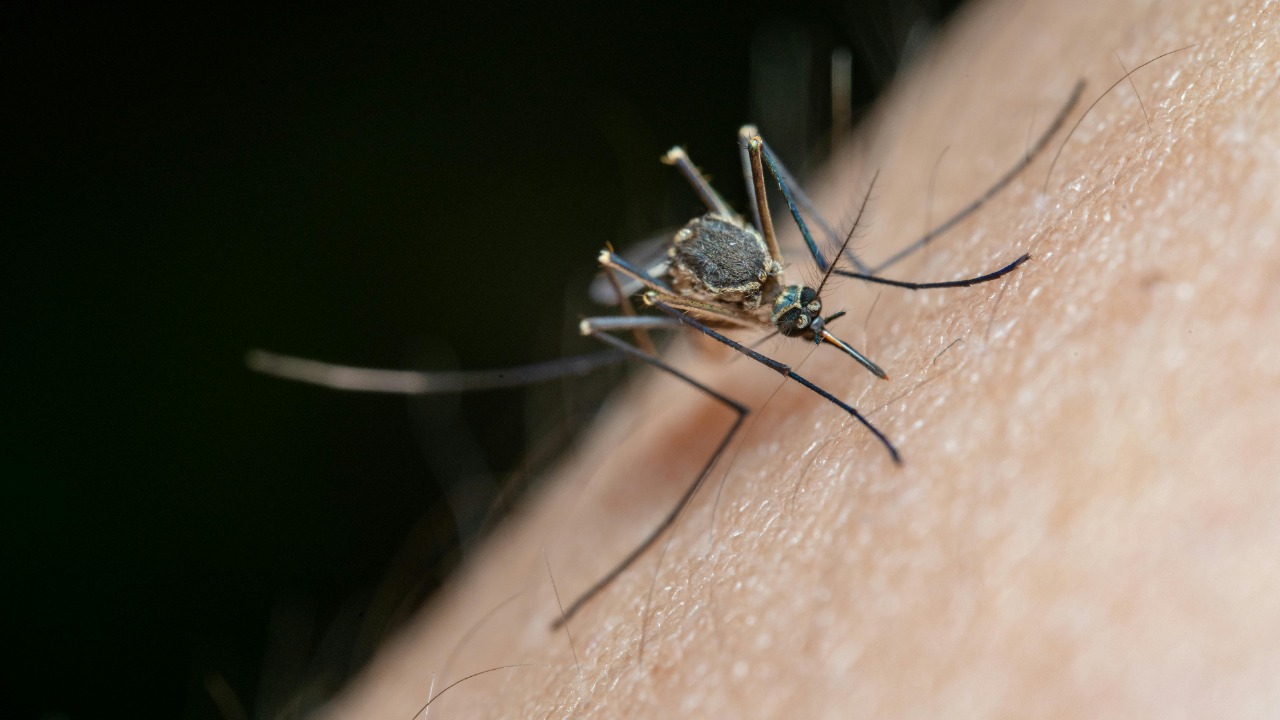

For years, travelers have swapped horror stories about summer in Florida and Texas, assuming the worst mosquito problems were clustered along the Gulf Coast. The latest national rankings tell a different story. The most mosquito-infested city in the United States right now is Los Angeles, a sprawling Southern California metropolis far from the swampy stereotype.
That top spot is not a fluke. Pest control data show Los Angeles has become the country’s mosquito capital for multiple seasons in a row, while other big hubs like Chicago and New York City are climbing the list as warming temperatures reshape where these insects thrive. I want to unpack how Los Angeles landed at number one, why the rest of the top tier looks nothing like the old map of mosquito country, and what that means for anyone planning to spend time outside.
Los Angeles tops the mosquito list, again
Los Angeles is better known for traffic and wildfire smoke than biting insects, yet it now ranks as the nation’s leading mosquito city. According to pest control company Orkin, its 2025 Top 50 Mosquito Cities List is based on the number of new residential mosquito treatments from April 1, 2024, to March 31, 2025, and Los Angeles came out on top. That means more households there called in professionals for mosquito relief than in any other metro, a clear signal that the problem has shifted from nuisance to full-blown quality-of-life issue.
The city’s size and geography help explain why it keeps landing in first place. Greater Los Angeles, California stretches from dense coastal neighborhoods to inland valleys where heat lingers and yards are packed with pools, fountains, and planters that can hold standing water. Another Orkin breakdown notes that from April 2024 through March 2025, Los Angeles held the number one position while traditional mosquito strongholds such as New Orleans slipped, underscoring how much the center of gravity has moved west.
Climate change and invasive species are rewriting LA’s mosquito story
Los Angeles did not always have this reputation. For much of the twentieth century, its semi-arid climate and extensive water infrastructure limited mosquito breeding compared with wetter regions. That balance is changing as warmer conditions and erratic precipitation patterns reshape Southern California. Reporting on climate impacts notes that For Los Angeles, mosquitoes are now described as an unwelcome and invasive presence, with local agencies in Southern California mounting aggressive campaigns to control them.
Those campaigns are a response to both discomfort and disease risk. Health officials have warned that invasive species can carry viruses that cause thousands of infections annually, and one analysis tied mosquito-borne illnesses to about 2,000 cases per in the United States. In a region that already struggles with heat waves and wildfire smoke, the arrival of aggressive day-biting mosquitoes adds another layer of stress for residents of Los Angeles and neighboring communities.
Chicago, New York City and other northern hubs are catching up
Los Angeles may hold the crown, but it is not alone at the top. Orkin’s 2025 Top 50 Mosquito Cities List shows that Chicago and New York City are also among the most heavily affected metros. One industry summary notes that, according to Orkin’s 2025 Top 50 Mosquito Cities List, According to that ranking, Los Angeles claims the No. 1 spot for the fourth year in a row, with Chicago and other northern cities climbing as temperatures rise. Another report highlights that in addition to L.A., some of the most affected cities included Chicago and New, underscoring how far the problem has spread beyond the Sun Belt.
These are not fringe markets. Chicago, IL sits on Lake Michigan, with humid summers and a dense urban core that can trap heat, while New York, NY combines coastal marshes, aging infrastructure, and millions of residents who rely on small outdoor spaces. A separate rundown of the worst mosquito seasons notes that the top 10 cities for summer mosquito activity include Los Angeles and Chicago, reinforcing that the nation’s biggest economic centers are now also mosquito hot spots.
Beyond LA: a reshuffled top tier of mosquito cities
Once you look past Los Angeles, the rest of the rankings read like a cross-country tour of places grappling with changing summers. A professional pest management summary of Orkin’s Top 50 Mosquito Cities List for 2025 notes that the company released its annual Top 50 Mosquito Cities List and that Mosquito Cities List anchored the top, with other large metros close behind. Another overview aimed at facilities managers points out that the Top 50 Mosquito Cities List tracks where mosquito swarms are worst and that Los Angeles has held the No. 1 position while northern cities climb as temperatures rise, a trend that is reshaping how building operators think about outdoor spaces and standing water.
Consumer-focused guides have tried to translate those rankings into practical advice. One breakdown of the worst mosquito problems for the coming summer explains that 25 U.S. cities are expected to struggle, warning that Nothing ruins a picnic, barbecue, or backyard gathering faster than a swarm of bites. Another consumer list notes that the top 10 cities predicted to have the most mosquito activity this summer include Here Los Angeles and Chicago, reinforcing that the same cities dominating the professional treatment rankings are also where everyday outdoor life is being reshaped.
What this means for residents from Atlanta to Denver
The mosquito surge is not limited to the coasts or the Midwest. In the Southeast, Atlanta, GA remains a perennial hotspot, with humid summers and tree-lined neighborhoods that create ideal breeding pockets. Farther north, Cleveland, OH and Detroit, MI are seeing more intense mosquito seasons as warmer weather arrives earlier and lingers longer. A facilities-focused analysis notes that Orkin’s Top 50 Mosquito Cities List tracks how mosquito activity is expanding into northern cities as temperatures climb, a pattern that matches what residents in these Great Lakes metros are reporting.
Even traditionally drier or more temperate regions are not immune. In the Mountain West, Denver, CO has seen enough mosquito pressure to land on national watch lists, while in the mid-Atlantic, Washington, D.C. combines swampy origins with dense development that can trap water in gutters, planters, and construction sites. In Texas, Houston, TX and Dallas, TX remain firmly in the mix, while in California, the broader Los Angeles, CA region continues to anchor the national rankings.