
When President Donald Trump intensified pressure on Venezuela in late 2025, the official explanation centered on drugs, migration, and Nicolás Maduro’s government.
But another fact made the confrontation impossible to separate from energy geopolitics:
Venezuela possesses the largest proven crude-oil reserves in the world.
At the time, Venezuela was estimated to hold roughly 303 billion barrels of proven crude reserves—more than Iraq and even Saudi Arabia. Yet it was producing only around one million barrels per day, a fraction of its historical output.
That created an extraordinary contradiction. One of the world’s most oil-rich countries had become a relatively minor producer.
And as Washington dramatically increased military pressure around Venezuela, the question became unavoidable:
How much did oil matter?
The Threat Was Much More Than Political Rhetoric
By December 2025, the United States had assembled a major military presence in the Caribbean.
CNN reported roughly 15,000 U.S. personnel in the region along with numerous warships, while Trump had been publicly discussing possible military action against Venezuela.
Reuters separately reported that Washington had been carrying out strikes against suspected drug-smuggling vessels and building up substantial military forces while the administration considered its next steps against Maduro.
The Trump administration argued that its campaign was connected to narcotics trafficking, illegal migration, and national security.
Maduro offered a completely different explanation.
He accused Washington of wanting Venezuela’s oil.
That allegation was disputed by the U.S. government, and oil should not simply be presented as a proven explanation for the administration’s military strategy.
But economically, Venezuela’s petroleum resources were far too significant to ignore.
Venezuela Has More Proven Oil Than Iraq
When people think about enormous oil reserves, they usually think about Saudi Arabia, Iraq, Kuwait, or other Persian Gulf producers.
Venezuela beats all of them on the conventional measure of proven reserves.
Its roughly 303 billion barrels represented close to one-fifth of global proven reserves in the figures cited at the time.
That is an almost unimaginable quantity of petroleum.
Yet having oil underground and producing it economically are two very different things.
Venezuela demonstrates that better than almost anywhere.
Venezuela Was Producing Surprisingly Little Oil
Despite its enormous reserves, Venezuela was producing only about one million barrels per day in late 2025.
That represented less than 1% of global crude production.
Historically, the situation was very different.
Venezuela once produced around 3.5 million barrels per day.
Years of economic crisis, political instability, sanctions, insufficient investment, deterioration of infrastructure, and problems at state oil company PDVSA contributed to a dramatic decline.
That meant Venezuela was simultaneously an oil superpower underground and a weakened producer above it.
For international energy companies, that represented enormous potential—but also enormous difficulty.
Venezuelan Oil Isn’t Easy Oil
There is another reason the headline reserve number can be misleading.
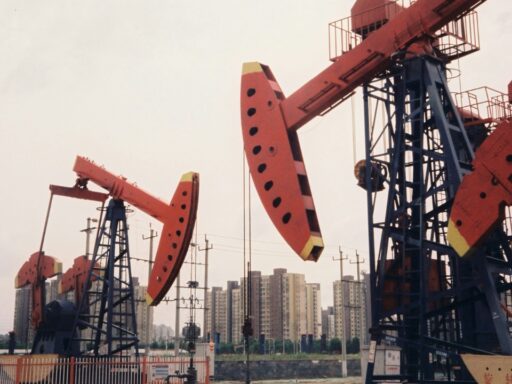
Much of Venezuela’s petroleum is heavy, sour crude.
That means it is thicker and contains more sulfur than lighter crude.
Producing, transporting, and refining it requires specialized equipment and greater processing than many lighter grades.
So Venezuela cannot simply open a valve and suddenly flood world markets with hundreds of billions of barrels.
Restoring production would require enormous investment.
CNN reported estimates that returning infrastructure toward previous production capacity could require around $58 billion, while PDVSA had said some pipelines had not been updated in decades.
Even with sanctions removed and foreign companies allowed to invest freely, a major production increase would take years.
So Why Would the United States Care?
Because heavy Venezuelan crude has characteristics that matter to American refineries.
The United States produces enormous quantities of oil domestically, much of it relatively light crude.
Some U.S. Gulf Coast refineries, however, were designed to efficiently process heavier grades like those historically imported from Venezuela.
That makes Venezuela geographically and technically interesting.
It is relatively close to the United States.
It possesses extraordinary reserves.
And its heavy crude can complement lighter American production.
That does not establish that oil was the reason for U.S. military pressure.
It explains why the energy consequences of political change in Venezuela would be substantial.
There Was Also a Russia and China Angle
Venezuelan oil matters beyond American refineries.
Energy is geopolitical power.
China has maintained extensive economic relationships with Venezuela, while Russia has historically supported Caracas and maintained interests in its energy sector.
A Venezuelan government more closely aligned with Washington could potentially redirect investment and petroleum relationships toward American and other Western companies.
It could also eventually provide additional heavy crude to global markets.
That could compete with other exporters.
CNN’s analysis noted that expanded Venezuelan capacity could potentially provide alternatives to Russian crude for some buyers over the longer term.
So Venezuela’s oil is not merely a commercial asset.
It affects relationships among the United States, China, Russia, and other major energy consumers.
Would More Venezuelan Oil Lower Gas Prices?
Possibly—but not overnight.
Suppose sanctions disappeared tomorrow and major international oil companies received permission to invest freely.
Production would still not immediately return to historical levels.
Companies would need to repair pipelines.
Upgrade refineries and production facilities.
Restore wells.
Secure financing.
Import equipment.
Rebuild technical capacity.
Negotiate contracts.
Establish political stability.
That process could take years.
However, if Venezuela eventually added one or two million barrels per day of sustainable production, the additional supply could become meaningful for global oil markets.
Oil prices are determined at the margin.
Relatively small changes between supply and demand can sometimes produce large movements in price.
More Venezuelan Production Could Create Winners and Losers
Cheaper oil sounds universally positive.
It isn’t.
Consumers generally benefit from lower fuel prices.
Airlines benefit.
Transportation companies benefit.
Manufacturers may benefit.
Inflation can decline.
But oil producers receive less revenue.
American shale companies could face greater competition if global supply increased substantially.
OPEC+ producers might respond by reducing their own output.
Russia could lose revenue if alternative heavy crude became more widely available.
So rebuilding Venezuela’s oil industry would not simply “add cheap oil.”
It could alter the competitive balance of the global petroleum market.
Maduro Said Oil Was “At the Heart” of the Conflict
Maduro repeatedly argued that Washington’s pressure campaign was ultimately designed to gain control over Venezuela’s natural resources.
Other regional leaders expressed similar suspicions.
But those claims should be separated from established facts.
The Trump administration publicly presented its campaign primarily around narcotics, migration, Maduro’s legitimacy, and security concerns—not a plan to seize Venezuela’s oil. CNN reported that the State Department rejected the accusation that oil was driving the military buildup.
There is nevertheless an obvious reason people questioned that explanation.
History.
Iraq Still Hangs Over Any Discussion Like This
The comparison with Iraq was politically powerful.
The United States invaded Iraq in 2003, and debates about petroleum and American Middle East policy have continued ever since.
Trump himself has repeatedly argued over the years that the United States should have taken Iraq’s oil.
So when the same president threatened military action against a country possessing even larger proven petroleum reserves, comparisons were inevitable.
But Venezuela would not simply be “another Iraq.”
Its geography, military, politics, economy, regional relationships, and oil industry are different.
The historical lesson that does translate is simpler:
Removing a government can be much easier than determining what happens afterward.
A former CIA official discussing the Venezuela situation in late 2025 explicitly warned about that problem, arguing that overthrowing a government and successfully managing the aftermath are completely different challenges.
Oil Reserves Don’t Automatically Make a Country Rich
Venezuela is also one of the clearest examples of the so-called resource curse.
A country can possess extraordinary natural wealth while its population experiences severe economic hardship.
Oil can create enormous government revenue.
But excessive dependence on one commodity can make an economy vulnerable to price collapses, corruption, political mismanagement, underinvestment, sanctions, and institutional deterioration.
Venezuela’s petroleum industry once financed much of the state.
When production collapsed, the consequences spread through the wider economy.
That means simply restoring access to oil would not automatically repair Venezuela.
Political stability and functioning institutions would matter just as much as drilling equipment.
What Happened Next Changed the Story Completely
There is an important reason this headline now needs historical context.
Trump’s threats did not remain hypothetical.
On January 3, 2026, U.S. forces captured Nicolás Maduro during a major American military operation in Venezuela. Trump subsequently said the United States would oversee Venezuela until what he described as a safe transition could occur and openly discussed the role of U.S. oil companies in rebuilding the country’s petroleum industry.
Days later, the United States was also seizing tankers tied to Venezuelan oil flows as Washington expanded its effort to reshape the country’s petroleum trade.
So the December 2025 question—whether oil would become central if Maduro fell—was answered remarkably quickly.
It did.
That does not prove that acquiring oil was the original motive for military action.
It does demonstrate how rapidly energy became part of the post-Maduro strategy.
Venezuela’s Oil Still Cannot Be Rebuilt Overnight
Even political control does not solve the engineering problem.
The petroleum remains difficult to extract.
Infrastructure still needs investment.
Companies need predictable contracts.
Facilities need repairs.
International investors need confidence that future governments will respect agreements.
Workers and technical specialists need to return or be trained.
And companies must decide whether investing tens of billions of dollars makes economic sense in a world gradually shifting toward electric vehicles and lower-carbon energy.
The oil may be there for decades.
The question is how much can be produced economically.
The Headline Was Really About Power
“Trump is threatening to attack a country with more oil than Iraq” was an attention-grabbing headline in December 2025.
But underneath it was a much larger geopolitical story.
Venezuela possessed the world’s biggest proven oil reserves while producing surprisingly little of them.
The United States wanted Maduro out and officially framed its pressure campaign around security, drugs, migration, and political legitimacy.
Maduro argued that Washington wanted his oil.
American officials denied that allegation.
Then Maduro was captured, and oil immediately became a major part of Washington’s discussion about Venezuela’s future.
That does not make the simplistic conclusion—“the war was only about oil”—automatically correct.
International conflicts rarely have only one motivation.
But pretending that 300-billion-plus barrels of crude were irrelevant would be equally difficult.
Venezuela’s petroleum affects energy prices, American refineries, China, Russia, OPEC, international oil companies, and the economic future of Venezuela itself.
The oil was therefore never just sitting beneath the confrontation.
It was one of the enormous strategic assets that made the outcome of the confrontation matter to the entire world.
Original CNN report: Venezuela oil and Trump’s military threats