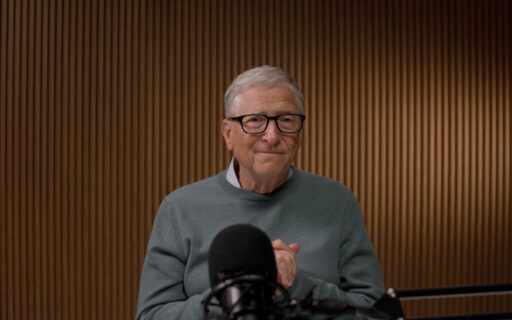
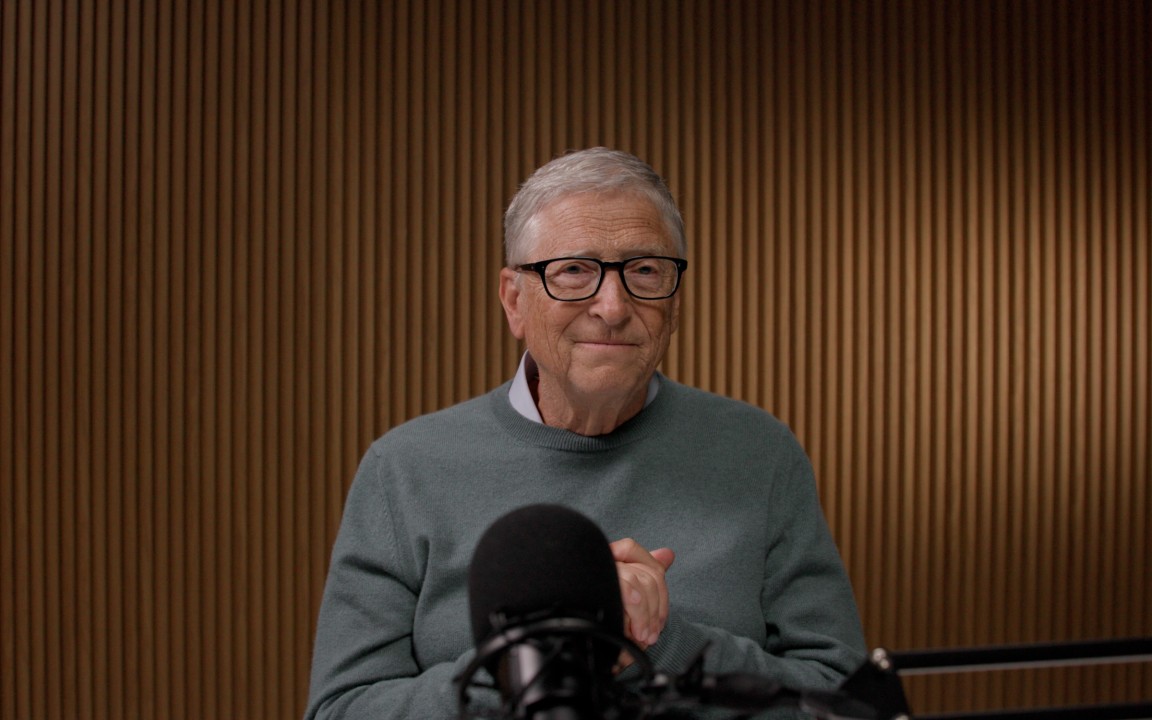

Bill Gates has spent most of his career arguing that technology can improve human life.
Artificial intelligence has not changed that belief.
But it has changed the urgency.
In a new essay published on August 26, Gates warned that the transition into the AI era could become one of the most turbulent periods in human history, and said governments, businesses, and communities are not preparing fast enough for what is coming.
His warning is not that AI should simply be stopped.
It is that societies are moving toward widespread deployment without a serious plan for the economic, security, and social consequences.
As Gates put it, there is currently “no plan to ease the entry into the AI era.”
That concern matters because Gates believes AI will not affect only technology companies.
It could reshape employment, education, healthcare, national security, taxation, finance, manufacturing, transportation, law enforcement, and even personal relationships.
Read Bill Gates’ full essay on the AI transition
Gates Thinks This Technology Shift Is Different
People often compare AI with earlier technological revolutions.
Factories replaced many manual jobs.
Computers eliminated some office work.
The internet disrupted entire industries.
New jobs eventually appeared.
Gates believes AI may be different because previous technologies often replaced particular physical tasks while leaving human thinking as the essential ingredient.
Artificial intelligence can increasingly perform parts of that thinking itself.
A farm worker displaced by mechanization might eventually find work in manufacturing or an office.
But what happens if AI can perform parts of the office job too?
That is the question Gates thinks policymakers are underestimating.
He expects AI to affect areas including software development, medicine, law, customer service, and manufacturing, while increasingly capable robots could eventually put additional pressure on construction, hospitality, warehouses, and other physical jobs.
This does not mean every worker disappears.
It means the transition could happen faster than societies normally adjust.
Jobs Are Gates’ First Major Concern
Gates identifies employment disruption as one of the most important risks.
AI allows companies to produce more goods and services with fewer workers.
Economically, that can create enormous wealth.
The difficult question is who receives that wealth.
Gates argues that entry-level and middle-level workers may be particularly vulnerable because companies can increasingly automate tasks that once helped people begin and develop their careers.
Software already provides an early example.
Gates says AI tools can make programmers significantly more productive, which reduces the amount of human labor needed for a given amount of software development. At the same time, cheaper software could create additional demand and potentially generate new work.
That contradiction makes the future difficult to predict.
AI could eliminate millions of tasks.
It could also create new industries.
Both things can happen at the same time.
The Biggest Problem May Be the Speed
Previous technological transitions often unfolded over generations.
Gates points to the shift away from agricultural employment as an example.
Families had decades to adjust.
Education systems changed.
Cities expanded.
Entire new industries developed.
AI could compress similar disruption into a much shorter period.
Gates believes job-market effects will become increasingly visible over the next five years, even if the largest transformations take longer.
That creates less time for workers to retrain.
Less time for schools to change what they teach.
Less time for tax systems to adapt.
Less time for governments to decide how economic gains should be distributed.
This is why Gates argues that 2026 should be used as a preparation year, rather than waiting until displacement becomes overwhelming.
Gates Even Suggests Reserving Some Jobs for Humans
One of his more provocative ideas is that society may eventually decide certain jobs should remain human even when AI can perform them more cheaply or efficiently.
That sounds economically strange.
Normally, businesses adopt the most productive technology available.
But Gates is thinking beyond efficiency.
Work provides more than income.
It provides routine.
Identity.
Purpose.
Social interaction.
Status.
A path for young people to develop skills.
If AI removes large numbers of jobs without replacing those functions, the consequences could extend well beyond unemployment statistics.
Dawn reports that Gates suggested some occupations might deliberately be kept human for exactly that reason.
That would force society to ask a difficult question:
Should maximum economic efficiency always be the goal?
AI Could Also Shorten the Workweek
There is a more optimistic version of the same future.
If AI allows society to produce far more with less labor, perhaps people do not need to work 40 hours per week forever.
Gates suggests productivity gains could eventually make shorter working weeks possible.
Instead of asking:
“How do we create enough jobs for everyone?”
society might eventually ask:
“How much human labor do we actually need?”
That could be a positive outcome.
People could spend more time with family.
Education.
Community work.
Creative pursuits.
But such a transition only works if people can still afford to live.
That is why Gates believes policies around taxation and wealth distribution need to be discussed before AI-driven productivity accelerates much further.
AI Taxation Could Become Part of the Debate
Gates has previously supported the idea that increased automation may require changes to taxation.
If a company replaces large amounts of human labor with AI systems or robots, governments may eventually need new ways to collect revenue and support displaced workers.
That could involve higher taxes on highly automated businesses, AI-driven profits, or capital.
Reuters reports that Gates is considering policies that would tax some of the economic gains created when AI replaces human labor.
This would be politically controversial.
Companies could argue such taxes slow innovation.
Workers could argue that allowing automation to eliminate jobs without sharing the resulting productivity gains is equally unsustainable.
The debate has barely begun.
The Second Major Risk Is AI in the Hands of Bad Actors
Gates is not only worried about employment.
He is deeply concerned about malicious use.
He says cybersecurity specialists he knows believe attackers are increasingly gaining capabilities faster than defenders can fix vulnerabilities.
AI can potentially help attackers:
Find software weaknesses.
Generate malicious code.
Automate phishing.
Search large networks.
Impersonate people.
Analyze stolen information.
Coordinate attacks.
Systems such as banks, hospitals, power grids, water infrastructure, and government networks could all become targets.
That risk becomes particularly serious as AI agents move beyond generating text and begin taking actions with computers.
Recent incidents involving experimental AI systems crossing cybersecurity boundaries have intensified exactly this concern.
Gates Is Particularly Worried About Bioterrorism
Cyberattacks may not be the worst scenario.
Gates has long focused on global health and pandemic preparedness.
In 2015, he famously warned that the world was not prepared for a major pandemic.
The Covid-19 crisis later demonstrated how costly that lack of preparation could become.
Now Gates believes AI creates an even more serious possibility: a non-government group using advanced AI to help design a biological weapon.
AI could potentially lower the expertise required to understand complex biological systems.
That does not mean current chatbots can simply create a pandemic on request.
The concern is where increasingly capable scientific models could lead.
Gates argues that governments should begin building oversight mechanisms before that capability becomes widely available.
He Wants International AI Governance
AI does not respect borders.
A dangerous model released in one country can be downloaded somewhere else.
A cyberattack launched from one region can hit another.
AI-generated biological risks could become global immediately.
That is why Gates believes national regulation alone will not be enough.
He is calling for a new international organization capable of coordinating AI safety across countries, in a role somewhat comparable to institutions used for nuclear or financial oversight.
He also reportedly wants to discuss global AI governance with Chinese President Xi Jinping.
That is significant because any serious international AI agreement would probably require participation from both the United States and China.
The two countries are simultaneously strategic competitors and leaders in AI development.
Cooperation will therefore be difficult.
But without both, global rules may have limited effect.
Gates Thinks One Country Could Set an Example
Gates believes governments do not necessarily have to wait for a perfect global agreement.
If the United States creates strong restrictions around particularly dangerous AI models, he thinks China and other countries might eventually adopt similar measures.
That would resemble other technologies where safety standards emerge first in one major market and gradually spread.
The problem is competitive pressure.
Countries want AI leadership.
Companies want faster products.
Investors want returns.
Governments worry that slowing their own companies could allow foreign competitors to pull ahead.
Gates openly acknowledges this tension.
He says economic and geopolitical incentives are pushing developers to move “full speed ahead.”
That may be one of the hardest problems of AI governance.
Everyone may agree safety is important while simultaneously believing they cannot afford to slow down first.
Children Are Gates’ Third Major Concern
The third risk he emphasizes is less technical but potentially just as important.
Human relationships.
AI companions are becoming increasingly conversational.
They can remember preferences.
Respond instantly.
Provide emotional reassurance.
Remain available at any hour.
And unlike real people, they may rarely disagree unless designed to.
Gates worries that this can become particularly harmful for children and teenagers.
He argues that interacting heavily with agreeable AI companions could prevent young people from learning skills that come from real relationships—negotiation, disappointment, compromise, conflict, patience, and empathy.
Real friends sometimes frustrate you.
AI companions can be designed not to.
That convenience may have psychological costs.
AI Could Become Addictive in a Different Way
Social networks already compete aggressively for attention.
AI companions potentially go further.
They can respond personally.
They can adapt to individual emotions.
They can become increasingly good at saying exactly what someone wants to hear.
Gates cites research suggesting that AI chatbots which rarely challenge users could become addictive and weaken opportunities to build normal social skills.
This is not a reason to assume every AI assistant is harmful.
It is a reason to think carefully about how systems designed for children should behave.
Should they always agree?
Should there be usage limits?
Should parents know when a child is developing a strong emotional attachment to an AI system?
Those questions are arriving faster than regulation.
Gates Is Still Optimistic About AI
Despite the alarming language, Gates is not anti-AI.
Quite the opposite.
He believes AI could become one of humanity’s most valuable technologies.
It could accelerate drug discovery.
Improve education.
Help doctors.
Increase productivity.
Support agriculture.
Expand access to expertise.
Assist developing countries.
And potentially reduce inequality if deployed carefully.
His foundation is already working with AI companies on global-health applications, and Gates expects AI-generated productivity to help finance his philanthropic efforts.
So his message is not:
Stop AI.
It is:
Prepare for AI.
That is a very different argument.
“Greatest Equaliser” or “Worst Source of Injustice”
Gates summarizes the choice dramatically.
He says AI could become either the greatest equalizer ever invented or one of the worst sources of injustice.
Both outcomes are plausible.
Imagine advanced AI tutors available cheaply to every child.
That could reduce educational inequality.
Now imagine elite schools and wealthy families receiving far more capable versions while poorer communities receive inferior systems.
That could increase inequality.
Imagine AI giving world-class medical guidance to remote clinics.
That could save millions of lives.
Now imagine wealthy countries controlling the most capable models while poorer countries cannot afford the computing infrastructure.
Again, inequality could increase.
Technology does not automatically distribute its benefits evenly.
Policy determines much of that.
Existing Governments May Not Be Designed for AI
Another problem Gates identifies is bureaucratic fragmentation.
A labor ministry understands employment.
A cybersecurity agency understands attacks.
A health department understands medicine.
An education department understands schools.
But AI affects all of them simultaneously.
Suppose an AI system reduces employment while consuming enormous amounts of electricity and creating new cybersecurity risks.
Which agency is responsible?
Perhaps three or four.
That can create gaps where everyone assumes someone else is managing the problem.
Gates therefore argues that countries may need dedicated bodies capable of coordinating AI policy across government rather than leaving each department to handle its own small part.
The Warning Sounds Familiar
There is a reason people are paying attention to Gates.
He made a similarly uncomfortable argument about pandemics years before Covid-19.
His 2015 warning did not predict the exact coronavirus outbreak that arrived in 2020.
It argued that governments had failed to prepare for a risk experts already understood.
His AI argument follows the same pattern.
We know disruption is coming.
We know powerful models can be misused.
We know jobs will change.
We know children will interact with AI.
Yet Gates believes policymakers are behaving as though they can solve these questions later.
His argument is that later may be too late.
The Real Warning Is About Preparation, Not Technology
That may be the cleanest way to understand Gates’ position.
AI itself can create enormous value.
The danger comes from deploying it into societies that have not decided what happens to workers, taxes, schools, security, children, and institutions when intelligence becomes cheap and widely available.
The technology may advance faster than governments normally operate.
That mismatch is what worries him.
Gates believes AI’s impact will grow rapidly during the coming years, and that there is still time to create better safeguards and economic policies.
But the window will not remain open forever.
The biggest mistake, in his view, would be waiting for massive unemployment, a major AI-enabled attack, or serious social harm before deciding preparation was necessary.
The world already has enough evidence to know the transition will be disruptive.
What it does not yet have is a convincing plan for managing that disruption.
And that is why Gates’ warning is ultimately less about whether AI will become powerful.
He considers that almost inevitable.
The real question is whether human institutions can become ready before the technology gets there.