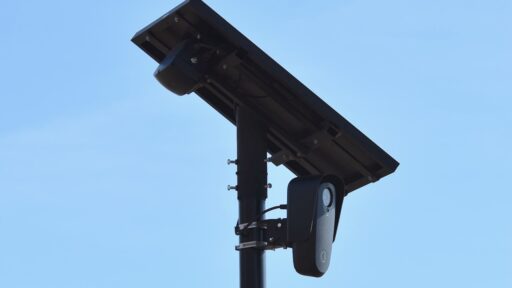
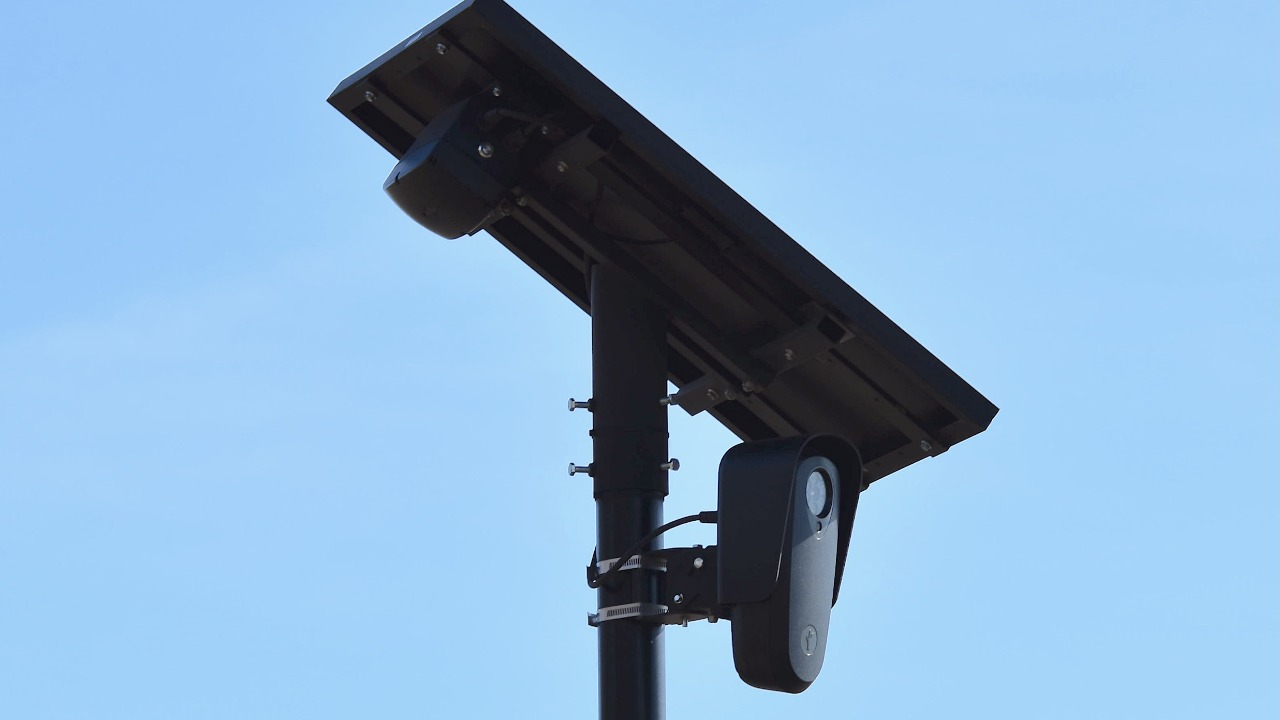

What happens when cameras designed to watch passing vehicles suddenly become the objects that disappear?
That unusual question became very real in Winona, Minnesota, after police discovered that every one of the city’s eight Flock automated license plate reader cameras had been removed. The mounting poles had been cut near their bases, the poles were found discarded nearby, and the cameras themselves were gone.
At roughly $3,000 to replace each camera and pole, the incident represented an estimated $24,000 in damage. But the financial loss quickly became only part of a much larger story involving surveillance technology, policing, privacy, public trust, and the growing debate over how much vehicle tracking communities are willing to accept.
How Did Eight Cameras Simply Disappear?
The discovery was not initially triggered by someone reporting suspicious activity around one of the cameras.
Instead, the technology itself appeared unusually quiet.
On August 1, 2026, a Winona police officer noticed there had not been recent activity from the city’s Flock cameras. Officers went out to inspect the locations and discovered that the poles supporting the cameras had been cut down near their bases.
The poles remained nearby.
The cameras did not.
Police said the thefts were believed to have occurred sometime between July 29 and August 1, meaning the phrase “disappeared overnight” captures the sudden nature of the discovery, although investigators identified a several-day window in which the equipment could have been removed.
The cameras had been installed in pairs at four locations around Winona, including Highway 61 and Bundy Boulevard, Highway 61 and Highway 14, Highway 14 and Knopp Valley Drive, and Highway 43 and Homer Road.
Someone had therefore not simply removed one conveniently located device.
Every camera operated by the Winona Police Department was gone.
Readers can see the original local reporting through KTTC’s report on the Winona camera thefts.
What Exactly Are Flock Cameras?
Why would the disappearance of eight roadside cameras generate such widespread attention?
Because these are not ordinary traffic cameras.
Flock Safety operates automated license plate reader technology, commonly called LPR or ALPR systems. According to the company’s own policy, its system can collect a license plate image, vehicle image, plate number and state, vehicle characteristics, date, time, and camera location. The system can also generate alerts when captured information matches vehicles associated with certain crime databases or other authorized hot lists.
In practical terms, a vehicle passes a camera and information about that vehicle can become searchable for investigative purposes.
Police departments argue that this capability can help officers locate stolen cars, identify vehicles connected to crimes, find missing or endangered people, and generate investigative leads much faster than traditional methods.
Winona Police later said the city’s cameras had helped officers locate a homicide suspect, locate people experiencing crises, and investigate cases involving stolen vehicles, hit-and-runs, and other offenses.
Flock’s explanation of what its technology collects is available through Flock Safety’s official license plate reader policy.
Then Why Are The Cameras So Controversial?
The same capability that makes license plate readers useful to police is also what concerns privacy advocates.
A camera does not necessarily know whether someone driving past it has committed a crime.
It records vehicles passing through its field of view.
That distinction matters because a network of cameras positioned across different roads can potentially reveal information about where vehicles appeared and when they appeared there.
For someone investigating a stolen car, that can be extremely valuable.
For someone concerned about mass surveillance, the same technology raises a different question: should the movements of ordinary drivers be collected simply because they travel on public roads?
Minnesota law already places restrictions on automated license plate reader information. The state’s statute limits government ALPR collection to information including license plate numbers, date, time and location data, and images of vehicles and surrounding areas. It also places restrictions on how data may be used and shared and generally requires non-investigative ALPR data to be destroyed within 60 days.
Those safeguards demonstrate something important.
The debate is not simply about whether police should solve crimes. It is about what limits should exist while they do it.
People interested in those legal protections can read Minnesota’s automated license plate reader statute.
Was The Theft A Privacy Protest?
It might be tempting to connect the Winona thefts directly to political opposition to surveillance cameras.
But that conclusion would go beyond what investigators have established publicly.
The equipment disappeared during a period when Flock cameras were already attracting significant public criticism, and similar cameras have been vandalized or stolen elsewhere. However, the Winona investigation was still ongoing when police announced their later decision not to replace the system.
Without an identified perpetrator and established motive, there is an important difference between context and evidence.
Someone may have opposed surveillance.
Someone may have intended to sell equipment.
There could have been another motive entirely.
Until investigators establish who removed the cameras and why, treating the theft itself as a political protest would be speculation.
What is clear is that it happened during an increasingly heated public debate about Flock technology.
The Bigger Surprise Came After The Theft
The missing cameras produced another twist.
Winona Police decided not to reinstall them.
On August 12, the department released an official statement acknowledging that the Flock system had been an effective law enforcement resource. It said officers had used the technology successfully and that the department had policies, training, oversight, and no known instances of misuse.
Yet police also acknowledged that Flock had contributed to growing concerns about trust in policing locally and elsewhere.
The department ultimately announced that it would not reinstall Flock cameras in Winona.
That decision arguably became more significant than the original theft.
The physical removal of eight cameras was one incident.
A police department deciding that community trust outweighed reinstalling a technology it considered effective became part of a much wider national conversation.
The full statement can be read through the City of Winona’s official Flock camera update.
Why Would Police Give Up A Tool They Say Worked?
That is where the Flock debate becomes difficult.
Technology does not have to be useless to create legitimate concerns.
Winona Police publicly credited Flock cameras with helping investigations. If officers believe a system helps them locate suspects or stolen vehicles, abandoning it can mean giving up a useful investigative capability.
At the same time, police departments operate through public legitimacy as much as they operate through equipment.
A technology that repeatedly creates distrust may eventually cost an agency something that cannot be measured in the price of cameras.
Winona’s statement made that tradeoff explicit by describing community trust as the foundation of effective policing.
That does not prove every community will reach the same conclusion.
Some residents may consider ALPR cameras a reasonable tool when strict controls exist.
Others may believe widespread tracking of vehicle movements creates an unacceptable surveillance infrastructure.
Both sides are often responding to the same capability while assigning different weight to security and privacy.
The $24,000 Question Is Actually Much Bigger
At first glance, the story almost sounds absurd.
Eight surveillance cameras disappear, their poles are left behind in weeds, and authorities suddenly face approximately $24,000 in replacement costs.
But that is not why the story has continued attracting attention.
It arrived at exactly the moment communities across the United States were asking harder questions about automated surveillance.
Who can search the data?
How long should the information remain available?
Can one police agency access records collected somewhere else?
What oversight prevents misuse?
Should someone who has done nothing wrong have their vehicle movements recorded at all?
And perhaps most importantly, who gets to decide what level of surveillance a community considers acceptable?
Those questions cannot be answered with a stronger mounting pole.
What Happens To Winona’s Cameras Now?
For now, Winona’s decision is unusually straightforward.
The police department has said it will not reinstall the Flock cameras in the city. The investigation into their disappearance, however, has remained a separate matter. Removing or damaging equipment is not made lawful simply because some people disagree with the technology.
That distinction is essential.
A community can debate surveillance through legislation, public meetings, elections, policy changes, lawsuits, or contract decisions. Theft and vandalism are something else entirely.
Yet the Winona case demonstrates how quickly those two stories can collide.
The cameras were originally installed to help police watch vehicles moving through the city.
Then someone apparently watched the cameras closely enough to remove every one of them.
And after they disappeared, the police decided that they would not come back.
The estimated $24,000 loss may have started the headlines, but Winona’s larger story is about something much harder to price: how communities decide where public safety ends and unacceptable surveillance begins.