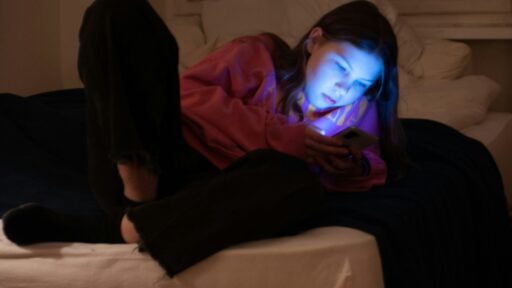
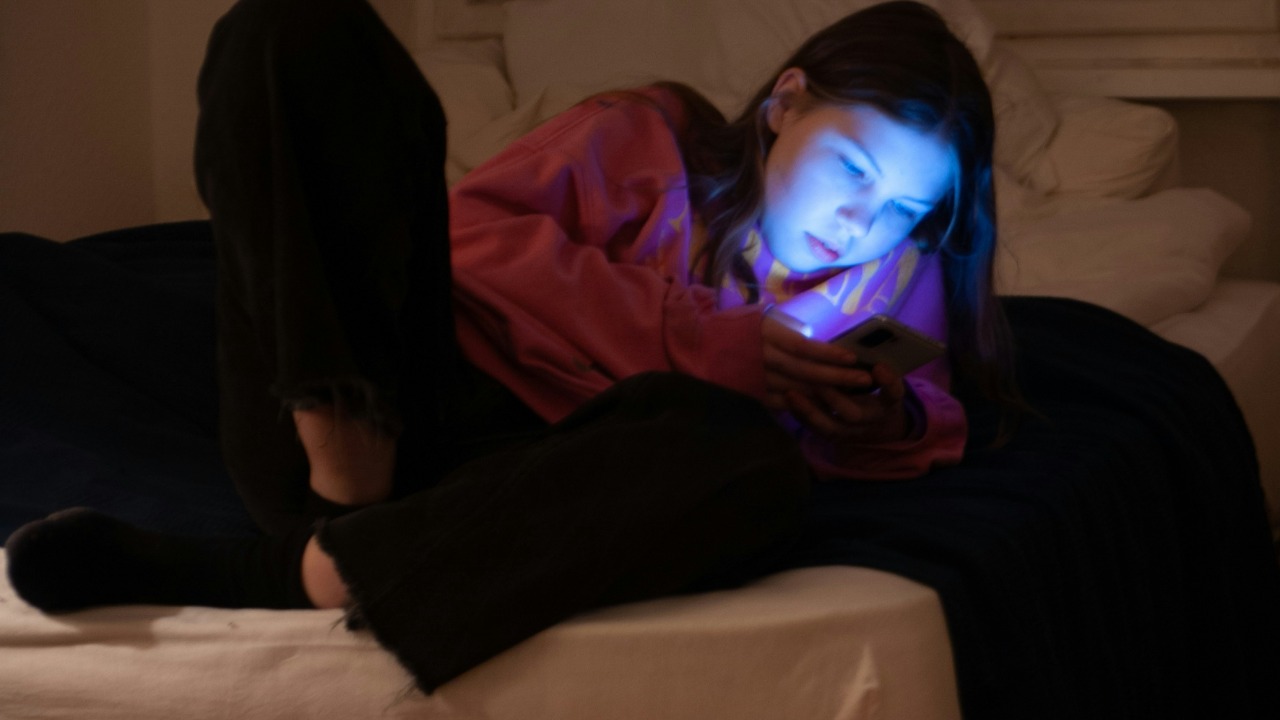

For years, people have been told that one of the worst things they can do before bed is stare at a glowing smartphone screen. Blue light became the main suspect. It was blamed for suppressing melatonin, confusing the body clock, delaying sleep, and leaving people exhausted the following morning.
That story was simple, memorable, and commercially useful. Blue-light-blocking glasses appeared everywhere, smartphones introduced warmer “night modes,” and many people became convinced that removing the blue color from a screen could protect their sleep.
But scientists are now challenging that simplified explanation.
The newer research does not show that light at night is completely harmless. Instead, it suggests that focusing exclusively on whether light looks blue may miss what actually matters. Brightness, melanopsin stimulation, the amount of light reaching the eyes, the timing of exposure, what someone is doing on the device, and how long they delay bedtime can all influence the result.
So has science really debunked blue light and sleep? Not exactly. What researchers are debunking is the idea that the color blue alone explains why screens may interfere with sleep.
Why Blue Light Became the Villain
The original concern was not invented without scientific reasoning.
Inside the eye are specialized retinal cells that contain a light-sensitive pigment called melanopsin. These cells help communicate environmental light information to areas of the brain involved in circadian timing.
Their sensitivity is particularly strong around shorter wavelengths of visible light. Because smartphones, tablets, laptops, and many LED lights produce short-wavelength light, researchers reasonably investigated whether evening screen exposure could influence melatonin and sleep.
Laboratory studies have indeed shown that certain types of evening light can suppress melatonin and delay the biological clock. Research published in Communications Biology, for example, found that differences in melanopic light exposure could influence sleep latency and melatonin responses.
The important detail, however, is that “melanopic light” and “the color blue” are not exactly the same thing.
That distinction is changing the conversation.
Scientists Tested Blue Light More Carefully
Researchers from the University of Basel and the Technical University of Munich designed an experiment to investigate whether perceived blue versus yellow light actually produces different effects when melanopsin stimulation is carefully controlled.
Their study, published in Nature Human Behaviour, exposed participants to blue-dim light, yellow-bright light, and a control condition while keeping melanopsin activation comparable between the conditions.
The researchers found no conclusive evidence that the blue-yellow color difference itself meaningfully changed melatonin suppression, sleepiness, circadian timing, or subsequent sleep.
That finding matters because it separates two things that are often treated as identical.
A light can look bluer to someone without necessarily producing dramatically greater circadian stimulation. Likewise, changing a screen so that it looks warmer does not automatically reveal exactly how much biologically relevant light is reaching the retina.
The University of Basel summarized the finding by explaining that light color appears to be less important for the internal clock than researchers once assumed.
They are not saying that people should sleep under bright lights.
They are saying the biological mechanism is more complicated than “blue equals awake and yellow equals sleepy.”
Melanopsin May Matter More Than Color
This is where the science becomes more interesting.
The human eye does not simply identify the color of a light and then decide whether the body should sleep. Different photoreceptors process different aspects of light, and melanopsin-containing retinal ganglion cells play an important role in nonvisual responses such as circadian regulation.
A screen can therefore be adjusted in ways that reduce its melanopic stimulation even if its appearance does not change dramatically.
In the Communications Biology experiment involving 72 healthy men, researchers manipulated melanopic irradiance independently of display luminance and color. Higher melanopic exposure was associated with longer sleep latency, greater melatonin suppression, and later melatonin timing.
That creates a much more accurate interpretation.
Light exposure in the evening can matter, but the biological dose matters more than simply whether the screen appears blue.
Researchers interested in the original experiment can examine the Communications Biology study on evening display light.
Screens May Affect Sleep for Reasons That Have Nothing to Do With Blue Light
There is another problem with blaming everything on screen color.
What is the person actually doing while looking at the screen?
They may be watching an emotionally intense television series. They may be answering work messages. They may be scrolling social media for another hour. They may be playing a competitive game or reading distressing news.
Even if the screen produced no blue light at all, those behaviors could still keep them awake.
A major 2024 National Sleep Foundation consensus statement reviewed hundreds of studies involving screens and sleep. The expert panel agreed that screen use generally harms sleep health among children and adolescents, and that pre-sleep screen content can also interfere with their sleep. However, the panel did not reach consensus that light emitted from screens before sleep independently impairs sleep health in children, adolescents, or adults.
That is a major distinction.
The problem may sometimes be the light, but it can also be bedtime displacement, psychological stimulation, notifications, emotional arousal, or simply staying awake longer than intended.
Someone who activates an orange screen filter and then scrolls until 2 a.m. has not necessarily solved the main sleep problem.
Blue-Light Glasses Are Also Facing Scientific Scrutiny
The popularity of blue-light-blocking glasses was built partly around the idea that filtering short-wavelength light could improve sleep and reduce digital eye strain.
The evidence has been far less convincing than the marketing.
A Cochrane systematic review examined 17 randomized controlled trials involving 619 participants. Researchers concluded that blue-light-filtering lenses may provide little or no short-term benefit for computer-related eye strain, while evidence about improvements in sleep remained uncertain and inconsistent.
The review did not establish that the glasses reliably improve sleep for the general population.
People interested in the evidence can read the Cochrane review of blue-light-filtering lenses.
This does not mean every individual will experience exactly the same response. It means claims that such glasses reliably fix sleep problems are stronger than the current evidence supports.
Does That Mean Night Mode Is Useless?
Not necessarily.
Night mode often does more than make a screen look orange. Depending on the device and settings, it may reduce short-wavelength output, and lowering overall screen brightness can reduce the amount of light reaching the eyes.
The University of Basel researchers have emphasized that reducing melanopic light in the evening can still be useful, even though the visible blue-yellow color shift itself may not be the central mechanism.
So a warmer display can still be part of a sensible bedtime routine.
The mistake would be assuming that the orange color alone makes unlimited nighttime screen use harmless.
Someone who lowers screen brightness, uses a night setting, avoids stimulating content, and stops using the device earlier is changing several factors simultaneously. That approach makes more biological and behavioral sense than relying entirely on a color filter.
Light at Night Still Matters
The growing skepticism about exaggerated blue-light claims should not be confused with evidence that nighttime light has no effect on sleep.
A 2026 systematic review and meta-analysis examining artificial light at night found an association between greater nighttime light exposure and sleep disturbance. Across the studies included in the analysis, people in the highest light-exposure groups had a higher risk of sleep disturbance than those with lower exposure.
Again, the broader issue is light exposure rather than one supposedly dangerous color.
Bright bedroom lighting, illuminated screens, televisions, and other light sources can all contribute to the nighttime environment.
Scientists are therefore moving toward a more nuanced message: darkness at night still matters, but “avoid blue light at all costs” is an oversimplification.
Daytime Blue Light Is Not the Enemy Either
There is another reason the anti-blue-light narrative can become misleading.
Blue-rich natural daylight is an important part of daytime circadian regulation.
During the day, exposure to bright natural light helps reinforce the contrast between daytime and nighttime. The body needs strong daytime signals as well as darker evenings.
That means completely avoiding blue wavelengths throughout the day would make little biological sense.
Researchers have even investigated blue-enriched light therapeutically. A 2026 systematic review of randomized trials found that morning blue-light therapy may produce modest improvements in certain sleep outcomes among adults with insomnia, although researchers emphasized that the findings should be interpreted cautiously.
The timing changes everything.
Light that supports alertness during the morning can become undesirable close to bedtime.
What Science Is Actually Debunking
The emerging research is not overturning everything scientists know about light and circadian rhythms.
It is correcting an overly simple explanation.
Blue-looking light is not automatically the single cause of poor sleep. Melanopic stimulation, intensity, duration, timing, individual sensitivity, previous daytime light exposure, screen content, and bedtime habits all interact.
That means someone struggling with sleep may gain more from creating a darker environment, reducing overall evening brightness, getting sufficient daylight earlier in the day, stopping stimulating activities before bedtime, and maintaining a consistent sleep schedule than from obsessing over the exact color of a smartphone screen.
Blue-light filters may still reduce certain wavelengths, and night modes can remain useful tools. They simply should not be treated as a scientific permission slip for endless late-night screen use.
The newer research makes the story less dramatic, but more useful.
Blue light was never necessarily a fictional problem. The myth was believing that blue light was the whole problem.
When scientists separate color perception from biological light exposure, the message becomes clearer: the brain cares about much more than whether a screen looks blue.