
China’s best-known humanoid robot maker has just delivered one of the most spectacular stock-market debuts of 2026.
Shares of Unitree Robotics surged as much as 629% when they began trading on Shanghai’s technology-focused STAR Market on August 19. Although some of those gains faded, the stock still closed at 845 yuan, roughly 460% above its IPO price of 150.80 yuan. That left the company valued at approximately $50 billion.
Unitree raised around 6.1 billion yuan, or $904 million, from the listing. Retail demand had been extraordinary even before trading began, with the IPO reportedly more than 8,000 times oversubscribed.
Those numbers would be impressive for an established technology giant.
Unitree was founded only in 2016.
Its rise shows how quickly humanoid robots have moved from laboratory experiments and viral videos into one of the hottest investment themes in China.
But the enormous valuation also raises another question.
Are investors buying into the next major computing platform—or getting dangerously far ahead of what robots can actually do?
Unitree Became Famous by Making Robots People Wanted to Watch
Unitree did not initially become famous because factories were installing thousands of its humanoid workers.
It became famous because its robots were difficult to ignore.
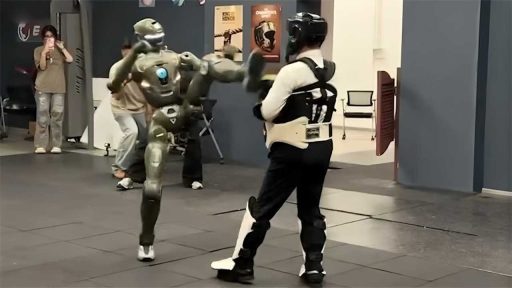
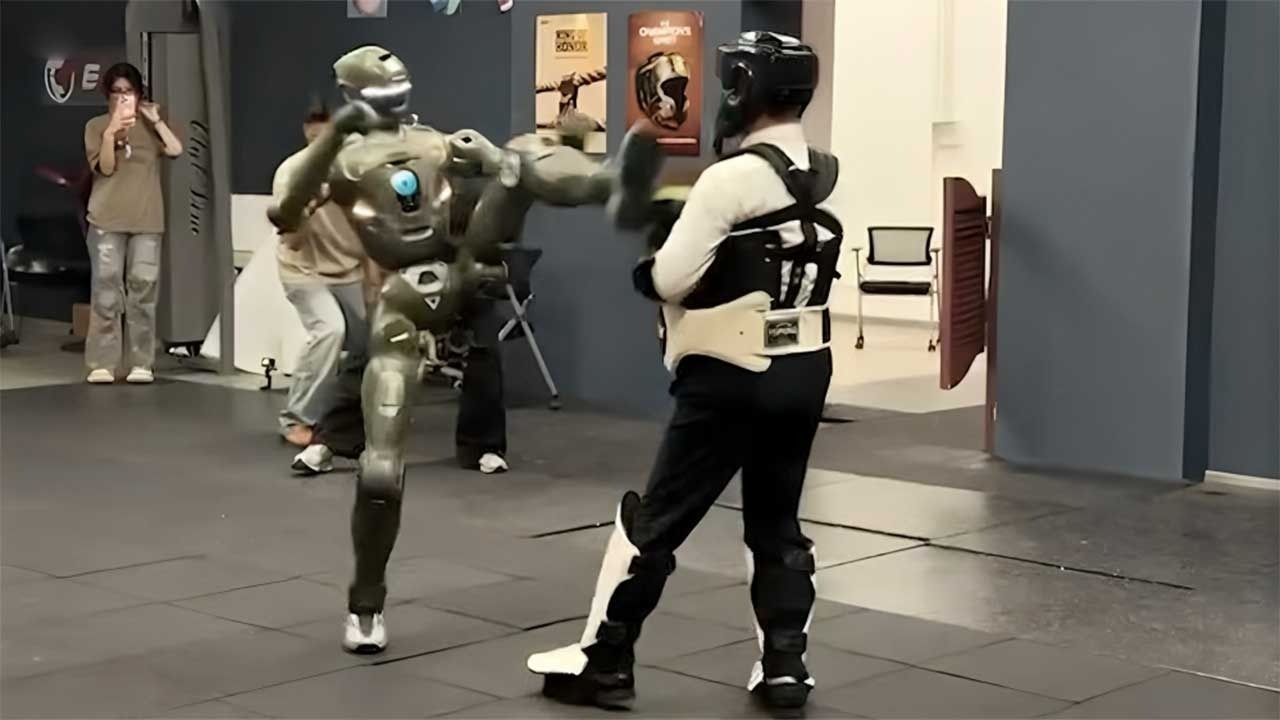
The Hangzhou-based company produces both quadruped robots resembling mechanical dogs and increasingly sophisticated humanoids capable of walking, running, dancing and performing martial-arts demonstrations.
Those videos spread widely across social media.
The company’s G1 humanoid, for example, helped establish Unitree as one of the most recognizable names in embodied artificial intelligence.
Reuters describes Unitree as the world’s largest humanoid-robot manufacturer by sales and says the company had cumulatively produced and delivered approximately 18,000 bipedal humanoid robots across several models by July 2026.
That scale matters.
Many humanoid-robot companies can produce impressive prototypes.
Manufacturing thousands of machines repeatedly is a different challenge.
Its Latest Robot Can Run at Astonishing Speeds
Just before the IPO, Unitree provided investors with another demonstration of how rapidly its hardware is improving.
The company unveiled a new robot nicknamed “Superman.”
According to Reuters, the machine achieved a standing jump of two meters and reached a top speed of 12.66 meters per second. Unitree said it developed the robot in a little more than three months.
For perspective, that speed is roughly 45.6 kilometers per hour.
The robot remains under development, so the demonstration should not be confused with a commercially available worker ready to spend eight hours moving boxes through a warehouse.
But it reveals the pace of engineering progress.
A decade ago, simply making a full-size humanoid walk reliably was an extraordinary achievement.
Now companies are competing over running speed, jumping, manipulation and increasingly complex autonomous behavior.
Readers interested in the company’s current machines can explore Unitree’s official product information.
China Sees Humanoid Robots as More Than a Novelty
The enthusiasm surrounding Unitree is partly about the company.
It is also about China’s industrial strategy.
Beijing has identified robotics and artificial intelligence as strategically important technologies and has been supporting development of the broader embodied-AI ecosystem.
The Unitree listing coincided with the World Robot Conference in Beijing, giving the IPO additional visibility at a moment when investors were already focused heavily on robotics.
China has several structural advantages.
It already possesses enormous electronics and manufacturing supply chains.
Motors, sensors, batteries, gears and other components required by robots can often be sourced domestically.
Factories provide real environments where robots could eventually be deployed.
And increasingly capable Chinese AI models can provide the software layer needed to make those machines useful.
The combination creates a compelling vision.
Instead of AI living only inside computers, AI gets a body.
That is what investors mean when they talk about embodied AI.
The IPO Demand Was Almost Absurd
Before Unitree began trading, investors were already fighting for access to the shares.
The retail portion of the IPO received orders more than 8,000 times greater than the number of shares available, according to Reuters.
That kind of demand helps explain what happened once trading began.
Investors who could not obtain enough stock in the initial offering rushed into the secondary market.
The price exploded.
At one point, Unitree shares were trading more than seven times above the IPO price.
There is an important distinction here.
The company did not become seven times better overnight.
Nothing fundamental about its robot technology changed between Tuesday and Wednesday morning.
What changed was what investors were willing to pay for access to it.
That makes Unitree’s debut as much a story about financial-market enthusiasm as robotics.
The Company Is Actually Generating Revenue
Unitree does have something many futuristic technology companies lack: meaningful commercial sales.
The company reported approximately 1.7 billion yuan, around $250 million, in revenue for 2025, with more than 40% coming from international markets, according to the Associated Press.
That international exposure has helped Unitree develop a customer base beyond China.
Its machines are used in research, education, demonstrations and some industrial applications.
Robotics laboratories can purchase platforms rather than building every mechanical system themselves.
Universities can use Unitree hardware to develop control algorithms and AI applications.
Companies can experiment with robots without committing to designing proprietary machines.
That business model gives Unitree revenue today while leaving investors exposed to a much larger potential market tomorrow.
The $50 Billion Valuation Is Where Things Get Complicated
The excitement becomes much harder to evaluate once the stock price is compared with the underlying business.
A company producing roughly $250 million in annual revenue and carrying a market value around $50 billion is being priced for enormous future growth.
Investors are clearly not valuing Unitree like an ordinary industrial-equipment manufacturer.
They are valuing the possibility that humanoid robots become a huge new technology category.
That could eventually happen.
Humanoid robots could work in factories.
They could move goods through warehouses.
They could inspect dangerous facilities.
They could assist elderly people.
They could perform repetitive commercial tasks.
They could eventually enter homes.
If even some of those markets become enormous, today’s robot sales may look tiny compared with future demand.
But the word doing most of the work is if.
Humanoid Robots Still Struggle With Basic Real-World Work
Watching a robot perform kung fu is impressive.
Paying one to perform eight hours of economically useful labor is much harder.
The real world contains irregular objects.
Slippery floors.
Unexpected obstacles.
Humans walking unpredictably.
Tools designed for human hands.
Tasks requiring delicate judgment.
A factory robot bolted to the floor can repeat a precisely programmed action millions of times.
A humanoid robot has to balance while navigating changing environments and manipulating unfamiliar objects.
That dramatically increases both hardware and software complexity.
The Associated Press noted that despite investor enthusiasm, many humanoid robots are still being used mainly for research and demonstrations rather than widespread mainstream work.
That is the gap every company in the sector must close.
The robots already look futuristic.
They now need to become economically useful.
AI Could Be the Missing Piece
The recent explosion in generative AI may dramatically accelerate that transition.
Traditional robots depend heavily on carefully programmed rules.
Modern AI systems can potentially allow robots to interpret language, vision and unfamiliar environments much more flexibly.
Imagine telling a robot:
“Take these boxes from the table and organize them by size on that shelf.”
Older automation might require engineers to define each movement.
A more capable AI system could potentially recognize the boxes, understand the instruction, plan the sequence and adapt if someone moves one halfway through the task.
That is why humanoid robotics is increasingly discussed alongside large language models and multimodal AI.
The body provides mobility and manipulation.
AI provides understanding.
Unitree is backed by major Chinese technology companies including Tencent, Alibaba and DeepSeek, connecting it directly to some of China’s most important AI and internet businesses.
The IPO Money Will Help Unitree Scale Faster
The roughly $904 million raised in the IPO gives Unitree substantial resources to invest in the next stage of development.
Research and development is expensive.
So is building manufacturing capacity.
Humanoid robots contain large numbers of precisely engineered moving components.
Reducing their price while improving durability will require economies of scale similar to what transformed smartphones and electric vehicles.
A robot that costs $100,000 and requires constant maintenance has limited commercial appeal.
A reliable $20,000 or $30,000 machine capable of doing genuinely useful work creates a very different economic calculation.
That cost curve may ultimately determine which robotics companies survive.
America Is Becoming a Major Risk for Unitree
Unitree’s global ambitions also face a serious geopolitical obstacle.
The United States has moved to restrict Chinese robotics technology over national-security concerns.
Reuters reports that Unitree has been placed on a Pentagon list of companies associated with China’s military, while new U.S. restrictions threaten its access to what had previously been an important export market.
The Federal Communications Commission has also moved against future imports of certain foreign-made humanoid and quadruped robots on national-security grounds. The U.S. had accounted for roughly 13% of Unitree’s revenue, according to Reuters.
That creates a familiar technology divide.
China wants domestic robotics champions.
Washington increasingly views sophisticated connected Chinese machines as potential security risks.
Robots equipped with cameras, microphones, wireless communications and autonomous navigation naturally raise questions similar to those surrounding drones and connected vehicles.
Unitree’s Debut Could Trigger a Wave of Robot IPOs
Other Chinese robotics companies are watching closely.
Firms including Deep Robotics and Mech-Mind Robotics are also preparing potential listings as companies try to take advantage of investor enthusiasm for embodied AI.
That makes Unitree something more than one successful IPO.
It is a valuation benchmark.
If investors are willing to give Unitree an extraordinary market capitalization, competing robotics companies can argue that public markets may reward them too.
The result could be an influx of capital into the sector.
That money could accelerate development.
It could also inflate valuations faster than actual robot adoption.
Technology booms frequently produce both effects simultaneously.
The Robots Are Real—the $50 Billion Question Is What Comes Next
Unitree is not merely selling a science-fiction story.
It has factories.
It has customers.
It has thousands of delivered robots.
Its humanoids can perform physical feats that would have seemed extraordinary only a few years ago.
And it has now raised almost $1 billion to accelerate development.
What remains uncertain is whether humanoid robots will transition from spectacular demonstrations into ordinary economic infrastructure quickly enough to justify investor expectations.
That is why Unitree’s market debut is so revealing.
Shares did not rise 460% because investors suddenly discovered the company.
They rose because investors believe humanoid robotics could become one of the next enormous technology industries.
If factories, warehouses and eventually homes fill with general-purpose robots, Unitree may one day look like an early leader investors were right to chase.
If humanoids remain expensive machines mostly used for research and demonstrations, the stock-market excitement could look very different in retrospect.
For now, one thing is undeniable.
Artificial intelligence’s next great investment race is no longer only about models running inside data centers.
China’s hottest technology companies are trying to give those models arms, legs and somewhere to go.