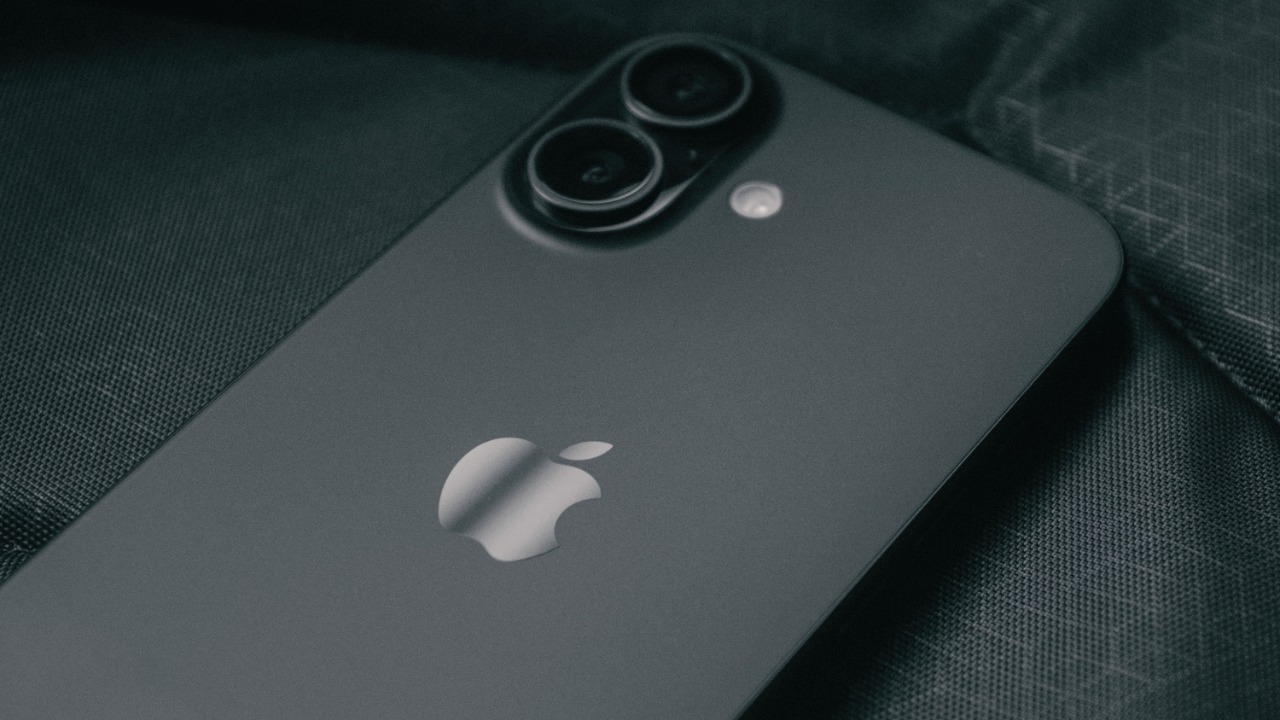

Waiting for the next iPhone usually sounds sensible.
Apple releases a new generation every year, so why buy the current model when something newer is just around the corner?
In 2026, that logic is becoming much less straightforward.
The standard iPhone 18 is now widely expected to skip Apple’s traditional fall launch and arrive in early 2027 instead, while the iPhone 18 Pro models are still expected this fall. Recent reporting says Apple’s supplier Pegatron has confirmed a staggered launch strategy in which premium models arrive first and the regular iPhone 18 follows later.
Meanwhile, the iPhone 17 is already a surprisingly complete phone.
Apple gave it a 6.3-inch ProMotion display running at up to 120Hz, an A19 processor, an upgraded 48MP ultrawide camera, an 18MP Center Stage front camera and 256GB of starting storage. Apple also rates it for up to 30 hours of video playback.
For someone using an iPhone 13, 14 or older model, waiting indefinitely for an iPhone 18 may therefore make less sense than it normally would.
Here are four reasons the iPhone 17 could be the smarter upgrade right now.
1. The Standard iPhone 18 May Not Arrive Until 2027
This is the biggest reason not to wait.
Apple has traditionally introduced its main iPhone lineup together in September.
That pattern appears to be changing.
Current reporting indicates that the iPhone 18 Pro and iPhone 18 Pro Max will remain fall 2026 products, but the standard iPhone 18 could be delayed until the first quarter of 2027.
That means someone waiting specifically for the normal iPhone 18 could be waiting considerably longer than expected.
The strategy would allow Apple to spread iPhone launches across two periods rather than releasing nearly every model simultaneously.
Rumors also point toward Apple’s first foldable iPhone joining the high-end fall lineup, making the premium launch unusually crowded.
For someone whose existing phone still works perfectly, waiting may be reasonable.
But if an iPhone 12 or 13 has a degraded battery, damaged display or limited storage, postponing an upgrade for another six or seven months simply to obtain the next number on the box becomes much harder to justify.
The iPhone 17 is available now.
That matters.
2. The iPhone 17 Already Fixed the Biggest Weakness of the Standard iPhone
For years, Apple created an annoying gap between its regular and Pro iPhones.
The standard models remained stuck with 60Hz displays while premium Android phones—and eventually even many inexpensive ones—offered smoother 90Hz or 120Hz panels.
Apple finally eliminated that weakness with the iPhone 17.
The standard model has a 6.3-inch Super Retina XDR display with ProMotion up to 120Hz. It also supports always-on display functionality.
This is a much bigger everyday improvement than another small processor increase.
Scrolling looks smoother.
Animations feel more immediate.
Games capable of higher frame rates can look better.
Even something as ordinary as moving through a long webpage feels noticeably more responsive.
Independent reviews have repeatedly highlighted this as one of the reasons the iPhone 17 feels unusually close to the Pro experience. WIRED praised its 120Hz display and strong battery life, while TechRadar described it as one of the best-value standard iPhones Apple has produced.
That reduces one of the biggest reasons someone might otherwise wait.
The standard iPhone no longer feels deliberately compromised in such an obvious area.
3. Many iPhone 18 Improvements Are Still Rumors
There will almost certainly be improvements.
Apple does not release a new generation without changing something.
But buyers should separate confirmed iPhone 17 hardware from rumored iPhone 18 hardware.
Current reports suggest Apple’s upcoming Pro phones could introduce the A20 generation of chips, smaller Dynamic Island hardware and camera improvements. Rumors surrounding the iPhone 18 Pro Max also include a variable-aperture main camera.
Those developments sound impressive.
They also concern primarily the Pro models.
Information about the standard iPhone 18 remains much less certain because its launch is apparently farther away.
That creates a classic technology-buying problem.
Someone can always wait for something better.
After the iPhone 18 comes the iPhone 19.
After the iPhone 19 comes whatever Apple builds next.
Unless a rumored feature solves a specific problem someone actually has, buying based on speculation can become an endless cycle.
Apple’s current iPhone 17 page provides something rumors cannot: specifications that are already confirmed.
There is value in knowing exactly what is being purchased.
4. The iPhone 17 Finally Starts With 256GB
Storage is another area where Apple made the standard iPhone considerably easier to recommend.
The iPhone 17 begins at 256GB, twice the starting storage of the iPhone 16 generation.
That upgrade matters more every year.
Photos are larger.
4K video consumes enormous amounts of storage.
Games can require tens of gigabytes.
Offline streaming downloads add up.
AI-related device features also require local resources.
Someone buying an iPhone to keep for four or five years is therefore much less likely to regret choosing a 256GB starting configuration.
Apple managed to combine that storage increase with a $799 launch price for the base iPhone 17, which reviewers identified as a major part of its value proposition.
That gives Apple less room to make the standard iPhone 18 dramatically better simply through storage.
One traditional reason to wait for the next generation has effectively already disappeared.
The Cameras Are Better Than the “Standard iPhone” Label Suggests
The iPhone 17 also received meaningful camera improvements.
Apple equipped it with a 48MP Fusion main camera and a 48MP Fusion Ultra Wide, replacing the much lower-resolution 12MP ultrawide used on the iPhone 16.
The front camera changed too.
Apple introduced an 18MP Center Stage front camera capable of automatically helping frame people while allowing landscape-style selfies without requiring the phone itself to be physically rotated in the traditional way.
For most users, that provides plenty of photographic flexibility.
The iPhone 17 Pro remains significantly better for someone who needs serious telephoto capability. Apple gives the Pro line a 48MP telephoto camera with 4x and 8x optical-quality zoom options.
But someone taking family photos, travel pictures, pets and social-media video probably does not need to wait for an iPhone 18 purely because the camera number might improve.
The existing system is already strong.
Battery Life Is Another Reason Not to Wait
Battery improvement is one of the most meaningful smartphone upgrades because it affects every single day of ownership.
Apple rates the iPhone 17 for up to 30 hours of video playback, which it says is up to eight hours longer than the iPhone 16.
Reviews have generally found battery performance to be a strength as well. WIRED noted that the standard iPhone 17 delivers longevity comparable with much more expensive phones under normal use.
That makes it particularly attractive to someone upgrading from an older device whose battery health may have fallen substantially.
A new iPhone 18 will presumably improve efficiency further.
But the difference between a worn four-year-old battery and a new iPhone 17 battery will be far greater than the likely difference between two consecutive new generations.
That is the comparison a real buyer should make.
The A19 Chip Is Already More Power Than Most People Need
The iPhone 17 uses Apple’s A19 processor.
An A20-based iPhone will almost certainly be faster.
The practical question is whether someone will notice.
For everyday applications, messaging, social media, photography, navigation, web browsing and video streaming, modern smartphone processors already provide considerable performance headroom.
Processor upgrades matter more for demanding games, computational photography, AI workloads and professional applications.
For ordinary users, the difference between an aging A15-class device and an A19 phone can feel substantial.
The difference between A19 and whatever powers a standard iPhone 18 may be much more difficult to notice without benchmarks.
Buying the iPhone 17 therefore does not mean purchasing technology that is already struggling.
It means buying hardware that still has years of useful performance ahead.
There Is One Very Good Reason to Wait for the iPhone 18
The argument should not become one-sided.
Someone with an iPhone 15 or iPhone 16 in good condition probably does not need an iPhone 17.
Recent buying guides have reached a similar conclusion: the iPhone 17 is particularly compelling for owners of older devices, while people with relatively recent iPhones gain much less from upgrading.
If the current phone works well, waiting costs nothing.
The iPhone 18 generation may introduce more efficient processors, new cameras and whatever software features Apple chooses to tie to newer hardware.
The Pro models are also expected soon, making waiting sensible for someone specifically considering an expensive premium iPhone.
But that is very different from telling every buyer to postpone an iPhone 17 purchase.
The iPhone 17 Has Become the “Good Enough to Stop Waiting” iPhone
That may be the best way to understand Apple’s current standard model.
Previous generations often had one obvious compromise.
The display was only 60Hz.
Storage started too low.
The ultrawide camera lagged behind.
Battery improvements felt incremental.
The iPhone 17 addresses several of those weaknesses simultaneously.
It has 120Hz ProMotion.
It starts with 256GB.
It gets dual 48MP rear cameras.
It has the A19 processor.
Its front camera received a substantial redesign.
Battery life improved.
And all of those specifications are already real rather than rumors.
The iPhone 18 will almost certainly be better.
Every new iPhone is supposed to be.
But “better” is not the same as “worth waiting another six months for.”
For someone holding an iPhone 13 or older device and already ready to upgrade, the iPhone 17 represents an unusually sensible stopping point.
The biggest reason to skip the iPhone 18 may therefore have nothing to do with the iPhone 18 being bad.
It is that the iPhone 17 finally gives standard-model buyers very little to complain about.