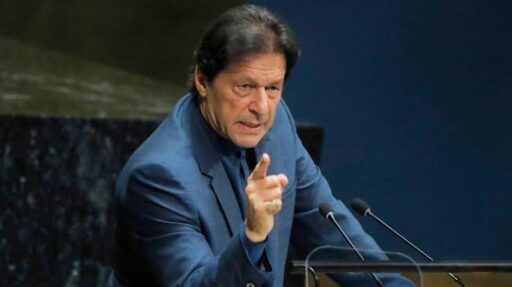

Pakistan’s Supreme Court has ordered imprisoned former Prime Minister Imran Khan to be transferred from jail to a private hospital, marking a significant development after months of concern from his family and political party about his health.
The court ruled on Tuesday, August 18, 2026, that the 73-year-old former prime minister should be moved from Adiala Jail in Rawalpindi to Shifa International Hospital in Islamabad for medical examination and treatment. He is expected to remain there until the next hearing, scheduled for September 16.
The decision does not release Khan from custody.
Instead, it changes where he will be held while doctors assess and treat his medical problems.
That distinction is particularly important given Khan’s political prominence and the continuing legal cases against him.
The Supreme Court Intervened Over Khan’s Health
Concerns about Khan’s health have been building for months.
His family, lawyers and Pakistan Tehreek-e-Insaf, or PTI, have repeatedly argued that he needs greater access to specialist medical treatment and his personal doctors.
The most serious publicly reported concern involves his eyesight.
Khan’s lawyers have said that he suffered significant loss of vision in his right eye while imprisoned, while his family has repeatedly raised broader concerns about his deteriorating health.
The Supreme Court has now ordered a medical board to examine him.
According to reports on the ruling, that board is expected to include medical specialists as well as Khan’s personal physician.
The hospital transfer therefore gives doctors an opportunity to assess Khan outside the prison’s medical facilities.
Khan Is Expected to Be Taken to Shifa International Hospital
The court specified Shifa International Hospitals Limited as the facility where Khan should receive medical attention.
The private hospital is located in Islamabad, while Khan has been incarcerated at Adiala Jail in nearby Rawalpindi.
Reports indicate that the transfer should take place within two days of the court’s ruling.
The Supreme Court also placed restrictions around the hospital stay.
Supporters have been directed not to gather outside the hospital, an understandable concern given Khan’s enormous political following and the possibility that his transfer could attract large crowds.
That means the transfer is being treated as a medical arrangement rather than a political event.
Whether it remains that way could depend on what happens once Khan leaves Adiala Jail.
Family Contact Was Another Major Part of the Case
The ruling goes beyond medical treatment.
The Supreme Court has also addressed Khan’s access to his family.
According to the Associated Press, the court ordered that he be permitted weekly family visits and telephone contact with his sons.
That has been another longstanding source of controversy.
Khan’s sons, Kasim and Sulaiman, live abroad and have publicly expressed concern about their father’s health and conditions of imprisonment. Reuters reports that they have not seen him in person since 2022 and have faced visa-related difficulties in attempting to visit Pakistan.
Restrictions on meetings with Khan have previously been justified partly on security grounds.
The Supreme Court’s intervention therefore addresses two issues simultaneously: medical access and family contact.
Why Is Imran Khan Still in Jail?
Khan has been imprisoned since August 2023 and has faced more than 100 legal cases since his government was removed through a parliamentary no-confidence vote in April 2022.
Several of the most prominent cases against him have produced convictions that were later overturned, suspended or challenged.
A conviction involving state secrets was overturned on appeal.
Sentences relating to state gifts from the Toshakhana have been suspended while appeals continue.
Khan and his wife, Bushra Bibi, were also convicted in 2024 in a case involving the legality of their marriage, but that conviction was subsequently overturned.
The case currently keeping Khan imprisoned centers on the Al-Qadir Trust.
In 2025, Khan and his wife were convicted in a corruption case involving land allegedly provided through the trust in exchange for political favors. Khan received a 14-year sentence.
He denies wrongdoing.
Khan has consistently maintained that the cases against him are politically motivated.
Pakistani authorities and prosecutors have rejected that characterization and maintain that the cases have proceeded through the country’s legal system.
His Imprisonment Has Reshaped Pakistani Politics
Khan is not simply another former political leader serving a prison sentence.
He remains one of Pakistan’s most influential political figures.
A former international cricket star, he founded PTI in 1996 and eventually became prime minister following the 2018 general election.
His government lasted until April 2022, when opposition parties successfully removed him through a parliamentary no-confidence vote.
His relationship with Pakistan’s powerful military establishment subsequently became increasingly confrontational.
Khan was arrested in May 2023, triggering widespread protests. Some demonstrators attacked military installations, producing one of the most serious confrontations between his supporters and the state. He was imprisoned again in August that year.
His detention did not eliminate PTI’s political influence.
PTI Candidates Performed Strongly in the 2024 Election
The February 2024 general election demonstrated how much support Khan retained even from prison.
Candidates associated with PTI won more seats than those linked to any other single political party, despite PTI being prevented from contesting under its traditional cricket-bat electoral symbol.
Because those candidates officially contested as independents, however, PTI was unable to translate its performance straightforwardly into a parliamentary majority.
A coalition government was ultimately formed under Prime Minister Shehbaz Sharif.
That history explains why virtually every development involving Khan’s imprisonment becomes politically significant.
A medical transfer is formally about healthcare.
But when the prisoner is the country’s most prominent opposition figure, even a hospital journey can become a national political event.
PTI Welcomed the Supreme Court’s Decision
Khan’s party has welcomed the hospital-transfer order.
PTI has spent months calling for independent medical assessment and greater access to Khan, particularly as concerns about his eyesight increased.
Party figures expressed relief at the Supreme Court’s intervention while also arguing that proper medical treatment should have been provided earlier.
From PTI’s perspective, the ruling supports its longstanding argument that Khan’s medical needs require treatment beyond what he has been receiving inside Adiala Jail.
The government’s perspective is different.
Pakistan’s law minister questioned whether similar medical privileges should then be available to other prisoners facing health problems, according to the Associated Press.
That illustrates the broader dispute.
PTI views Khan’s circumstances as exceptional because of his health and restrictions surrounding him.
Government figures have repeatedly resisted the idea that his political status should automatically entitle him to special treatment.
The Hospital Transfer Does Not Mean Khan Is Being Released
This point is likely to generate confusion.
The Supreme Court has not ordered Imran Khan’s release from custody.
He remains a prisoner.
The court has ordered authorities to move him from the prison environment to a hospital so that he can receive medical assessment and treatment.
Security will therefore remain part of the arrangement.
His legal cases continue.
His convictions and appeals continue.
And unless another court order changes his custody status, being admitted to hospital does not make him a free man.
The next important date is September 16, when the court is scheduled to revisit the matter.
The medical findings produced during the hospital stay could become important at that hearing.
His Eyesight Could Become a Central Issue
Among the different health concerns surrounding Khan, the reported deterioration of his vision has received particular attention.
His lawyers have said he lost significant sight in his right eye while imprisoned.
The hospital examination should provide a more detailed clinical assessment of that condition.
That matters beyond politics.
Prisoners remain entitled to appropriate medical care while incarcerated, and serious deterioration in eyesight can require specialist diagnosis and timely treatment.
The medical board’s findings may therefore help establish whether Khan requires treatment that cannot reasonably be delivered inside the prison.
Those findings could also reduce some of the political argument surrounding his health by replacing competing claims with specialist medical assessments.
The Court’s Order Comes at a Politically Sensitive Moment
Khan’s imprisonment remains one of the central fault lines in Pakistani politics.
PTI continues campaigning for his release.
His supporters argue that his legal cases are intended to exclude the country’s most popular opposition leader from political life.
The government and Khan’s opponents reject that narrative, arguing that a former prime minister must remain accountable before the law like anyone else.
The hospital ruling does not settle that dispute.
But it changes the immediate circumstances surrounding Khan.
For the first time after months of demands from his family and party, he is expected to leave Adiala Jail for sustained treatment at a private medical facility.
That creates new political and security considerations.
Authorities will need to transport one of Pakistan’s most recognizable figures through the Rawalpindi-Islamabad area.
PTI supporters will want information about his condition.
His family will seek greater access.
And every detail of his medical treatment is likely to attract national attention.
September 16 Is Now the Date to Watch
The immediate question is whether authorities implement the Supreme Court’s order exactly as directed.
Khan is expected to be moved to Shifa International Hospital, examined by a specialist medical board and allowed greater contact with his family.
After that, attention will shift to what doctors find.
If the medical assessment confirms serious health problems requiring continued hospital treatment, Khan’s lawyers could use those findings in subsequent proceedings.
If doctors conclude that his condition can be adequately managed in prison, authorities could argue for his return to Adiala Jail.
Either way, the September 16 hearing could become another significant moment in the prolonged legal battle surrounding the former prime minister.
For now, the Supreme Court’s ruling represents a clear intervention.
After months of arguments about his health, access to doctors and contact with his family, Pakistan’s highest court has ordered that Khan receive specialist hospital care.
It is not a release order.
It does not end his corruption sentence.
And it does not resolve the political struggle that has surrounded him since his removal from office.
But for Imran Khan, his family and PTI, it delivers something they have been demanding for months:
medical treatment outside the walls of Adiala Jail.