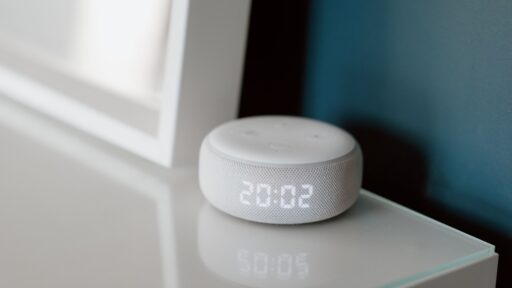
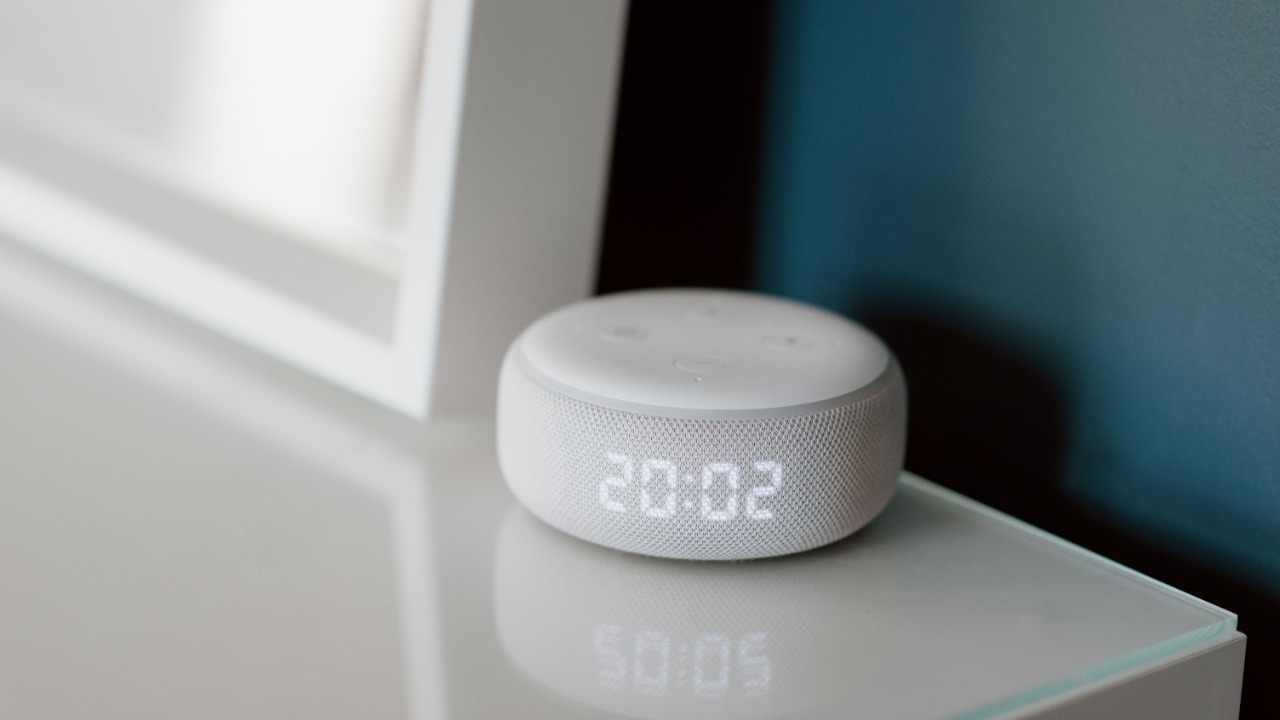

Smart speakers were supposed to make technology disappear.
Instead of unlocking a phone, opening an app and navigating menus, someone could simply say what he wanted. The speaker would play music, turn off the lights, answer a question or adjust the thermostat.
Google was particularly well positioned for that future.
It already had one of the world’s most powerful search engines, an enormous ecosystem of services and years of experience with voice recognition. The original Google Home therefore arrived with an appealing proposition: put Google Assistant in the middle of the house and let voice become the remote control.
Years later, the basic idea still works.
Google’s home speakers can be dependable controllers for compatible smart-home equipment. They handle timers, alarms, music and routine household requests reasonably well. Google’s ecosystem also supports the Matter smart-home standard, giving users broader compatibility with newer connected devices. Google’s Matter information explains how supported Google Home products can work with Matter-enabled equipment.
But there is a problem that becomes more noticeable every year.
The speaker can feel slow.
And in an era when conversational AI can respond almost immediately to complicated questions, waiting for a smart speaker to perform a simple command feels increasingly difficult to excuse.
The Hardware Still Does Its Job
The strongest part of Google’s smart-speaker formula remains its simplicity.
A Google Home or Nest speaker does not need to dominate a room.
It sits on a counter, desk or shelf and waits.
That is exactly what a good smart-home controller should do.
Microphones listen for the activation phrase, while the speaker provides audible feedback and handles music or spoken responses. There is no complicated interface to learn because the primary interface is someone’s voice.
For ordinary household use, that remains remarkably convenient.
Someone cooking can start a timer without touching anything.
A person walking into a dark room can ask for the lights.
Someone lying in bed can adjust a compatible thermostat.
Those are small conveniences individually.
After years of using them, however, physically operating every device starts to feel surprisingly old-fashioned.
Smart-Home Control Is Where Google Home Still Makes the Most Sense
Google Home becomes considerably more useful when it is connected to other devices.
A speaker by itself is essentially a voice assistant combined with an audio system.
Connect smart lights, plugs, cameras, thermostats and other devices, and it becomes a household control point.
The Google Home platform supports a large ecosystem of compatible devices, while Matter has made interoperability between manufacturers increasingly important.
This is where reliability matters more than intelligence.
When someone says, “Turn off the bedroom lights,” he does not need an insightful answer.
He needs the lights to turn off.
When Google Home understands the request correctly and executes it quickly, the experience still feels excellent.
Unfortunately, that second part—quickly—is where frustration can begin.
The Delay Is Small Until You Experience It Every Day
A slow smart speaker does not necessarily mean waiting 20 seconds.
Sometimes the irritating delay is only a few seconds.
But consider the interaction.
Someone walks into the kitchen and says, “Hey Google, turn on the lights.”
The speaker acknowledges the wake phrase.
There is a pause.
It processes the request.
Another moment passes.
Then the lights finally activate.
Technically, the command succeeded.
Experientially, reaching for the wall switch might have been faster.
That distinction matters enormously.
Smart-home automation is valuable because it removes friction. Once issuing the automated command feels slower than completing the physical action, the technology starts defeating its own purpose.
Occasional latency is understandable.
Persistent latency becomes part of the product.
Why Can a Simple Command Take So Long?
The answer lies partly in how voice assistants work.
What sounds like one interaction can involve several technical stages.
The device needs to detect the wake phrase.
It needs to capture the command accurately.
Speech needs to be interpreted.
The system has to determine what the user intends.
It may need to communicate with a cloud service.
That service may communicate with another company’s smart-home platform.
The command then travels to the device.
Finally, the speaker provides confirmation.
Each stage can add latency.
Network quality matters too.
A weak Wi-Fi connection can make an otherwise reliable speaker feel unresponsive.
Third-party smart-home integrations can introduce their own delays.
This means Google is not necessarily responsible for every slow light bulb.
But users experience the entire chain as one product interaction.
They said something.
Google Home took too long to make it happen.
That is what they remember.
Voice Recognition Is Generally One of Its Stronger Features
Speed and understanding are separate issues.
Google has spent years developing speech-recognition technology, and its speakers are generally capable of recognizing ordinary conversational commands in normal household environments.
That matters more than specifications suggest.
A voice assistant that responds instantly but misunderstands one request in four would be unbearable.
Google’s ecosystem can also use Voice Match to distinguish between supported users and provide personalized results. Google’s Voice Match documentation explains how voice recognition can be associated with individual accounts on compatible devices.
When it works, the experience is almost invisible.
Someone asks for a calendar item, music or another personalized result, and the speaker knows whose information it should use.
It is the kind of feature users stop noticing until it fails.
Music Is Fine, but This Isn’t a Replacement for Serious Audio Equipment
Google’s speakers also function as convenient everyday music players.
For kitchens, bedrooms, offices and smaller living spaces, that can be enough.
The biggest advantage is not necessarily audio fidelity.
It is accessibility.
A user can ask for a song without finding his phone.
Multiple compatible speakers can also be grouped, allowing audio to play across different rooms.
Google provides instructions for creating and controlling speaker groups through Google Home.
For casual background music, podcasts and spoken audio, the system works well.
Anyone expecting the soundstage, bass extension and detail of dedicated hi-fi equipment should keep expectations realistic.
A smart speaker has to balance microphones, compact dimensions, processing hardware, wireless connectivity and audio components inside a relatively small enclosure.
Its purpose is convenience first.
Routines Are More Powerful Than Individual Commands
The best smart-home setup is often the one that requires fewer commands.
Google Home routines allow multiple actions to happen from a single trigger.
Someone could create a bedtime routine that turns off selected lights, adjusts compatible devices and performs other configured actions.
A morning routine could trigger another set of household behaviors.
Google explains the available automation system through its Google Home routines documentation.
This is where smart speakers become much more compelling.
Telling a speaker to switch off six individual devices is not particularly futuristic.
Saying one phrase and having the entire home transition into nighttime mode is.
Routines also reduce the impact of latency.
Waiting briefly for five things to happen simultaneously feels more worthwhile than waiting the same amount of time for one lamp.
The Biggest Problem Is That AI Has Changed Expectations
Google Home’s shortcomings would be easier to overlook if the broader technology world had remained unchanged.
It has not.
Generative AI has completely altered what users expect from conversational computers.
People can now ask complicated follow-up questions, provide context, request explanations and continue a conversation without carefully constructing every sentence like a command.
Traditional voice assistants can feel primitive by comparison.
“What’s the weather?”
Easy.
“Turn on the kitchen lights.”
Easy.
But start asking ambiguous, contextual or multi-step questions and the limitations become more obvious.
This is particularly awkward for Google because the company is one of the major developers of generative AI.
Its Gemini technology demonstrates how dramatically conversational interaction has progressed.
Once someone experiences that kind of AI, a speaker that struggles with context or pauses before a basic home-control request feels much older.
Google Is Trying to Bring Gemini Into the Home
Google knows this.
Its strategy increasingly involves bringing Gemini capabilities into the Google Home ecosystem rather than leaving the traditional Assistant experience frozen in time.
The company has introduced Gemini for Home as the next generation of its household assistant, with more natural conversational capabilities and improved understanding intended to replace the rigid command structure associated with older smart speakers.
Google outlines that direction through its Gemini for Home platform.
This transition could be extremely important.
A genuinely conversational home assistant should understand something like:
“It’s getting a little dark in here, but don’t make the room too bright.”
An older assistant may struggle because there is no explicit device command.
A more capable AI can infer that the user probably wants compatible lights activated at a moderate brightness.
That is the difference between following instructions and understanding intent.
But Smarter AI Won’t Automatically Fix Slow Smart-Home Commands
Generative AI creates another potential problem.
More intelligence can require more processing.
If Google adds sophisticated language interpretation but a simple light command still takes several seconds, users may not care how advanced the underlying model has become.
The ideal smart-home assistant needs two modes of behavior.
Simple commands should be nearly immediate.
Complex questions should receive intelligent, contextual answers.
There is no reason “turn off the lamp” needs the same computational treatment as “help me plan dinner based on what I have in the refrigerator.”
This is where local processing becomes increasingly important.
The more basic commands that can be interpreted and routed without unnecessary cloud round trips, the faster the home can feel.
Google’s challenge is therefore not merely making Home smarter.
It needs to make intelligence feel fast.
Reliability Matters More Than Novelty in a Smart Home
Technology reviews often reward new features.
Smart homes operate under different rules.
A light switch has almost no exciting features.
It also works immediately almost every time.
That creates an extremely high standard for anything trying to replace it.
If a voice assistant succeeds 95 times out of 100, that sounds impressive.
But if someone uses it 20 times per day, failures can become regular events.
Smart-home products therefore need to prioritize consistency.
The speaker should recognize the command.
The correct device should respond.
The response should happen quickly.
And it should behave the same way tomorrow.
Google Home can deliver that experience, particularly with a well-configured network and compatible equipment.
But when delays or inexplicable failures appear, they become disproportionately irritating because the task itself was so simple.
Privacy Still Deserves Consideration
A microphone-equipped device sitting inside someone’s home naturally creates privacy questions.
Smart speakers are designed to listen for wake phrases, and voice requests may be processed through online services depending on the feature being used.
Google provides controls for reviewing and managing Assistant-related activity through the Google Account activity controls.
Users should understand those settings rather than simply plugging the speaker in and forgetting about them.
Microphone hardware controls are also useful when someone wants additional certainty that the device is not listening for commands.
The trade-off is straightforward.
A smart speaker becomes useful precisely because it is always available to hear someone.
The same characteristic that makes it convenient is the reason privacy settings matter.
Should Someone Buy a Google Home Speaker Today?
That depends heavily on what he expects from it.
Someone deeply invested in Google services and compatible smart-home equipment can still find considerable value in Google’s speaker ecosystem.
It is useful for lights.
It handles timers.
It plays music.
It supports household automations.
It can provide quick information without requiring a screen.
And Google’s move toward Gemini gives the ecosystem a potentially much more capable future.
Someone expecting an instant, highly conversational AI assistant may be less impressed.
The hardware concept remains good.
The basic functionality remains dependable.
But the pauses and occasional sluggishness increasingly stand out because competing technology has taught users how fast digital interactions can feel.
Solid and Dependable Isn’t Quite Enough Anymore
Google Home helped normalize the idea that people could simply talk to their houses.
That achievement should not be underestimated.
What once looked futuristic has become so ordinary that turning on a light by voice barely feels technological.
But success created a new problem.
Users no longer compare Google Home with the world before smart speakers.
They compare it with what modern AI can do now.
That raises the standard enormously.
A smart speaker in 2026 needs to understand context, handle natural language, control dozens of devices and respond quickly enough that a physical switch never feels like the better option.
Google already has many of the pieces.
Its smart-home ecosystem is extensive.
Its voice technology is mature.
Its Gemini models provide a path toward far more natural interaction.
The missing ingredient is making all of that feel immediate and predictable.
That is why the Google Home speaker remains easy to describe in three words:
Solid. Dependable. Slow.
The first two are reasons to keep using it.
The third is the reason Google needs to make the next generation much better.