
The Democratic Republic of the Congo is facing an Ebola crisis moving at a pace the world has never seen before.
More than 4,300 cases and 2,000 deaths have now been reported in eastern Congo, and World Health Organization Director-General Tedros Adhanom Ghebreyesus has issued an alarming warning: if transmission continues at its current rate, the epidemic could eventually surpass the catastrophic West African Ebola outbreak of 2014–2016.
That earlier epidemic killed more than 11,000 people and became the deadliest Ebola outbreak ever recorded.
The current outbreak has not reached anything close to that death toll yet. But its extraordinary speed is what worries health officials.
“At its current pace, it’s on track to eclipse the West African Ebola outbreak of 2014 to 2016,” Tedros said on August 12.
Why is this outbreak proving so difficult to contain despite decades of experience fighting Ebola?
The answer begins with an unusual strain of the virus, but it extends far beyond medicine.
This Is Not the Ebola Strain Most People Remember
The current epidemic is being driven by Bundibugyo virus, one of the viruses capable of causing Ebola disease.
That distinction is extremely important.
Much of the medical progress made after previous Ebola epidemics focused on the Zaire ebolavirus, the strain responsible for the devastating 2014–2016 West African epidemic.
The current Bundibugyo outbreak presents a different challenge.
WHO says there is currently no approved vaccine or specific treatment for Bundibugyo virus disease, although experimental candidates are being developed and tested.
That means health workers are confronting a rapidly expanding epidemic without some of the tools that transformed the response to more recent Zaire Ebola outbreaks.
Two vaccines developed specifically against Bundibugyo virus have now entered human testing for the first time.
That development offers hope.
But vaccine development and epidemic control operate on very different clocks.
People are becoming infected now.
The Outbreak Had Months to Spread Before It Was Recognized
One of the most troubling aspects of the crisis is how much of a head start the virus apparently received.
The outbreak was officially declared on May 15, 2026.
However, subsequent genetic analysis indicates that transmission may have begun as early as February.
That means the virus could have been spreading for months before authorities understood the scale of the problem.
Early Ebola symptoms can resemble other diseases common in the region.
A patient may initially experience fever, fatigue, muscle pain, headache and sore throat. More serious symptoms can follow, including vomiting, diarrhea and, in some cases, bleeding.
In regions where malaria, typhoid and other infectious diseases are common, recognizing Ebola immediately can be difficult.
That delay matters enormously.
Every unidentified patient can create additional transmission chains.
By the time laboratories establish what is happening, the outbreak may no longer be concentrated around one easily traceable cluster.
Tedros described the situation starkly: the epidemic received “a big head start,” leaving responders trying to catch up.
The Numbers Have Accelerated at an Extraordinary Rate
The progression of confirmed cases illustrates just how rapidly conditions deteriorated.
On June 6, WHO reported 515 confirmed cases and 91 confirmed deaths in the Democratic Republic of the Congo.
By July 1, those figures had reached 1,460 confirmed cases and 452 deaths.
By July 15, WHO was reporting 2,124 cases and 828 deaths in Congo.
The situation then accelerated further.
By August 11, government data cited in international reporting put the outbreak at 4,381 confirmed cases and 2,011 deaths.
More than 1,000 of those deaths occurred within roughly three weeks.
That rate of increase is why the comparison with West Africa is being made even though the overall totals remain far lower.
This outbreak is not yet the deadliest.
It is moving fast enough that WHO fears it could become so.
Eastern Congo Is One of the Hardest Places to Fight an Epidemic
Stopping Ebola requires an intensive public-health operation.
Patients need to be identified quickly.
Contacts need to be traced.
People who develop symptoms must be tested and isolated.
Healthcare workers require protective equipment.
Treatment centers need supplies and trained staff.
Deaths require safe and dignified burials because Ebola can remain highly infectious after death.
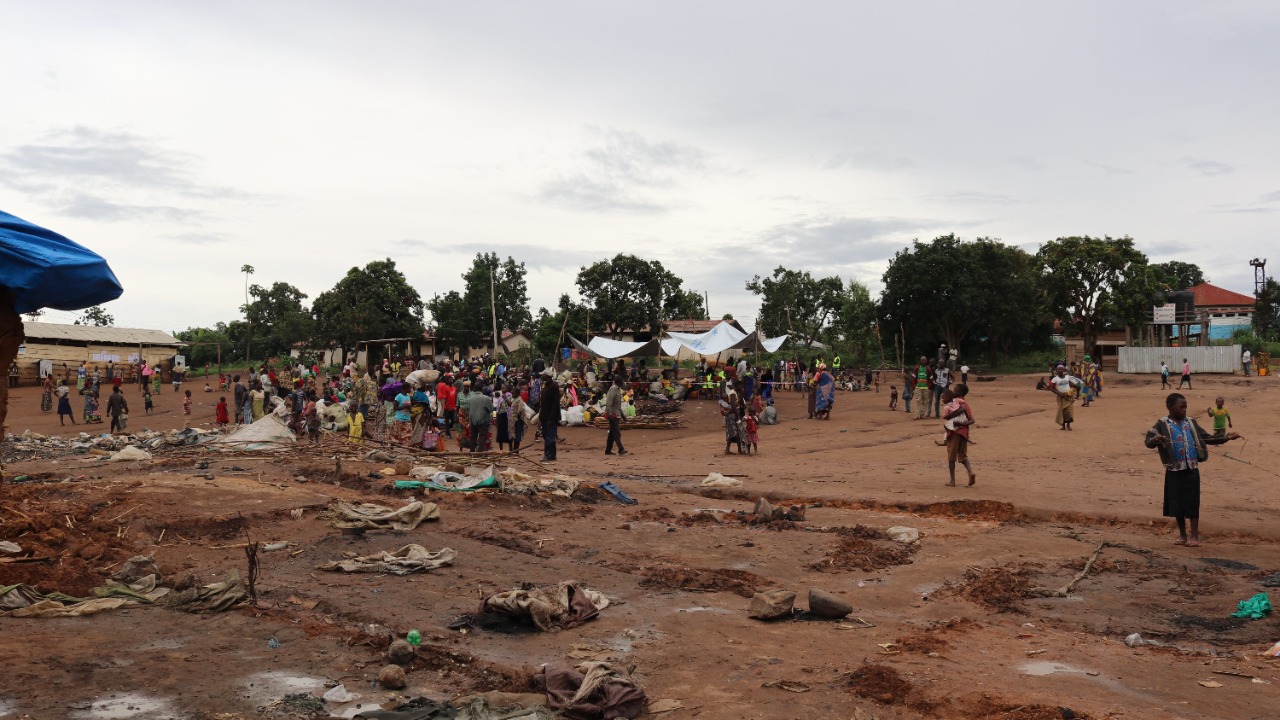
That system becomes extraordinarily difficult to maintain in a region affected by armed conflict, displacement and weak infrastructure.
Eastern Congo has experienced years of insecurity.
Some affected communities are remote.
Road infrastructure can be poor.
Health facilities may lack equipment.
Movement of displaced populations can complicate contact tracing.
The current outbreak has spread across multiple provinces, with Ituri among the areas most severely affected.
WHO reported in July that transmission had expanded from 35 to 42 health zones and from three to five provinces.
An Ebola response works best when health teams can rapidly reach almost everyone who might have been exposed.
In parts of eastern Congo, that basic assumption cannot always be guaranteed.
Many Patients Are Dying Without Ever Reaching a Treatment Center
Perhaps the most concerning warning came from WHO’s July assessment.
Tedros said that more than 80% of new cases were being detected outside known contact lists.
That indicates health teams were missing transmission chains.
If nearly every new patient is already on a contact list, responders have a reasonably clear picture of where the virus is moving.
When most patients appear outside those lists, the epidemic contains hidden branches.
WHO also reported that roughly two-thirds of deaths were occurring in communities among people who had never received care in a health facility.
That is dangerous for several reasons.
The patient loses access to potentially lifesaving supportive care.
Family members may be exposed while caring for the sick person.
And handling a body after death can create further opportunities for transmission.
The outbreak therefore becomes both a medical emergency and a surveillance problem.
Funerals Can Become Major Transmission Events
Ebola is not spread through ordinary airborne transmission in the way measles is.
It spreads primarily through direct contact with blood or other bodily fluids from infected people, contaminated materials, or infected animals.
That makes certain activities particularly dangerous.
Caring for a seriously ill relative without protective equipment is one.
Preparing the body of someone who died from Ebola can be another.
Traditional funeral practices may involve washing, touching or remaining physically close to the deceased.
During an Ebola epidemic, those expressions of respect can unintentionally expose many people.
The problem becomes even more complicated when bodies are transported between communities for burial. Health officials have expressed concern that such movement can carry infection into areas that previously had little or no transmission.
Safe burial teams therefore play an essential role.
But they can only succeed if communities trust them.
Misinformation Can Be Almost as Dangerous as the Virus
Public-health authorities cannot simply arrive in a community and demand cooperation.
Trust matters.
Rumors surrounding Ebola treatment centers, vaccines and foreign health workers have complicated previous outbreaks.
The current epidemic is experiencing similar problems.
Misinformation is circulating in some affected communities, while distrust of outsiders can discourage sick people from visiting treatment facilities.
That creates a vicious cycle.
A person develops symptoms but fears the clinic.
He remains at home.
His relatives care for him.
More people become exposed.
If he dies, additional relatives may participate in burial preparations.
By the time Ebola is confirmed, an entire chain of infections may already exist.
This is why WHO emphasizes community engagement alongside laboratories, treatment centers and contact tracing.
WHO’s current Ebola response in the Democratic Republic of the Congo
Medical technology matters enormously.
But people have to trust it enough to use it.
Even Health Workers Are Under Enormous Pressure
Healthcare workers are among those facing the greatest danger.
They may encounter patients before Ebola has been diagnosed.
Protective equipment can be limited.
Facilities can become overwhelmed.
Some health workers in affected areas have also gone on strike over unpaid wages, adding another layer of difficulty to an already strained response.
Earlier in the epidemic, WHO documented infections among healthcare workers as transmission expanded.
By June 10, 16 confirmed infections had already been reported among health and care workers. By July 1, that figure had risen to 102 confirmed cases, including 25 deaths.
When healthcare workers become infected, the consequences extend beyond those individual cases.
A community loses medical capacity precisely when it needs it most.
Uganda Shows That Containment Is Still Possible
There is one encouraging part of the regional picture.
Uganda detected imported cases and limited secondary transmission connected with the Congo outbreak.
By mid-July, however, Uganda had reported no new cases since June 21 and had entered the enhanced surveillance period required before an outbreak can formally be declared over.
WHO reported 20 confirmed Ugandan cases, including two deaths, with no evidence at that point of sustained community transmission.
That demonstrates something important.
Bundibugyo Ebola can still be contained when cases are identified, contacts are followed and health systems can intervene rapidly.
The virus itself is not unstoppable.
The circumstances surrounding it determine how difficult stopping it becomes.
Experimental Vaccines Could Change the Trajectory
The lack of an approved Bundibugyo vaccine is one of the biggest differences between this outbreak and recent epidemics involving Zaire ebolavirus.
But scientists are trying to close that gap.
Two vaccines specifically designed for Bundibugyo virus have begun first-in-human testing, while WHO is also evaluating whether an existing Ebola vaccine that showed encouraging results in animal studies could provide useful protection.
If researchers establish safety and enough evidence of effectiveness, vaccination could become a powerful addition to the response.
That would be especially useful for ring vaccination.
Under that strategy, health teams vaccinate contacts of confirmed patients and contacts of those contacts, building a protective barrier around transmission chains.
The approach helped control previous Ebola outbreaks.
But vaccines work best when health teams know where those chains are.
The large proportion of cases currently occurring outside known contact lists makes that harder.
Could This Really Become Worse Than the 2014–2016 Epidemic?
It is possible, but it is not inevitable.
The West African epidemic produced more than 28,000 cases and killed more than 11,000 people across Guinea, Liberia and Sierra Leone.
The current Congo outbreak remains far below those totals.
WHO’s warning is based on trajectory, not a prediction that 11,000 deaths are guaranteed.
Health officials currently expect the epidemic could peak in approximately six months under a moderate scenario. A worse scenario could see transmission continuing for nine months to a year.
Those forecasts can change.
A successful vaccination campaign could alter the trajectory.
Improved contact tracing could alter it.
Better community cooperation could alter it.
Additional international funding and healthcare personnel could alter it.
The future death toll is not predetermined.
That is precisely why the warning is being issued now.
The World Has More Ebola Knowledge Than It Did in 2014
There is one crucial difference between today and the beginning of the West African crisis.
The world has far more experience fighting Ebola.
Health authorities understand transmission better.
Laboratory capacity has improved.
Emergency response systems have been developed.
African health institutions have accumulated significant experience managing outbreaks.
Scientists can sequence viral genomes rapidly.
Experimental vaccines can enter trials much faster.
WHO and Africa CDC have also established a joint continental preparedness and response effort for the current emergency. Earlier in the outbreak, partners sought $518 million to support detection, response and preparedness across African countries.
Those advantages matter.
But scientific knowledge cannot compensate completely for inaccessible communities, armed conflict, understaffed clinics and delayed detection.
The Next Few Months Could Decide Whether This Becomes a Historic Disaster
Calling this outbreak potentially the deadliest ever does not mean that outcome has already been decided.
It is a warning about what happens if the current trajectory continues.
More than 4,300 people have already been infected and over 2,000 have died. The epidemic apparently circulated for months before it was officially recognized, is spreading through difficult-to-reach communities and involves a Bundibugyo virus for which there is currently no approved vaccine or specific treatment.
Those conditions explain WHO’s alarm.
Yet Uganda’s experience demonstrates that transmission can still be interrupted, while experimental vaccines and expanded international support offer additional tools.
The 2014–2016 West African epidemic taught the world a brutal lesson: waiting until Ebola becomes enormous makes every part of the response harder.
This time, the warning has arrived before the historical record is broken.
Whether the outbreak actually reaches that record will depend on what happens next.
The frightening part is not that Congo’s epidemic has already become the deadliest Ebola outbreak in history.
It is that, according to WHO, it is moving fast enough to get there.