
Many people expect to lose some muscle as they get older. It is often treated as an unavoidable part of aging, something that affects appearance, mobility, or how much weight someone can lift at the gym.
Research suggests the consequences can be far more serious.
Age-related loss of muscle mass and strength, known as sarcopenia, has been consistently associated with poorer health outcomes in older adults. Meta-analyses have linked sarcopenia with a significantly higher risk of death, while other studies connect it with falls, fractures, disability, hospitalization, and loss of independence.
The important part is that this process can begin quietly. A person may weigh roughly the same at 55 as he did at 45, yet carry less muscle and more fat. By the time everyday activities begin feeling noticeably harder, the decline may already have been progressing for years.
That makes muscle preservation after middle age less about appearance and more about maintaining the physical reserve that helps the body survive illness, injury, and aging itself.
Muscle Loss Is More Than Looking Smaller
Sarcopenia refers to the age-related decline in skeletal muscle mass, strength, and physical function.
The condition does not necessarily begin at a single birthday, but the effects often become more noticeable as people move through middle age and into later adulthood. The U.S. Office on Women’s Health describes sarcopenia as the gradual loss of muscle mass and strength that occurs with aging, particularly among people who are less physically active.
That distinction matters.
Muscle is not simply tissue used for lifting objects.
It plays a major role in movement, balance, glucose regulation, metabolism, recovery from illness, and the ability to remain physically independent.
When muscle gradually disappears, the body loses more than strength.
It loses reserve.
A person with more functional muscle has greater capacity to recover from a hospital stay, infection, operation, or period of inactivity than someone who already has very little strength to spare.
That is one reason researchers increasingly treat sarcopenia as a clinically important condition rather than a cosmetic consequence of aging.
The Link With Early Death Is Real
One of the strongest findings in the scientific literature is the association between sarcopenia and mortality.
A systematic review and meta-analysis published in Gerontology concluded that sarcopenia was associated with a significantly higher risk of mortality across different populations and definitions of the condition.
A more recent 2026 meta-analysis focusing on community-dwelling older adults reached a similar conclusion, finding that sarcopenia predicted both long-term functional decline and mortality.
That does not mean losing muscle directly causes every early death.
Older adults with sarcopenia may also have chronic diseases, nutritional problems, lower activity levels, or other factors that increase risk.
But the association remains important because muscle weakness often sits inside a broader chain of decline.
Weakness reduces activity.
Reduced activity accelerates further muscle loss.
Less strength increases the risk of falls.
A serious fall may lead to hospitalization.
Hospitalization often means extended periods in bed, which can cause even more rapid loss of muscle and physical function.
Once that cycle begins, returning to the previous level of independence becomes increasingly difficult.
Strength May Matter Even More Than Muscle Size
It is tempting to think muscle health is mainly about how much muscle someone carries.
The research is more complicated.
Several studies suggest that muscle strength may be more strongly associated with health outcomes and mortality than muscle mass alone.
That is why clinicians often pay attention to functional measurements rather than relying only on body composition.
Grip strength, walking speed, and the ability to stand up from a chair can reveal important information about physical function.
A person may not look dramatically thinner, yet he may notice that opening jars has become harder, stairs require more effort, or getting up from a low chair requires using his arms.
Those changes can be early signs that functional strength is declining.
The difference matters because body weight can hide muscle loss.
Someone can lose muscle while gaining fat and remain almost exactly the same weight.
A bathroom scale would show nothing unusual.
His body composition and physical capacity, however, could be changing significantly.
Falls Turn Muscle Loss Into a Much Bigger Problem
One of the most immediate dangers of sarcopenia is falling.
A large meta-analysis found that older adults with sarcopenia had a significantly higher risk of both falls and fractures compared with those without the condition.
The connection is straightforward.
Strong leg, hip, and core muscles help stabilize the body during everyday movement. They also allow someone to recover when he trips or loses balance.
As strength declines, that margin of safety becomes smaller.
A minor stumble that a stronger person could correct may become a serious fall.
In later life, a fracture can have consequences extending far beyond the bone itself.
Hospital stays and reduced mobility can produce rapid physical deconditioning. Someone who was previously independent may leave the hospital requiring a walking aid, rehabilitation, or assistance with daily activities.
That is why preserving strength is closely connected with preserving independence.
The World Health Organization specifically recommends that older adults include muscle-strengthening activities and exercises emphasizing balance and coordination as part of regular physical activity.
Muscle Is Also a Metabolic Organ
The importance of skeletal muscle extends beyond movement.
Muscle is one of the major tissues involved in glucose metabolism.
After a meal, insulin helps move glucose from the bloodstream into tissues, including skeletal muscle, where it can be used for energy or stored.
Maintaining active muscle therefore supports metabolic health.
Muscle also contains protein that the body can draw upon during illness, injury, or periods of stress.
This becomes particularly important later in life.
A younger adult with abundant muscle may lose some tissue during several weeks of illness and still retain a substantial reserve. An older adult who begins with very little muscle may have less capacity to tolerate the same event.
That helps explain why researchers often describe muscle as a kind of physiological reserve.
It does not make someone immune to disease.
It gives the body more resources with which to respond.
Inactivity Can Accelerate the Problem
Age contributes to muscle decline, but inactivity can make it considerably worse.
When muscles are not regularly challenged, the body has less reason to maintain them.
This creates an unfortunate feedback loop.
A person becomes slightly weaker, so he moves less.
Because he moves less, he loses additional strength.
Everyday activities then become harder, encouraging even less movement.
The cycle can continue until physical tasks that once felt ordinary begin requiring significant effort.
This is why the worst response to age-related weakness is often avoiding activity altogether.
Physical activity does not stop aging, but it can substantially influence how much function someone retains.
The World Health Organization’s physical activity recommendations advise adults to perform muscle-strengthening activities involving major muscle groups on at least two days each week.
For adults aged 65 and older, WHO also recommends regular aerobic activity and additional balance-focused movement when mobility is limited.
Resistance Training Remains One of the Strongest Defenses
The encouraging part of the research is that older muscle can still respond to training.
Resistance exercise creates a stimulus that tells the body muscle is still required.
That training does not have to mean competitive bodybuilding.
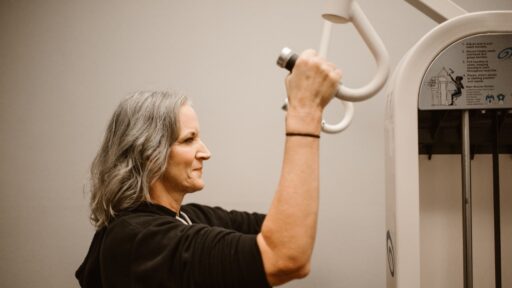
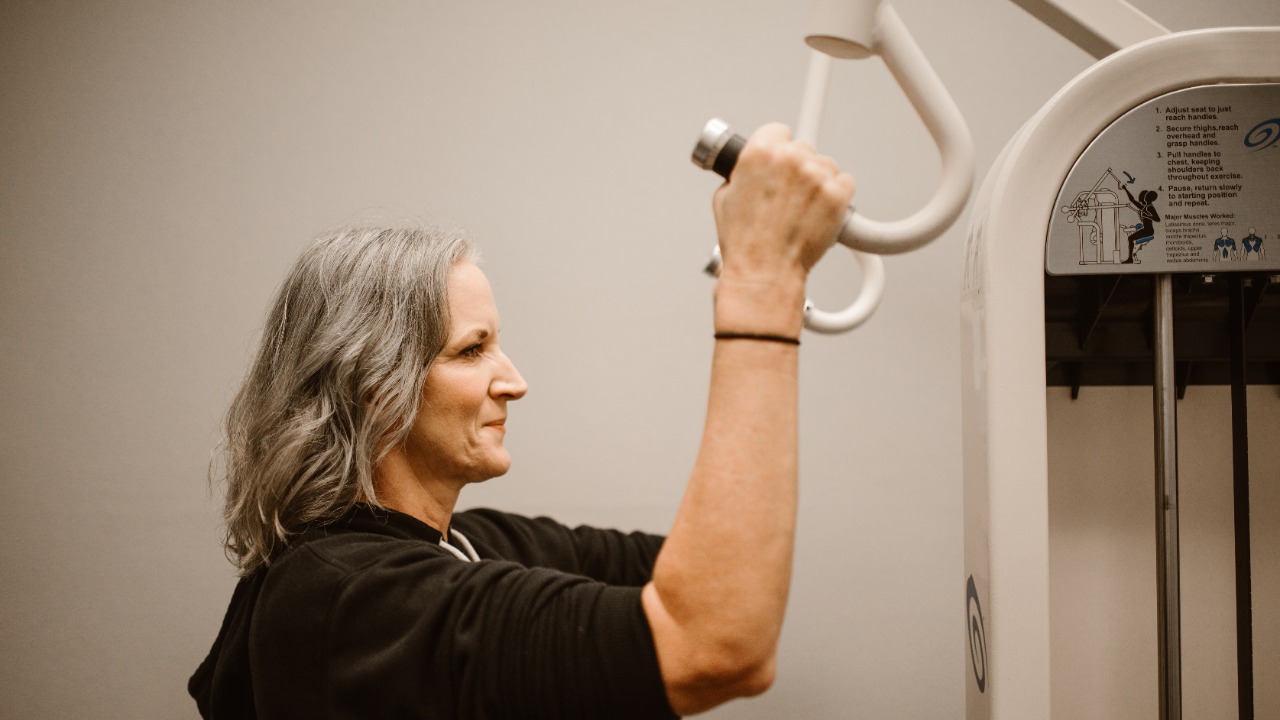
Depending on a person’s ability, resistance can come from weight machines, free weights, resistance bands, body-weight movements, or supervised rehabilitation exercises.
The goal is progressive challenge.
Muscles need to work harder than they normally do if strength is going to improve.
Reviews of sarcopenia interventions consistently identify resistance training as one of the most effective strategies for improving muscle strength and physical performance in older adults.
Someone who has been inactive for years should not suddenly begin an aggressive training program, particularly if he has heart disease, joint problems, balance difficulties, or another medical condition.
But the broader principle is clear.
Muscle remains adaptable much later in life than many people assume.
Protein and Nutrition Matter Too
Exercise provides the signal for muscle maintenance and growth, but the body also needs adequate nutrition.
Protein supplies amino acids required for repairing and building muscle tissue.
Older adults sometimes consume less protein because appetite falls, meal sizes shrink, or medical and dental problems make eating more difficult.
That combination can become problematic.
If someone is eating too little protein while also becoming less active, muscle loss can accelerate.
Vitamin D, overall calorie intake, and management of underlying medical conditions can also affect muscle health.
This is one reason sarcopenia should not be reduced to a simple instruction to “go to the gym.”
Physical activity, nutrition, chronic disease, sleep, and recovery all influence how well the body maintains muscle.
Anyone experiencing unexplained weakness, rapid weight loss, repeated falls, or major difficulty with normal activities should discuss those changes with a healthcare professional rather than assuming they are simply normal aging.
The Scale May Be the Wrong Thing to Watch
For decades, many adults have focused heavily on body weight.
After 50, that number can become increasingly misleading.
A lower body weight does not necessarily mean better health if much of the weight lost came from muscle.
Conversely, someone who begins resistance training might gain or maintain weight while substantially improving strength and body composition.
Research examining older adults has even found that muscle mass can provide useful information about longevity that body mass index alone may miss.
That does not make body weight irrelevant.
It means weight is only one piece of the picture.
Walking speed, grip strength, ability to climb stairs, balance, and ease of standing from a chair may tell an older person far more about how well his body is aging than the number on a bathroom scale.
Preserving Muscle Is Really About Preserving Independence
The most important reason to maintain strength after 50 may have very little to do with living longer.
It is about how those later years are lived.
Muscle allows someone to carry groceries, travel, climb stairs, get out of a chair, play with grandchildren, recover from illness, and continue living independently.
When those abilities disappear, quality of life changes rapidly.
That is why the connection between sarcopenia and mortality matters.
It is not simply that researchers have found another biomarker associated with lifespan.
Muscle sits at the center of many systems that allow older adults to remain resilient.
Losing some muscle with age may be common.
Allowing strength to disappear without resistance does not have to be inevitable.
Regular strength training, sufficient movement, appropriate nutrition, and early attention to declining physical function can all help change the trajectory.
The goal after 50 is therefore not necessarily to build the largest muscles possible.
It is to preserve enough strength that the body still has something in reserve when life becomes physically demanding.
That reserve may influence not only how independently someone ages, but potentially how long he lives.