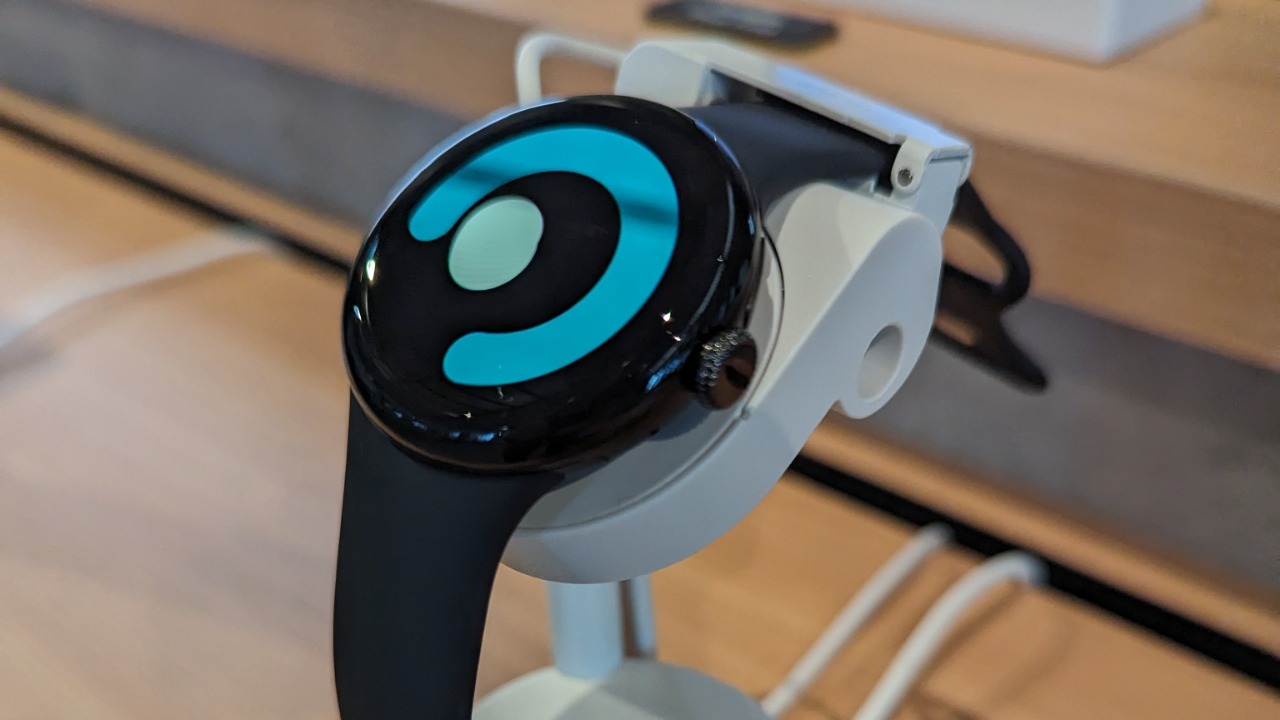

Smartwatches have spent years getting better at counting steps, measuring heart rate, estimating sleep and tracking workouts. Those features are useful, but they have also become relatively ordinary.
Google is now trying to push wearable health tracking into a much more ambitious category.
With the Pixel Watch 5, the company is introducing two health-trend features that most mainstream smartwatches still cannot provide: Blood Pressure Trends and Insulin Resistance Trends.
Neither feature is designed to replace a doctor, a blood-pressure cuff or a laboratory blood test. Google explicitly describes them as general wellness tools rather than diagnostic systems. But the fact that a wrist-worn consumer device can estimate long-term changes in these areas at all represents a significant shift in what wearable technology may become. (blog.google)
The Pixel Watch 5 Is Moving Beyond Basic Fitness Tracking
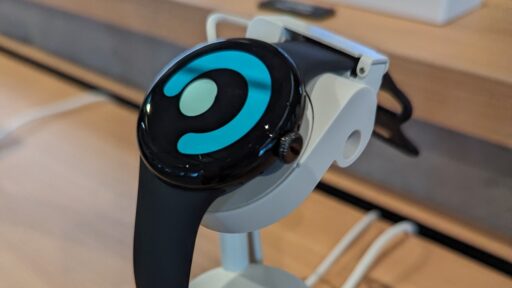
Google officially introduced the Pixel Watch 5 on August 12, 2026, as part of its Made by Google hardware launch.
The new watch includes upgraded health features, Gemini-powered intelligence and more proactive wellness monitoring rather than focusing only on conventional exercise statistics. Google describes the device as using advanced sensors to provide insights ranging from blood-pressure trends to signs associated with insulin resistance. (Google Store)
That distinction matters.
Most smartwatches are very good at telling a wearer what happened during a particular workout. They can report how fast he ran, how high his heart rate climbed or how many calories he burned.
Google increasingly wants the watch to do something different: observe physiological patterns continuously and identify slow changes that a person might never notice himself.
That is the concept behind the company’s new Health Guardian platform.
Blood Pressure Trends Do Not Require a Traditional Cuff
Blood pressure is one of the most familiar health measurements, yet it normally requires either a clinical measurement or a home monitor with an inflatable cuff.
The Pixel Watch 5 takes a different approach.
Google says its Blood Pressure Trends feature passively analyzes pulse and movement information collected over the course of the month. Rather than producing a traditional systolic-over-diastolic reading every time someone looks at his wrist, the system attempts to identify whether his cardiovascular patterns are persistently trending higher.
That difference is extremely important.
If a conventional blood-pressure monitor reads 120/80 mmHg, it is providing a specific measurement. Google’s wearable feature is not claiming to provide that same type of clinical reading.
Instead, it is looking for longer-term trends.
The goal is to alert a wearer when his physiological patterns suggest that cardiovascular stress may be moving in an unfavorable direction, giving him a reason to confirm the pattern with a proper home monitor or speak with a healthcare professional.
The feature therefore sits somewhere between simple wellness tracking and traditional medical measurement.
Why Blood Pressure Is Difficult for Smartwatches
Measuring heart rate at the wrist is relatively straightforward compared with estimating blood pressure.
Most smartwatches use photoplethysmography, commonly called PPG, which shines light into the skin and analyzes changes in blood volume as the heart pumps.
Blood pressure is more complicated because there is no simple optical equivalent of squeezing an artery with a cuff and directly observing the pressure needed to restrict blood flow.
Wearable manufacturers have therefore explored different combinations of pulse-wave information, motion sensors, calibration procedures and machine-learning models.
Google’s approach relies heavily on AI.
The company says Blood Pressure Trends uses a foundation model called WavesFM, trained on billions of minutes of raw heart and motion data. Its models were also evaluated using data from a Fitbit hypertension research study.
That does not suddenly turn a smartwatch into a hospital monitor.
But it shows why modern wearable development increasingly depends on software and large-scale physiological datasets as much as it depends on sensors.
Insulin Resistance Trends May Be Even More Unusual
The second feature is arguably more surprising.
Insulin Resistance Trends attempts to identify changes associated with a person’s metabolic health without requiring a blood sample.
Insulin resistance occurs when cells become less responsive to insulin, forcing the body to work harder to regulate glucose. Persistent insulin resistance can be associated with worsening metabolic health and may develop without obvious symptoms.
Traditionally, understanding it requires clinical information, often including blood tests.
The Pixel Watch 5 does not directly measure insulin.
Instead, Google says its system analyzes multiple weeks of physiological information collected by the wearable and looks for patterns associated with changes in insulin resistance.
That makes the wording “Insulin Resistance Trends” particularly important.
The watch is not telling the wearer exactly how much insulin is circulating in his bloodstream. It is estimating whether his overall physiological pattern is moving in a direction associated with higher or lower metabolic stress.
Google Says No Blood Sample Is Needed
One of Google’s biggest claims is that the feature works without requiring a single drop of blood.
That immediately separates it from traditional glucose monitoring and laboratory testing.
Google says the technology is based on a large sensor foundation model trained on more than one trillion minutes of data from five million opted-in users, with accuracy evaluated against standard clinical blood tests.
The company’s research into wearable-based metabolic prediction has also been developing for some time. Earlier in 2026, Google highlighted research on predicting insulin resistance from wearable data and said the underlying work had been published in Nature. (Google Fitbit research update)
For a consumer wearable, this is a significant change in direction.
The watch is no longer simply recording visible behavior such as walking or running. It is attempting to infer hidden biological patterns from combinations of sensor signals.
It Does Not Replace a Glucose Monitor
This is also where expectations need to be controlled carefully.
Insulin Resistance Trends is not continuous glucose monitoring.
A continuous glucose monitor measures glucose levels in interstitial fluid using a small sensor inserted beneath the skin. It can provide numerical glucose readings and show how glucose changes following meals, exercise or medication.
The Pixel Watch 5 does not do that.
It does not directly measure blood glucose, and it does not diagnose diabetes.
Google explicitly states that its insulin-resistance feature is intended for general wellness and informational purposes. It should not be used as a prescreening tool for diabetes, should not guide medication changes and is not a substitute for professional medical advice.
That limitation may sound less exciting than the marketing headline, but it is crucial for understanding what the watch actually does.
The technology is about trend detection, not clinical diagnosis.
Both Metrics Are Part of Google’s Health Guardian System
Blood Pressure Trends and Insulin Resistance Trends are part of a broader group of features Google calls Health Guardian.
The system also includes Sleep Breathing Quality Trends and, for certain Pixel Watch users in selected European markets, Breathing Emergency Detection.
The broader strategy is clear.
Instead of requiring a wearer to actively open an app and request a health test, Google wants the device to operate quietly in the background.
When enough data accumulates, the system can highlight notable changes in a monthly summary inside the Google Health app.
That is fundamentally different from the traditional smartwatch model.
A normal fitness tracker says, “Here is what happened today.”
Health Guardian is trying to say, “Here is what has been gradually changing over the last several weeks.”
AI Is Becoming the Real Sensor
One of the most interesting aspects of the Pixel Watch 5 is that the breakthrough does not necessarily come from adding one magical new sensor.
It comes from combining existing physiological signals with increasingly sophisticated AI models.
Google says its sensor models were trained using enormous quantities of wearable data and can learn relationships between different biological patterns without humans manually labeling every minute of sensor information.
That approach suggests an important direction for wearable technology.
The next generation of health features may not require a completely new piece of hardware every year.
The same optical heart sensor, accelerometer and other existing components may become capable of producing new types of insights because software learns to interpret their combined signals differently.
In that sense, AI itself is beginning to function almost like an additional sensor.
The Pixel Watch 5 Is Not the Only Device Getting These Features
There is one important qualification to the headline.
The Pixel Watch 5 is not necessarily the only Google wearable that will receive these capabilities.
Google says Health Guardian features are coming to qualified Pixel Watches and the Fitbit Air, with availability varying by device and region. The Fitbit Air product page also lists Blood Pressure Trends, Insulin Resistance Trends and Breathing Quality Metrics among its upcoming capabilities. (Google Store)
So the real story is broader than one watch.
Google appears to be building a health-intelligence platform that can work across multiple wearable products.
The Pixel Watch 5 is simply one of the most prominent devices demonstrating where that platform is heading.
Availability Will Depend on Where the Wearer Lives
Health features on smartwatches are often more complicated than ordinary software features because health regulations differ between countries.
Google warns that Health Guardian availability varies depending on region, country and device. Some capabilities may arrive later in particular markets, and certain features may have different names depending on local requirements.
That means a buyer should not assume that every feature advertised internationally will be immediately available where he lives.
Before purchasing specifically for health monitoring, he should check the current regional availability on Google’s official Pixel Watch pages.
This is especially important for health technology because regulatory clearance, language support and clinical requirements can influence rollout timing.
The Bigger Story Is What Smartwatches Are Becoming
The most interesting thing about Blood Pressure Trends and Insulin Resistance Trends is not simply that Google can add two more entries to a specification sheet.
It is what those features suggest about the future of wearables.
Smartwatches began as extensions of smartphones. They displayed notifications, controlled music and counted steps.
Then they became fitness devices.
Later, they gained ECG functionality, blood-oxygen monitoring, sleep analysis and emergency detection.
Now companies are trying to identify complex physiological changes that cannot be directly seen or felt.
Google’s Pixel Watch 5 reflects that transition.
Its most ambitious health features are not designed to tell a wearer exactly what his blood pressure or insulin level is at a particular moment. Instead, they try to detect whether his body appears to be gradually changing in a meaningful way.
That may ultimately be more valuable than another workout statistic.
A person may already know that he ran three miles yesterday.
What he probably does not know is whether subtle cardiovascular or metabolic patterns have been shifting for weeks without producing obvious symptoms.
The Pixel Watch 5 is attempting to make those invisible trends visible.
And if wearable AI continues developing at this pace, the most important smartwatch feature of the future may not be what the device can measure directly.
It may be what it can infer before the person wearing it realizes anything has changed.