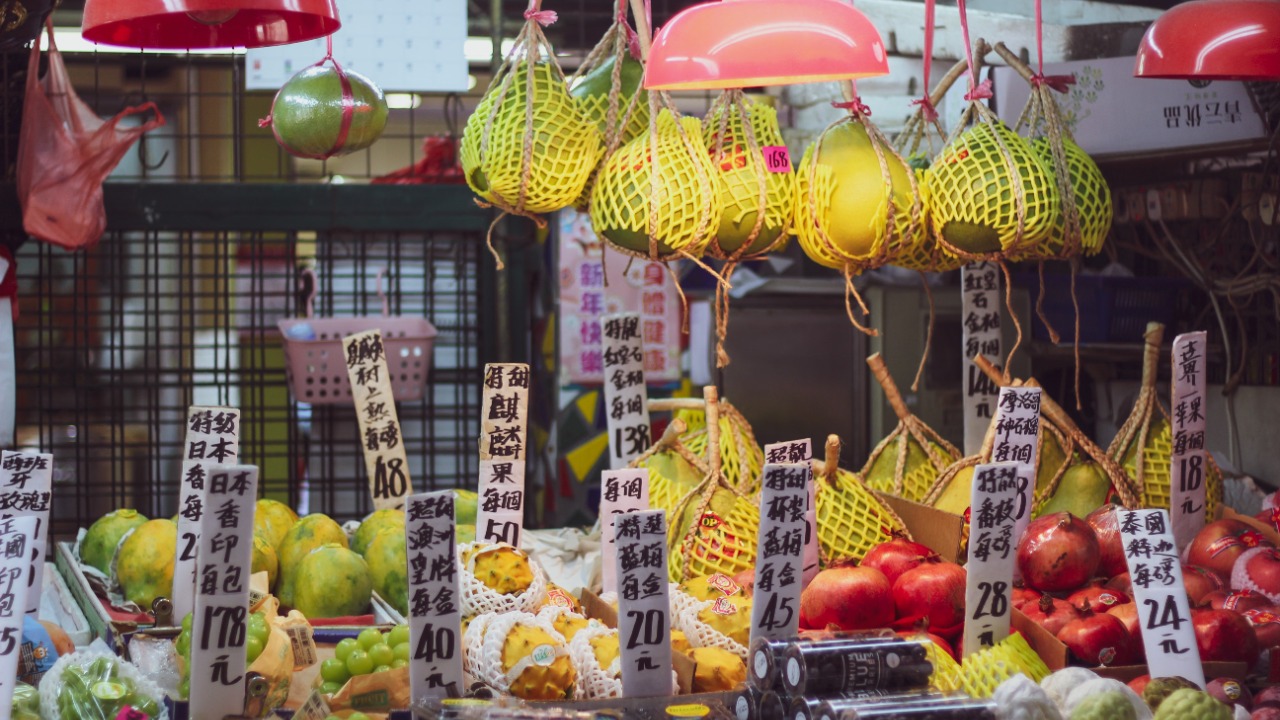

China’s appetite for durian has become enormous.
The famously pungent tropical fruit, often called the “king of fruits,” has gone from a niche luxury to a major consumer craze in China. Supermarkets, specialty stores and online delivery platforms increasingly sell premium varieties such as Musang King and Black Thorn, while Southeast Asian producers compete for access to one of the fastest-growing fruit markets in the world.
But behind the boom is a growing problem.
Malaysian farmers are finding it more expensive and unpredictable to produce the quality of durian Chinese buyers expect. Rising temperatures, irregular rainfall, floods, drought, changing flowering conditions and pressure on natural pollinators are all making production harder.
China wants more durian.
Climate conditions are making it increasingly difficult to guarantee the supply.
China Has Become the Center of the Global Durian Market
Few agricultural products illustrate the power of Chinese consumer demand as clearly as durian.
According to the Associated Press, China accounted for about 95% of global durian exports between 2020 and 2022. By 2025, Chinese imports had reached 1.87 million tonnes of fresh durian worth roughly $7.5 billion, with import volume increasing around sixfold over the previous decade.
That scale changes everything for producers.
A fruit once consumed mainly within Southeast Asia is now part of a massive international trade network. Thailand and Vietnam currently dominate exports to China, but Malaysia has been trying to capture a larger share by emphasizing premium quality.
Malaysia received an important boost when China expanded access for fresh Malaysian durian in 2024. The Malaysian government’s official fresh durian export protocol sets out the phytosanitary requirements for sending the fruit directly into the Chinese market.
That created an obvious opportunity.
But opening a market and reliably supplying it are two very different challenges.
Malaysian Farmers Have Expanded Rapidly
The economic promise of durian has encouraged significant expansion in Malaysia.
AP reported that Malaysian durian orchards covered about 92,100 hectares in 2024, almost 40% more than in 2016. Production rose nearly 90% during the same period to around 568,800 tonnes.
Those numbers show how seriously growers responded to demand.
More land went into durian.
More trees were planted.
More capital flowed into orchards.
The problem is that durian is not an easy commodity crop.
A tree may take years before becoming commercially productive, and fruit quality depends heavily on weather conditions throughout flowering and development.
The Food and Agriculture Organization notes that durian prefers a hot, humid climate with substantial and reasonably well-distributed rainfall, while relatively dry periods help stimulate and synchronize flowering.
That requirement creates a delicate balance.
Too much rain at the wrong time can damage pollination.
Too little rain can hurt fruit development.
Extreme heat can force farmers to spend more on irrigation and orchard management.
One Farmer Lost Around 100 Trees to Flooding
The climate problem becomes clearer when looking at individual farms.
AP followed Malaysian grower Stephen Chow in Karak, Pahang, whose orchard has experienced repeated extreme-weather problems. Heavy rainfall in 2021 caused flooding that damaged around 100 durian trees along with agricultural machinery.
The following three years brought another problem: persistent rain during flowering season contributed to pollination failure and reduced yields.
Then the weather changed again.
Between February and April 2026, afternoon temperatures at his orchard reached roughly 33 to 35 degrees Celsius. The hotter, drier conditions improved flowering in some respects, but they also forced him to increase watering, fertilization and pruning to protect fruit quality.
The result is an increasingly complicated farming environment.
A grower cannot simply prepare for drought.
He also has to prepare for flooding.
He cannot simply hope for rain.
He needs rain at the right stage of the tree’s development.
That unpredictability raises costs even when the final harvest looks successful.
Malaysia Is Getting Warmer
The weather problems described by individual farmers also align with broader temperature trends.
AP cited Malaysia’s meteorological department as reporting that average temperatures across Peninsular Malaysia increased by about 0.24 degrees Celsius per decade between 1969 and 2025.
That does not mean every year becomes uniformly hotter or drier.
Climate change often appears through volatility.
One season may bring extreme rainfall.
Another may produce prolonged heat.
A later season may combine unusually high temperatures with disrupted rainfall.
Across the wider Asia-Pacific region, the FAO has warned that rising temperatures, stronger droughts and shifting rainfall patterns are creating increasingly inconsistent agricultural conditions for farmers.
Durian is especially vulnerable because premium quality depends on consistent development.
A fruit can survive difficult weather and still become commercially disappointing.
Musang King Needs More Than Just Survival
Chinese consumers do not simply want any durian.
Premium Malaysian varieties have become desirable precisely because of their texture, aroma, color and flavor.
Musang King is particularly important.
That makes weather-related quality changes economically significant.
An adviser to Malaysia’s Durian Academy told AP that excessive rain during rapid fruit development can cause white or gray patches in the normally golden flesh, while water shortages can produce dark spots.
The fruit may still exist.
But it may no longer qualify for the most profitable grade.
That distinction matters in a premium export market.
A farmer is not simply being paid for kilograms of fruit.
He is being paid for appearance, ripeness, flavor and consistency.
Climate volatility therefore threatens both yield and price.
Even the Pollinators May Be Changing
Durian production also depends on an ecological system that farmers cannot completely control.
Fruit bats are important natural pollinators for durian.
One Malaysian grower interviewed by AP said that for the first time he did not see fruit bats at his orchard during flowering season. He suggested that extreme heat or increased pesticide use could have contributed.
This creates another uncomfortable feedback loop.
Warmer conditions can increase pest pressure.
More pests may encourage greater pesticide use.
Greater pesticide use can affect beneficial species.
Changes in pollinator behavior can then reduce fruit production.
That does not mean one missing season of bats proves a permanent ecological shift.
But it demonstrates how climate pressure can affect agriculture indirectly.
Farmers are not only managing trees.
They are managing an ecosystem.
A Big Harvest Can Still Hurt Farmers
Climate pressure does not always produce shortages.
Sometimes it creates the opposite problem.
Hot, dry conditions combined with more orchards reaching maturity produced an oversupply of Malaysian durian in 2026.
That drove prices down sharply.
AP reported that Grade A Musang King from Chow’s orchard sold for the equivalent of about $8.60 per kilogram in early July, roughly half the price seen a year earlier and around one-third of the 2024 peak.
This reveals one of the strangest problems farmers face.
A good harvest can be financially painful if too much fruit reaches the market simultaneously.
A bad harvest can be financially painful because there is not enough fruit to sell.
Farmers therefore need not only productive trees but predictable timing.
Climate volatility makes that harder.
Technology Is Moving Into the Orchard
Some growers are responding by making durian farming much more data-driven.
AP described one Penang farmer who installed sensors throughout his orchard to monitor rainfall, humidity, wind speed and soil conditions. Information was uploaded to the cloud so he could study patterns and intervene before problems became severe.
This represents an important shift.
Traditional orchard knowledge remains essential, but climate instability is making precision agriculture more valuable.
A farmer who understands exactly how much rain has fallen may adjust irrigation earlier.
Humidity data can help identify disease risk.
Soil sensors can indicate when trees are becoming water-stressed.
Weather forecasting can help growers plan fertilizer applications or protect orchards ahead of extreme conditions.
The objective is not to control the climate.
It is to make the farm more resilient to it.
China’s Demand Is Unlikely to Disappear
The extraordinary size of China’s durian market suggests the commercial incentive will remain strong.
Consumers increasingly treat durian as more than a seasonal novelty.
It appears in desserts, cakes, drinks, restaurants and specialty retail stores. Some buyers treat premium Malaysian varieties almost like luxury products.
Malaysia therefore has strong reasons to keep expanding its presence in China.
The difficulty is that Thailand and Vietnam already possess enormous export scale.
Malaysia’s competitive advantage is more likely to come from premium positioning rather than sheer volume.
That makes consistent quality even more important.
A Musang King sold at a premium has to justify the premium.
The Durian Boom Is Becoming a Climate Test
China’s obsession with durian created one of Southeast Asia’s most valuable agricultural opportunities.
It also created pressure.
Farmers planted more orchards because demand was rising.
Export channels expanded.
Fresh Malaysian durian gained greater access to China.
But climate conditions are becoming increasingly difficult to predict.
The same grower can face flooding, failed pollination, extreme heat, pest pressure and oversupply within only a few seasons.
China may continue wanting more of the fruit.
The harder question is whether Southeast Asian agriculture can keep producing exactly the quality, quantity and timing that consumers expect.
Durian’s notorious smell may be what first attracts attention.
Its future, however, increasingly depends on something much less visible:
whether farmers can adapt quickly enough to a climate that no longer behaves the way it used to.