
Wall Street barely moved while crude oil prices dropped sharply, but the quiet trading masked something much bigger: investors were rapidly repricing the economic consequences of cooling tensions between the United States and Iran.
On July 27, 2026, the S&P 500 finished almost unchanged, rising less than 0.1%, while the Dow Jones Industrial Average gained 0.5% and the Nasdaq Composite fell 0.2%. The mixed session came as the United States and Iran paused attacks and efforts resumed to restart negotiations aimed at ending the conflict.
Oil reacted much more dramatically.
Brent crude, the international benchmark, fell 6.3% to settle at $85.87 per barrel for October delivery after trading above $100 only a week earlier. U.S. crude for September delivery dropped 7.5% to $82.61 per barrel.
That reversal explains why markets are paying such close attention to every development in the Middle East.
The conflict is not merely a geopolitical story.
It has become an inflation story, an interest-rate story and a corporate-profit story at the same time.
Oil Prices Are Acting Like a Fear Gauge
Oil markets often respond to actual supply and demand, but geopolitical fear can move prices just as quickly.
During the latest escalation between the United States and Iran, investors worried that disruptions around the Strait of Hormuz could reduce global energy supplies. Traffic through the strait had been sharply curtailed and, at times, halted during the conflict, creating concerns about the availability and cost of crude oil moving out of the Persian Gulf.
The Strait of Hormuz matters because it is one of the world’s most strategically important energy routes.
When traders believe shipping through the region may be interrupted, they often demand a risk premium for crude oil.
That can push prices higher before actual shortages become severe.
Once military tensions ease, some of that premium can disappear just as quickly.
That is exactly what happened when Brent fell back below $90 after exceeding $100 during the previous week’s escalation.
Investors were not suddenly expecting the world to consume dramatically less oil.
They were pricing in a lower probability of severe supply disruption.
Lower Oil Prices Can Ease Inflation Pressure
Why should Wall Street care whether crude oil falls by $10 or $15 per barrel?
Because energy prices spread throughout the economy.
Higher crude prices can push gasoline and diesel costs upward. Transportation companies pay more to move goods. Airlines face higher fuel bills. Manufacturers pay more for energy and shipping. Eventually, businesses often pass part of those additional costs to consumers.
The July market report noted that the conflict had already raised gasoline prices and shipping costs, increasing pressure on household budgets.
Lower oil therefore offers Wall Street something investors badly want: potential relief from inflation.
That is particularly important because the Federal Reserve was preparing to make another interest-rate decision during the same week.
At the time, Wall Street was assigning roughly a 36% chance to a Fed rate increase at the upcoming meeting as policymakers balanced persistent inflation against economic risks.
If energy costs continue falling, one important source of inflationary pressure weakens.
That could reduce the urgency for additional rate increases.
The Federal Reserve Still Has a Difficult Problem
Falling oil prices do not automatically solve inflation.
The Federal Reserve must consider a much wider set of economic forces, including wages, consumer spending, housing costs, tariffs and overall economic growth.
The central bank had been holding rates steady throughout 2026 while monitoring inflation, but investors still expected at least one rate increase before the end of the year.
Fresh U.S. tariffs were another complication.
Tariffs can increase the cost of imported goods, potentially putting upward pressure on consumer prices even while energy prices fall.
That means the Fed could find itself receiving contradictory signals.
Oil may be becoming cheaper.
Imported goods may be becoming more expensive.
Consumers may be under pressure from earlier price increases.
Corporate earnings may still look strong.
This uncertainty helps explain why stocks drifted rather than surging despite the sharp drop in crude.
Investors received good news from oil markets, but they were not yet willing to declare the inflation problem finished.
Technology Stocks Kept the Market From Moving in One Direction
The day’s market action also showed how much influence a relatively small number of giant technology companies now have over major stock indexes.
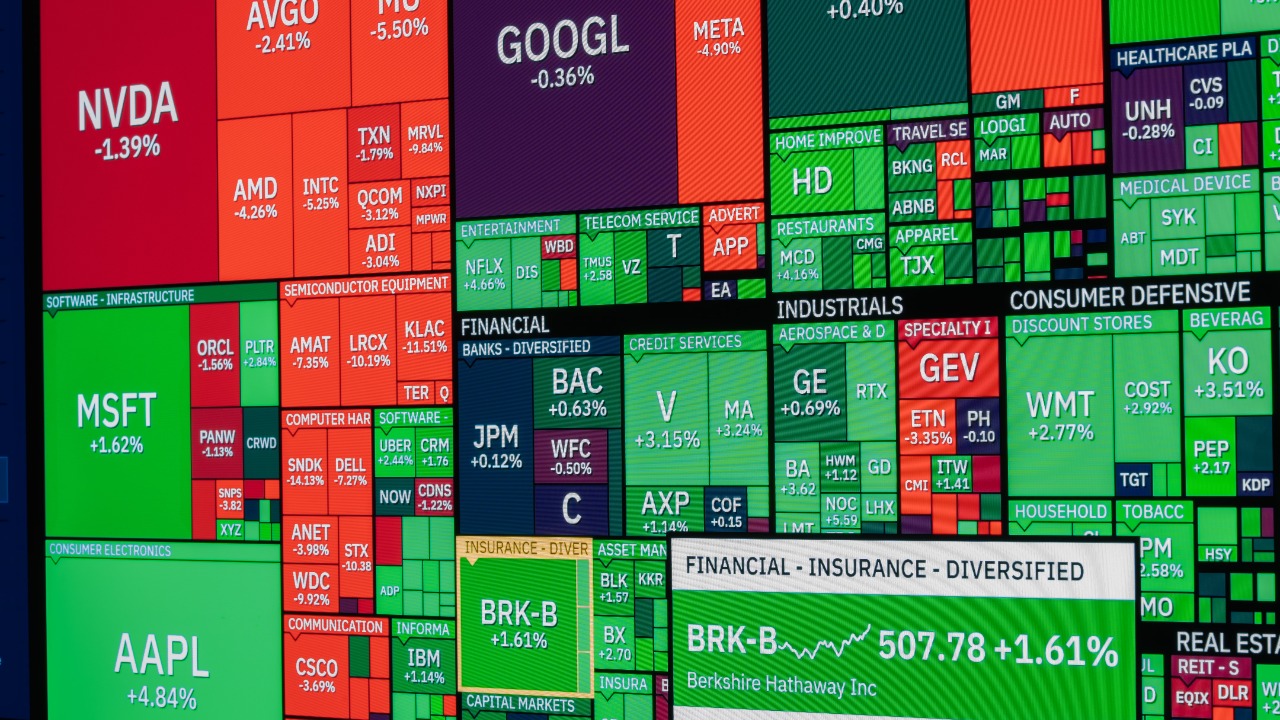
Nvidia fell 5% while Micron Technology dropped 2.3%. At the same time, Microsoft gained 1.9% and Apple rose 1.2%.
Because these companies have enormous market values, their daily movements can have a disproportionately large effect on indexes such as the S&P 500 and Nasdaq.
That creates unusual trading sessions.
Most companies in the S&P 500 can rise while the index itself barely moves because weakness in a handful of megacap technology stocks offsets those gains.
That was essentially what happened.
Meanwhile, Alphabet gained 2.1%, Charter Communications jumped 6.7% and Comcast rose 2.3%, while payment companies including Visa, Mastercard, American Express and Capital One also advanced.
The market was therefore not broadly collapsing.
It was rotating.
Wall Street Is Watching Earnings as Closely as Oil
Oil and geopolitics were not the only forces affecting investors.
A heavy corporate earnings schedule was approaching, including results from Microsoft, Amazon, Apple, Visa, Boeing, Starbucks and Chipotle.
That matters because stock prices had already risen significantly during the previous year.
When valuations become expensive, companies need strong earnings growth to justify them.
Investors therefore wanted answers to several important questions.
Were consumers beginning to cut spending?
Were higher fuel costs hurting profit margins?
Were technology companies still generating enough growth to support their enormous valuations?
Was artificial-intelligence spending continuing to deliver returns?
Corporate results could answer those questions more directly than geopolitical headlines.
This helps explain why investors remained cautious even as energy prices dropped.
Treasury Yields Also Moved Lower
The bond market provided another clue about investor expectations.
The yield on the 10-year U.S. Treasury fell to 4.65% from 4.69% the previous Friday.
Treasury yields respond to many factors, but inflation expectations and Federal Reserve policy are particularly important.
When investors become less concerned about inflation or expect less aggressive monetary tightening, yields can fall.
Lower yields can also support stock valuations because future corporate earnings become more attractive when the return available from relatively safer government bonds decreases.
For technology companies, that relationship can be especially significant because much of their valuation depends on expectations of profits far into the future.
Cooling Tensions Do Not Mean the Risk Has Disappeared
The most important word in the market story is not “peace.”
It is “cooling.”
The United States and Iran had paused attacks, but the underlying conflict remained unresolved. Negotiations were being discussed, and uncertainty around the Strait of Hormuz continued to influence global markets.
A renewed escalation could quickly reverse the oil-price decline.
That is why crude prices had been so volatile.
Markets were moving not only on physical oil flows but on changing probabilities.
If investors believed an agreement was becoming more likely, oil fell.
If fighting intensified, oil surged.
This relationship turned Middle East diplomacy into a direct financial-market catalyst.
Why Falling Oil May Matter More Than the Flat Stock Market
A nearly unchanged S&P 500 can look unimportant.
The oil move was not.
A 6% drop in Brent and a 7.5% decline in U.S. crude can affect transportation companies, airlines, consumers, inflation expectations and central-bank policy simultaneously.
That is why the day’s seemingly quiet stock-market close actually carried an important message.
Investors were beginning to price in the possibility that geopolitical pressure on energy markets could ease.
If that trend continues, lower fuel prices could give consumers more spending power, reduce corporate costs and make the Federal Reserve’s inflation problem slightly easier.
If tensions flare again, the calculation could change within hours.
For now, Wall Street appears caught between relief and caution.
Oil is telling investors that fear is fading.
Stocks are telling them they are not yet convinced the danger is gone.