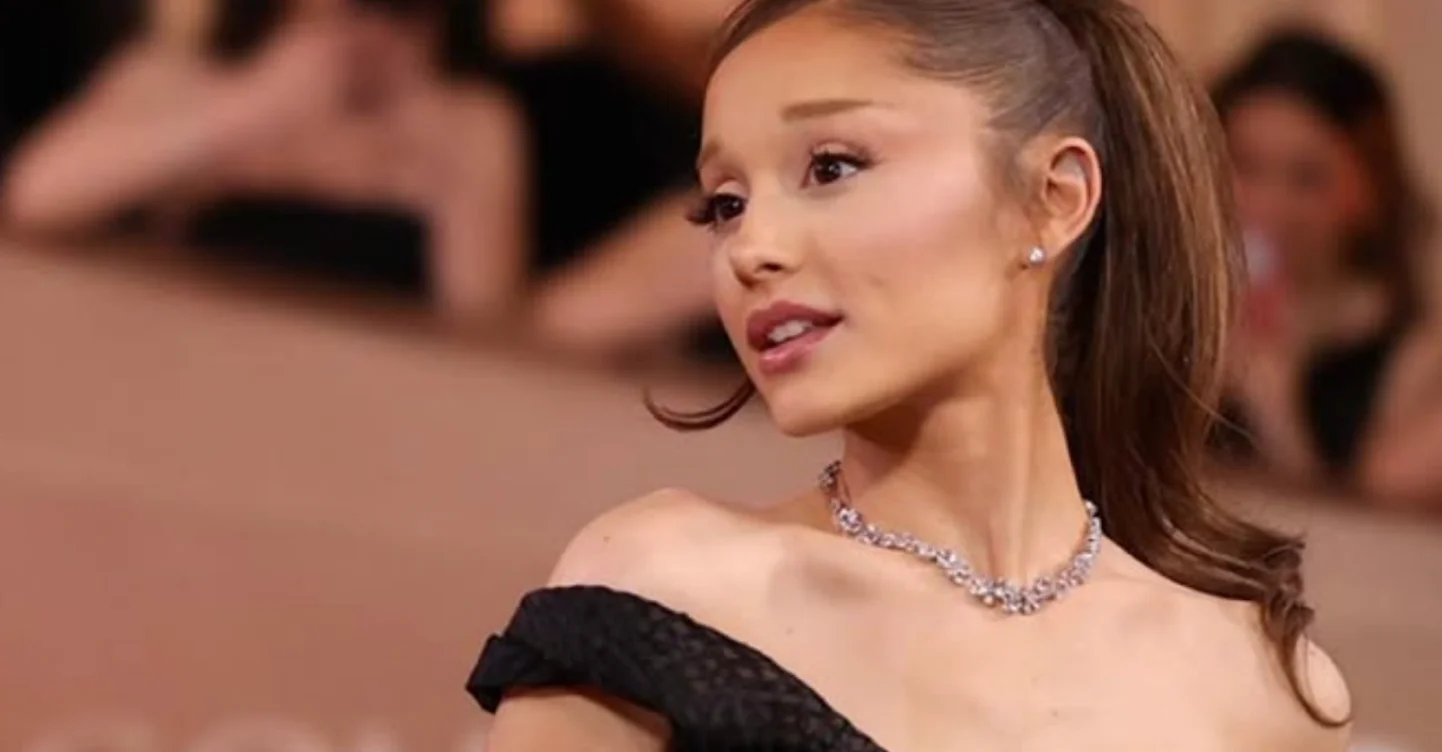

Ariana Grande’s body has once again become a major entertainment news story. Photographs, concert footage and scenes from her latest music video have triggered another wave of online commentary about her weight, appearance and presumed health.
Some posts describe the discussion as concern. Others make blunt judgments about how she looks. Both approaches often arrive at the same destination: strangers examining a woman’s body as though it were public evidence that can be interpreted, diagnosed and debated.
The latest attention has consequences beyond social media engagement. Grande’s representative confirmed that she plans to step back from public visibility after completing the Eternal Sunshine Tour. The announcement followed increased scrutiny surrounding her appearance, although Grande later told concertgoers that the decision was carefully considered rather than impulsive.
The situation raises a larger question. When a celebrity has repeatedly asked people not to comment on her body, why does the public continue treating that body as an open conversation?
The Latest Debate Followed the “Petal” Music Video
The latest cycle intensified after Grande released the music video for “Petal” on July 31. Online discussions quickly moved away from the music, imagery and meaning of the video and toward observations about her physical appearance.
Grande has not publicly disclosed a medical diagnosis that would justify the health claims circulating online. Photographs and edited video clips cannot reliably reveal a person’s physical or mental condition. Lighting, posture, styling, camera lenses, makeup and clothing can all change how a body appears, while many genuine health conditions produce no obvious visual signs.
Despite that uncertainty, social media users have confidently offered explanations ranging from illness and stress to cosmetic procedures and eating disorders. Repeating those claims does not turn them into verified information.
Coverage from the Associated Press reported that Grande will reduce her public-facing work after the tour and has withdrawn from the planned 2027 West End revival of Sunday in the Park With George. The production will continue with new casting, and its producers publicly supported her decision.
Her tour is scheduled to conclude in London on September 1. Grande has emphasized that she remains excited about performing the remaining dates, suggesting that the coming break should not be interpreted as an immediate disappearance or evidence supporting any specific online theory.
Grande Has Already Asked People to Stop
The current discussion is not the first time Grande has faced widespread speculation about her body. In 2023, she addressed comparisons between her appearance at that time and photographs from an earlier period.
She explained that the body people were describing as her healthier appearance had actually been associated with a difficult period in her life. She urged viewers to recognise that there are many ways for a person to look healthy and that commenting on another person’s body can be harmful even when the comment is intended as praise or concern.
A summary of Grande’s message published by Allure highlighted her central request: people should become more reluctant to discuss other people’s bodies because outsiders rarely understand what someone is experiencing privately.
Grande returned to the subject during the promotional period for Wicked. She described public analysis of a person’s appearance as dangerous and said that individuals should be protected from unsolicited judgments about how they look.
Her position has therefore been consistent. She has not asked the public to use kinder language while continuing the same examination. She has asked people to stop treating her body as a legitimate topic of public evaluation.
Concern Does Not Automatically Make Commentary Helpful
Many participants in celebrity body discussions insist that they are not body-shaming. They argue that they are worried and believe silence would be irresponsible.
Genuine concern is understandable when someone appears different. However, public speculation is rarely equivalent to meaningful support. A celebrity does not receive personal medical care because thousands of strangers repeat the same observation beneath a photograph. Instead, the person becomes exposed to more scrutiny, invasive headlines and unverified claims.
Concern can also become difficult to distinguish from entertainment. Posts using alarming language often attract more views, reactions and shares. Publishers then produce stories about the reactions, creating a self-reinforcing cycle in which the body generates content regardless of whether any new factual information exists.
The National Eating Disorders Association warns that remarks about weight, body shape and size can cause harm even when presented as compliments. Such comments can reinforce the idea that appearance determines health, value or personal success.
A supposedly positive statement can carry the same underlying message as an insult: the person’s body has been noticed, judged and compared with an approved standard.
No Body Type Proves Health or Illness
The Grande debate also exposes a common misunderstanding about health. People often assume that a larger body indicates poor health, while a smaller body represents fitness and discipline. When someone becomes thinner than the public expects, the assumption can abruptly reverse, with thinness treated as proof of illness.
Neither conclusion can be made responsibly from appearance alone.
A person may lose or gain weight because of medication, stress, ageing, hormonal changes, changes in activity, grief, illness, recovery, diet or numerous private circumstances. Some changes may have no medical importance. Others may require professional care. The correct interpretation depends on information that strangers normally do not possess.
Public figures do not surrender all medical privacy when they become famous. They may disclose health information voluntarily, but refusing to do so does not create permission for audiences to fill the gap with diagnosis.
There is also a difference between discussing beauty standards in the entertainment industry and selecting one woman’s body as evidence for that discussion. Industry practices, casting expectations, digital alteration and commercial pressures are valid subjects. Speculating about whether one specific performer is ill is a different and far more personal act.
Female Celebrities Are Rarely Allowed to Change Quietly
Grande’s experience fits a familiar pattern. Female celebrities are expected to remain recognisable while also appearing current, youthful and fashionable. Weight gain can become evidence that someone has “let herself go.” Weight loss can become evidence of illness. Ageing naturally is criticised, while cosmetic intervention is mocked.
The standard is impossible because the body is expected to change without ever appearing changed.
This scrutiny can overshadow professional work. Grande’s latest album, tour and acting career involve years of performance and creative decisions, yet headlines can reduce that work to a conversation about her frame. Even “concerned” coverage can reproduce the same imbalance by placing her body at the centre and her work around the edges.
The recent decision to step back from visibility illustrates the potential cost. According to Reuters, the increased attention followed the release of “Petal” and came as Grande withdrew from a major theatre commitment.
It would be too simplistic to claim that online comments alone caused every professional decision. Grande said her break had been considered for some time. Nevertheless, the fact that repeated public scrutiny forms part of the context should make audiences question whether this style of celebrity coverage is harmless.
The Media Helps Turn Speculation Into a Story
Social media comments do not become major news stories by themselves. Entertainment publications select them, quote them and package them into articles. A small selection of dramatic reactions can then be presented as widespread public alarm.
That structure creates an illusion of verification. The headline reports that “fans are concerned,” but the evidence may consist of anonymous comments from people with no personal relationship to the celebrity and no medical expertise.
The article can avoid directly making a diagnosis while still circulating the diagnosis through quoted reactions. Legally and rhetorically, the claim belongs to social media users. Commercially, the publication benefits from repeating it.
Responsible reporting can acknowledge that appearance-related discussion is occurring without reproducing cruel descriptions, magnifying rumours or treating physical changes as proof of a private condition. It can also place the celebrity’s own stated boundaries above the curiosity of anonymous observers.
The Better Response Is to Respect the Boundary
The most respectful reaction to Ariana Grande’s appearance is not to decide whether she looks healthy. It is to recognise that there is not enough verified information to make that judgment and that she has repeatedly asked the public to stop trying.
Supporters can discuss her performances, music, films, fashion and public statements. Journalists can report confirmed developments surrounding her tour and planned break. None of those conversations requires a diagnosis based on photographs.
Silence about another person’s weight is not indifference. In many situations, it is an acknowledgment that care does not require public access to someone’s body or medical history.
Grande’s body is in the news again, but there is no new public-health fact that requires millions of people to analyse it. The real story is the persistence of a culture that continues examining a woman after she has clearly asked it to stop.
Her body has changed over time because bodies do. The public’s entitlement to comment does not need to remain unchanged with it.