
Italy has temporarily reintroduced border checks for travellers arriving from Spain following an extraordinary migration surge into Ceuta, Spain’s North African enclave bordering Morocco.
The measure does not remove Spain from the Schengen Area or completely end free movement between the two countries. Instead, Italy is temporarily restoring passport controls on selected air and sea routes, initially focusing on third-country nationals travelling from Spain. The controls are expected to remain in place for one month, although their duration could change if the situation develops further.
According to a Reuters report on Italy’s decision, Rome is also coordinating with France to strengthen monitoring along their shared border. Italy does not share a land border with Spain, making airports, ferry terminals and possible secondary movements through France the main focus of its response.
The action has intensified political tensions between Italy and Spain while raising questions about how European governments should respond when an external Schengen border is suddenly overwhelmed.
What Happened in Ceuta?
Ceuta is a Spanish autonomous city located on the northern coast of Africa. It shares a heavily controlled land border with Morocco and represents one of the European Union’s few direct territorial boundaries with the African continent.
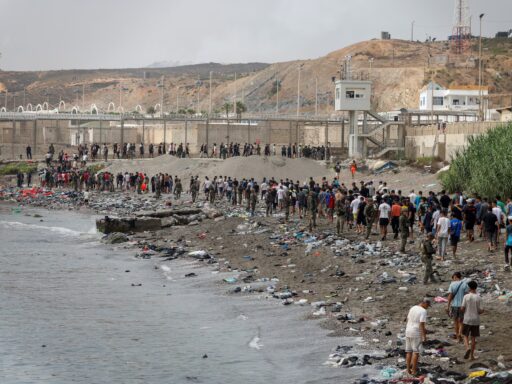
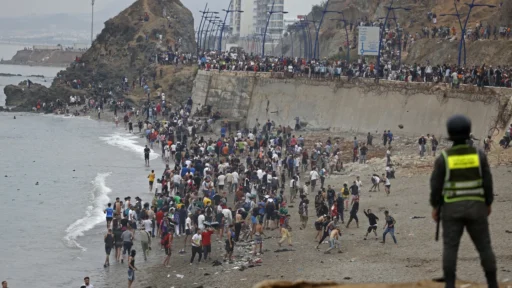
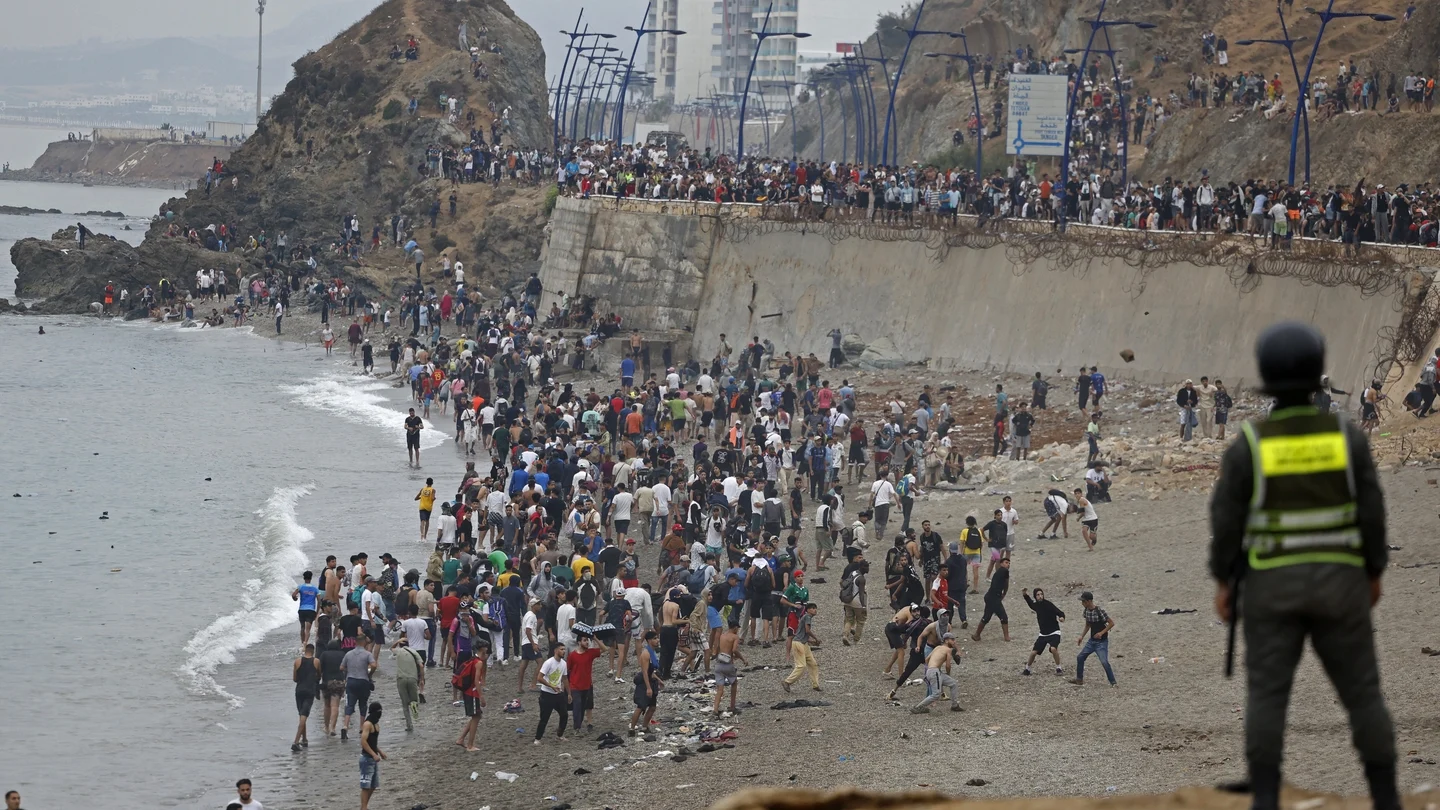
On July 30, tens of thousands of people entered Ceuta from Morocco within approximately 24 hours. Estimates varied between around 50,000 and 60,000 arrivals, a number equivalent to a large percentage of the enclave’s normal population. Many crossed through border areas on foot, while others attempted to swim around coastal barriers.
The influx overwhelmed local reception facilities and prompted Spain to deploy military and police personnel. At least 57 people reportedly died through drowning, crowd-related incidents and dangerous crossing attempts. The humanitarian consequences were particularly serious because many of those attempting to enter were young people and minors.
Spain and Morocco subsequently began coordinating returns. The Spanish Interior Ministry reported close cooperation with Moroccan authorities, while Spanish figures indicated that approximately 48,300 people had already returned voluntarily, leaving fewer than 2,000 recent arrivals in Ceuta by July 31.
Why So Many People Crossed at Once
Spanish authorities have blamed smuggling networks and false information distributed through social media for encouraging the mass crossing.
Reports suggest that a recent Spanish Supreme Court decision concerning migrants arriving by sea was misinterpreted or deliberately misrepresented as guaranteeing entry, legal protection or protection from immediate return. That claim spread rapidly among people in northern Morocco, contributing to the belief that a temporary opportunity to enter Spanish territory had opened.
Economic conditions in Morocco may also have contributed. High youth unemployment, limited opportunities and frustration among younger people created a population more willing to act on rumours promising access to Europe.
The crisis has also renewed questions about the political relationship between Madrid and Rabat. Morocco plays a central role in controlling migration towards Ceuta, Melilla and Spain’s southern coast. Any reduction in enforcement on the Moroccan side can quickly increase pressure on Spain’s external border.
Spanish Prime Minister Pedro Sánchez characterised the mass entry as a violation of Spain’s territorial integrity rather than a conventional increase in asylum arrivals. His government has maintained that the episode was driven by organised misinformation and border disruption rather than by recent changes to Spain’s regular migration policies.
What Italy Has Actually Suspended
The description that Italy has “halted Schengen” can create the impression that the entire free-travel agreement between Italy and Spain has been cancelled. Legally, the situation is narrower.
Schengen normally allows people to travel between participating countries without routine internal border checks. However, the revised Schengen Borders Code permits a member state to temporarily restore controls when it identifies a serious threat to public policy or internal security.
The European Commission’s guidance on temporary border controls states that such action must be exceptional, proportionate, limited in duration and used only as a last resort. The country introducing controls must also notify European institutions and other member states.
Italy has therefore reintroduced checks at specific internal travel connections rather than legally removing Spain from the Schengen Area. Italian authorities can inspect passports, verify residence status and question selected travellers arriving by air or sea from Spain.
European Union citizens retain their rights to move between member states, although checks may create delays and require them to present valid identification. The Italian measure is reportedly focused primarily on non-EU nationals whose legal entry or residence status may need to be verified.
Italy Cannot Remove Spain From Schengen by Itself
Italian political figures have also called for Spain’s broader participation in Schengen to be reconsidered. That would be very different from Italy temporarily controlling its own borders.
One member state cannot independently expel or suspend another country from the Schengen Area. Any Europe-wide response would require action through EU institutions and would need to meet the legal conditions established under the Schengen Borders Code.
The European framework allows the Council, acting on a proposal from the European Commission, to recommend coordinated internal border controls when persistent failures at an external border threaten the functioning of the wider Schengen Area. Such action is intended to be exceptional and can be taken only after less restrictive alternatives prove inadequate.
Former EU foreign-policy chief Josep Borrell rejected suggestions that Italy could unilaterally suspend Spain’s Schengen membership, arguing that no member state has that power under European law.
Italy’s current action is therefore legally significant but considerably more limited than a full suspension of Spain from Europe’s border-free zone.
Why Italy Is Concerned Despite Having No Border With Spain
Italy’s government argues that migrants entering the Schengen Area through Ceuta may eventually travel towards other European countries.
Once a person enters Spanish territory, onward movement can occur through mainland Spain and France before reaching Italy or other destinations. Although immigration checks and police controls remain possible within Schengen, the absence of routine internal border inspections normally makes travel between participating countries easier.
Italy has extensive experience managing irregular arrivals across the Central Mediterranean. Prime Minister Giorgia Meloni’s government has made border enforcement and reductions in undocumented migration central political priorities.
Critics argue that the controls are largely symbolic because most of the recent arrivals have already returned to Morocco and Italy receives no direct flights or ferries from Ceuta carrying large migrant groups. Opposition figures have accused the government of using the crisis to strengthen its domestic immigration message rather than addressing a measurable increase in arrivals from Spain.
Supporters respond that temporary checks are preventative and that Italy should not wait for secondary movement to become visible before acting.
The Dispute Exposes a Wider Schengen Vulnerability
The Ceuta crisis demonstrates how pressure at one external border can quickly become a political issue across the entire European Union.
Schengen depends on participating countries trusting one another to protect their external borders, register arrivals and apply asylum and return procedures consistently. When one border is overwhelmed, governments elsewhere may fear that people will move onward without adequate documentation or screening.
The European Commission already supports Spain through border management, reception planning, asylum procedures and efforts against migrant smuggling. Its overview of migration management in Spain describes external-border enforcement and cooperation with EU agencies as shared European priorities.
However, repeated national border controls can weaken one of the EU’s most visible achievements. They create delays for travellers and freight, increase administrative costs and risk turning an emergency measure into a routine response to migration disputes.
What Travellers Should Expect
Travellers moving from Spain to Italy may face passport or identity checks at airports and ferry terminals during the temporary control period.
EU citizens should carry a valid national identity card or passport even though they continue to benefit from freedom-of-movement rights. Non-EU nationals may need to present a passport, visa, residence permit or other documentation demonstrating their lawful status in the Schengen Area.
The controls do not amount to a general travel ban, and flights and ferry services are expected to continue operating. The most likely immediate effects are longer processing times, selective questioning and additional documentation checks.
Italy’s decision may be reviewed before the one-month period expires, particularly if Spain and Morocco maintain control of the Ceuta border and the number of recent arrivals remaining in the enclave continues to fall.
The larger political dispute may last longer. The crisis has exposed disagreements over responsibility for Europe’s external borders, the use of internal checks and how far one country should go when it believes another member state’s migration emergency may affect the wider Schengen system.