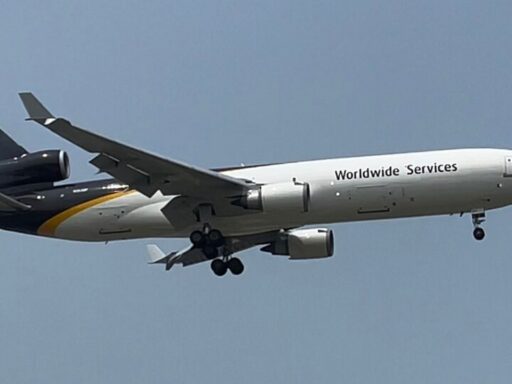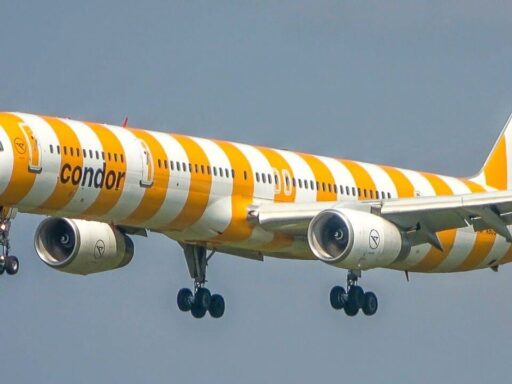

When an airliner turns back shortly after takeoff, observers may see streams of liquid leaving its wings and assume something has gone wrong with the fuel system. In some cases, however, the release is deliberate. The pilots are using a fuel-jettison system to reduce the aircraft’s weight before landing.
Commercial airplanes are designed around several important weight limits. Maximum takeoff weight defines how heavy the aircraft may be when it begins its flight, while maximum landing weight identifies the normal structural limit for touchdown. A long-haul aircraft may depart carrying enough fuel for ten or more hours of flying, making it substantially heavier at takeoff than it is expected to be when it reaches its destination.
During a normal flight, the engines consume much of that fuel. The aircraft gradually becomes lighter and usually reaches its destination below the permitted landing weight. If a technical problem, medical emergency or other serious issue forces the plane to return soon after departure, it may still be carrying most of its original fuel load.
The Federal Aviation Administration’s Aircraft Weight and Balance Handbook explains that fuel-jettison systems are installed on some aircraft so they can reduce their weight and return for landing soon after takeoff. The objective is not to empty every fuel tank, but to reach a safer landing weight while retaining enough fuel for the approach, a possible go-around and required reserves.
Takeoff Weight and Landing Weight Are Not the Same
An aircraft must withstand different forces during departure and arrival. At takeoff, the wheels leave the runway relatively smoothly as lift builds. During landing, the aircraft’s weight is transferred back onto the landing gear over a much shorter period.
Even a well-executed landing creates significant loads on the tires, wheels, brakes, landing gear and surrounding structure. A heavier aircraft also needs more runway distance, carries greater kinetic energy and may place additional stress on its brakes while slowing.
That is why a large jet may be certified to take off at a weight considerably higher than its normal maximum landing weight. The difference is based largely on the fuel expected to be consumed during the journey.
Maximum landing weight is not necessarily the point at which the aircraft will immediately break. It is the highest weight at which routine landing performance and structural requirements are approved without relying on special procedures. An aircraft can sometimes land above that figure, but the pilots must account for the higher approach speed, stopping distance, brake energy and structural load.
Fuel Dumping Is Only One Available Option
When a flight must return early, the crew generally has three broad choices. It can remain airborne and burn fuel, dump fuel if the aircraft has the equipment, or perform an overweight landing.
Circling to burn fuel avoids deliberately releasing it into the atmosphere. However, large airliners may carry tens of thousands of kilograms of fuel, and consuming enough to reach maximum landing weight could take hours. Waiting may be reasonable after a minor technical problem, but it may be unacceptable during an onboard fire, serious medical emergency, deteriorating engine condition or another time-sensitive event.
Fuel jettison can reduce weight much faster. The crew opens valves that direct fuel through outlets, generally located near the outer sections of the wings. Pumps and fuel pressure help release it into the airflow, where it forms a fine spray behind the aircraft.
An overweight landing may be selected when the need to land is more urgent than the benefit of reducing weight. SKYbrary’s guidance on air turnbacks notes that pilots may burn excess fuel, jettison it or land overweight depending on the nature of the emergency and whether the aircraft is expected to remain airworthy long enough to delay the landing.
Not Every Airliner Can Dump Fuel
Fuel dumping is often associated with commercial aviation, but many passenger aircraft have no jettison system.
Smaller airliners and many narrow-body aircraft are designed so that they can return and land overweight under approved procedures when necessary. Their difference between maximum takeoff and landing weight may not justify the additional complexity, maintenance and weight of a fuel-dumping system.
Larger long-haul aircraft are more likely to carry jettison equipment because the difference between their departure and landing weights can be substantial. Even then, the system is not used automatically whenever a flight turns back.
The crew considers the urgency of the situation, current aircraft weight, runway length, weather, braking conditions, remaining aircraft systems and time required to dump or burn fuel. Air traffic controllers also need to provide suitable airspace and keep other aircraft away from the jettison area.
The FAA formally defines fuel dumping as the airborne release of usable fuel. Its current Pilot/Controller Glossary distinguishes this controlled process from the release of external tanks or other equipment.
How the Fuel Is Kept Away From the Aircraft
A fuel-jettison system must release fuel without allowing it to enter the engines, cabin or other parts of the aircraft. The outlets are therefore positioned so the airflow carries the spray behind and away from the airplane.
FAA certification guidance requires the discharge to clear the aircraft, prevent fuel or fumes from entering it and avoid adversely affecting controllability. The system must also protect a minimum quantity of fuel required for continued flight and landing rather than allowing the crew to accidentally empty every available tank. These design principles are described in the FAA’s guidance for transport-airplane mechanical systems.
Pilots monitor the aircraft’s total weight and remaining fuel throughout the procedure. On some airplanes, the crew selects a target quantity, and the system stops automatically when that amount remains. Other aircraft require closer manual monitoring.
The process may take several minutes or considerably longer, depending on the amount that must be released and the jettison rate of the particular aircraft.
Air Traffic Control Coordinates the Operation
A crew does not normally begin dumping fuel without informing air traffic control. Controllers need to know the aircraft’s location, altitude, direction of flight and expected duration of the release.
The FAA’s Aeronautical Information Manual instructs pilots to advise ATC immediately when fuel dumping becomes necessary. Controllers then broadcast warnings about the aircraft, location and altitude at regular intervals so other traffic can avoid the affected area.
When operational circumstances permit, controllers direct the aircraft toward high-altitude airspace away from airports and populated communities. The FAA states that fuel dumping is rare and that aircraft are instructed to perform it as high and as far from populated areas as practical.
Under instrument flight conditions, FAA procedures require controllers to assign a dumping altitude at least 2,000 feet above the highest obstacle within five miles of the route or pattern. This is a minimum obstacle-clearance requirement rather than a preferred environmental altitude; actual operations may take place much higher when the emergency and airspace permit.
Does the Fuel Reach the Ground?
Jet fuel released at altitude spreads into small droplets. Airflow, temperature, wind and the height of the aircraft influence what happens next. A substantial portion may evaporate or disperse before reaching the surface when jettisoning occurs high enough.
It is inaccurate, however, to claim that dumped fuel always disappears completely. Fuel released at low altitude or in unfavorable atmospheric conditions may reach the ground as droplets or vapor and can create environmental and health concerns.
This is why altitude and location matter. Controllers generally try to keep the operation away from populated areas, while pilots avoid dumping at low altitude unless the emergency gives them no safer option.
A severe emergency can change those priorities. Protecting the people aboard the aircraft may require an immediate landing even when there is not enough time to climb, travel to a designated area or complete a normal fuel-jettison procedure.
An Overweight Landing Is Sometimes the Safer Decision
Landing above the published maximum landing weight sounds alarming, but aircraft manufacturers provide procedures for doing it when necessary.
Pilots calculate approach speeds, choose an appropriate flap setting and evaluate the runway and braking conditions. They also try to make the touchdown as smooth as possible without using excessive runway.
After an overweight landing, maintenance teams may inspect the aircraft for structural damage, hard-landing loads, overheated brakes or other problems. The extent of the inspection depends on the aircraft’s weight, touchdown forces and manufacturer instructions.
FAA records include incidents in which crews safely landed tens of thousands of pounds above normal limits because continuing the flight created a greater risk. In one documented case, a crew returned 23 minutes after departure and landed approximately 48,000 pounds overweight while following the operating procedure for the failure involved.
The decision is therefore based on risk, not simply on avoiding an inspection or saving fuel. If there is smoke in the cabin or evidence of fire, spending additional time in the air to reach the ideal landing weight would be a dangerous trade.
Why Fuel Dumping Remains a Rare but Important Capability
Fuel is expensive, and releasing it creates environmental concerns. Airlines do not dump it to save time on ordinary schedule disruptions or because a pilot wants a lighter landing.
The procedure exists for situations in which an aircraft must return much earlier than planned but does not require an immediate overweight landing. It provides a middle option between remaining airborne for hours and placing unnecessary stress on the aircraft during touchdown.
Fuel dumping may look dramatic from the ground, but it is a controlled safety procedure. The real purpose is not to eliminate fuel or prevent the airplane from exploding on landing. It is to bring the aircraft closer to the weight for which its normal landing performance was designed.
When time permits, the crew reduces the weight. When time does not permit, it lands overweight. In both cases, the central rule remains the same: the urgency of the emergency determines the safest response.