
Artificial intelligence may soon have a more practical automotive role than answering questions through a dashboard chatbot. A German startup is developing an AI-controlled battery system designed to extend electric-vehicle battery life, improve charging and allow aging cells to keep working instead of forcing the entire pack into early retirement.
Munich-based Pulsetrain says its technology could extend an EV battery’s useful lifespan by as much as 80 percent. The company’s system monitors and controls battery cells individually, using software to decide which cells should provide power, which should rest and how energy should move through the pack.
That 80 percent figure is currently a company performance claim rather than the result of a large, independently published fleet study. However, the engineering principle is credible: reducing heat, avoiding excessive stress and preventing weaker cells from limiting an entire battery pack can slow degradation and preserve more usable capacity.
Why EV Batteries Lose Capacity Over Time
Most electric vehicles use lithium-ion batteries made from hundreds or thousands of individual cells. Those cells gradually degrade as the vehicle is driven, charged and stored.
Heat is one of the largest causes of battery aging. Charging or discharging at high power creates heat inside the cells, while exposure to very hot weather can accelerate unwanted chemical reactions. Batteries can also degrade more quickly when repeatedly held near a full charge, drained extremely low or subjected to aggressive fast charging.
The individual cells inside a battery pack do not age at exactly the same rate. Manufacturing differences, temperature variations and driving conditions can cause some cells to lose capacity or develop higher resistance faster than others.
A conventional battery-management system must protect the weakest cells. If one cell reaches its safe voltage or temperature limit before the others, the system may reduce charging or power output for the entire pack.
That means a battery can lose useful performance even though most of its cells remain in better condition. Pulsetrain’s approach attempts to prevent those weaker cells from controlling the behavior of the whole system.
How AI Can Manage Every Battery Cell Differently
Pulsetrain’s system uses real-time battery data and software to manage individual cells rather than treating the pack as one fixed electrical unit.
The company says its architecture uses semiconductor switches and specialized control hardware to activate, bypass or rearrange cells while the vehicle is operating. A weak or hot cell can temporarily be removed from active use, while healthier cells continue supplying power.
AI software analyzes data such as cell voltage, temperature, resistance, charge level and performance history. It can then predict how each part of the battery is aging and adjust the workload before a small imbalance becomes a larger problem.
The system effectively allows cells to take turns. Instead of forcing every cell to experience the same electrical demand, the software can distribute stress according to each cell’s condition.
Pulsetrain describes this as a software-defined battery. The hardware provides flexible control, while the software continually determines the most suitable configuration for charging, driving and protecting the battery.
Weak Cells Would No Longer Limit the Entire Pack
In a traditional battery pack, cells are connected in fixed series and parallel arrangements. The pack’s voltage and capacity depend on that permanent configuration.
Pulsetrain uses what it calls multilevel architecture. Its switching system can change how cells participate in the electrical circuit during operation.
When one cell becomes weaker than its neighbors, the system can bypass it instead of reducing the performance of the complete battery. This could allow the vehicle to continue using the majority of the pack’s remaining capacity.
The company claims that selective cell activation can extend battery life while maintaining higher sustained power. It may also make battery repairs more practical because a small number of degraded modules would not necessarily make the entire pack unusable.
This approach does not stop chemical aging. Every lithium-ion cell will still lose capacity over time. The potential advantage is that the system could manage that aging more efficiently and delay the point at which degradation becomes noticeable to the driver.
The Technology Could Replace Several EV Components
The startup is not developing only an improved battery-management system.
Its design combines the battery-management system, onboard charger and motor inverter into one integrated in-battery unit. In a conventional EV, these are separate components connected through cables and high-voltage hardware.
The inverter converts the battery’s direct-current electricity into alternating current for the electric motor. The onboard charger converts incoming power into a form the battery can accept. The battery-management system monitors safety and cell conditions.
Pulsetrain says its multilevel system can generate the required alternating-current output directly from the battery by switching cells in carefully controlled sequences. This could eliminate the need for a conventional standalone inverter while reducing cables, weight, volume and component complexity.
Removing components could lower production costs and create more space inside the vehicle. However, combining several critical functions into one system may also create new design, repair and certification challenges.
Automakers would need evidence that the integrated architecture remains reliable through crashes, extreme temperatures, electrical faults and years of vibration.
AI Could Also Improve Charging Speed
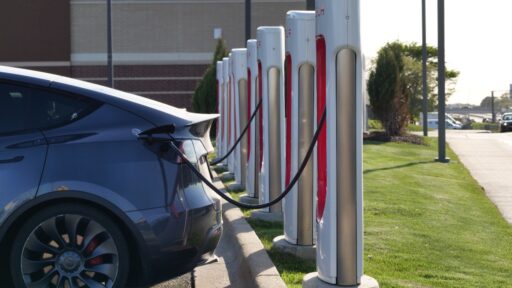
Charging an EV quickly creates a difficult balance. Drivers want shorter stops, but sending too much power into a battery can generate heat and accelerate degradation.
An intelligent battery system can adjust charging based on the real-time condition of individual cells. Healthier cells may accept more power while hotter or more degraded cells receive less.
This is more precise than using a single charging limit for the entire pack. The company says its software can support faster and more efficient charging while reducing the thermal risks associated with high-power operation.
The potential benefit is not simply a faster maximum charging rate. A system that understands cell-level conditions could maintain useful charging performance as the battery ages.
Older EVs sometimes charge more slowly because their management software becomes increasingly cautious. Better cell-level control may reduce the need to limit the entire battery because of a few deteriorating areas.
Battery Reuse Could Become Easier
An EV battery does not become completely useless when it can no longer deliver the range or power expected in a vehicle.
Used packs can sometimes be repurposed for stationary energy storage, where weight and maximum power matter less. They may store electricity from rooftop solar panels, support buildings or help balance the electric grid.
The difficulty is that used packs contain cells with different levels of health. Reconfiguring and testing them can be expensive.
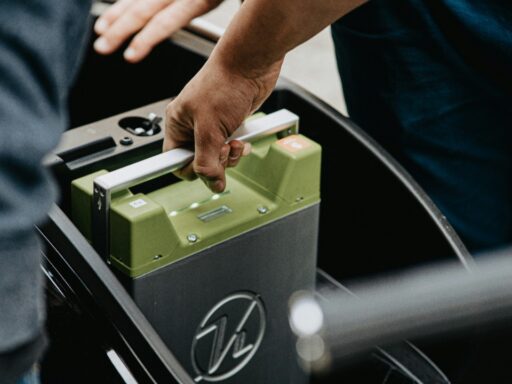
Pulsetrain says its software-controlled system could allow batteries to transition into second-life uses through software changes rather than major hardware reconstruction. The system could continue bypassing weak cells and arranging healthier ones for the requirements of stationary storage.
An investor profile for the company describes the technology as embedding intelligence at cell level to support lower costs and second-life reuse across vehicles, grids and industrial systems.
If it works at commercial scale, this could reduce battery waste and improve the economics of recycling. Packs could remain useful for longer before their materials need to be recovered.
Pulsetrain Has Raised Money and Found an Industry Partner
Pulsetrain raised €6.1 million in seed financing in March 2025. The funding round was led by Vsquared Ventures and Planet A, with participation from Climate Club. The company said the money would support product development and preparation for industrial production.
In early 2026, Pulsetrain announced a strategic partnership with automotive supplier Yazaki Europe, Middle East and Africa.
The companies plan to jointly develop and industrialize a component called the MultiCellBridge, which combines Pulsetrain’s multilevel battery technology with Yazaki’s experience in electrical connections and automotive manufacturing.
The partnership is important because a promising battery prototype is very different from an automotive component manufactured in large numbers. Production systems must meet strict requirements for quality, durability, cost and traceability.
Yazaki’s involvement does not guarantee that the technology will reach consumer vehicles, but it gives the project a clearer route toward automotive-scale testing and production.
The 80% Battery-Life Claim Needs Independent Proof
The most eye-catching claim is that the technology could extend EV battery life by up to 80 percent.
Pulsetrain presents that improvement as the equivalent of a battery lasting approximately 18 years instead of 10 under certain assumptions. Outside reports repeating the figure trace it back to the company rather than a publicly available long-term study of production vehicles.
Battery aging is highly dependent on chemistry, climate, charging behavior, vehicle design and how “end of life” is defined. A system may produce an 80 percent improvement under one testing protocol without delivering the same benefit in every vehicle.
Independent researchers and automakers would need to compare identical batteries using conventional and Pulsetrain management over thousands of charging cycles. Testing would also need to include fast charging, cold weather, high temperatures and realistic driving loads.
Until that data is published, the claimed lifespan improvement should be considered a target or company-reported result rather than a guaranteed consumer outcome.
Existing EV Batteries Are Already Lasting Longer
AI-based management would build on improvements that modern EVs already use.
Current vehicles monitor temperature, state of charge and cell balance continuously. Active cooling systems protect batteries from extreme heat, while software limits charging and power when conditions could cause damage.
Recent battery research increasingly uses machine learning to predict degradation before it becomes severe. One study introduced adaptive on-device models for EV battery-power prediction and reported forecasting-error reductions of up to 14.88 percent under offline adaptation. Better predictions could help management systems control batteries more accurately as driving conditions change.
Another large research effort created a battery-life dataset covering multiple chemistries, temperatures and charging protocols, highlighting both the promise of AI prediction and the difficulty of applying one model across every battery type.
AI will not create an indestructible battery. Its value lies in detecting patterns too complex for simple fixed rules and making small protective decisions throughout the battery’s life.
The Real Use of AI May Be Invisible to the Driver
Drivers may never directly interact with this type of AI.
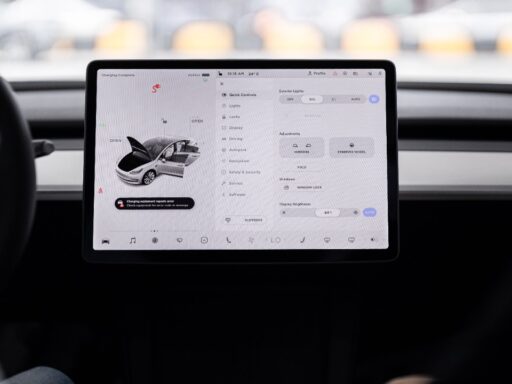
There may be no chatbot, voice assistant or visible “AI mode.” The system would operate in the background, deciding how to charge cells, distribute power and protect the battery from damaging conditions.
That quiet role may be more useful than many highly promoted consumer AI features. A longer-lasting battery could preserve driving range, improve used-EV values and reduce the likelihood of an expensive pack replacement.
Pulsetrain’s technology remains in the development and industrialization stage, and its largest claims still require independent validation. However, the project demonstrates how AI can be applied to a specific engineering problem rather than added as a marketing feature.
The most valuable artificial intelligence inside a future EV may not be the one talking to the driver. It may be the one quietly ensuring that the battery still performs years after the vehicle leaves the showroom.