
China is turning a busy metro hub into a live test bed for security robots that look like they were lifted from a science fiction set. Humanoid assistants, quadruped robot dogs, and autonomous drones are being deployed together to patrol platforms, inspect tunnels, and watch over passengers as part of a coordinated safety experiment. The project offers a rare, ground-level glimpse of how urban transit could function when artificial intelligence and robotics are deeply embedded in daily operations.
The trial, centered on a rail network in the city of Hefei, is designed to see whether a full cluster of machines can handle tasks that once demanded large human teams. Rather than a single gadget or isolated pilot, the system combines multiple robot types, a shared data brain, and constant video feeds to create what engineers describe as a more responsive shield around trains and stations.
The Hefei metro as a full-scale robot test bed
Hefei’s rail network is described as testing a coordinated artificial intelligence robot system that brings together humanoid machines, quadruped robot dogs, and aerial drones inside one metro environment. Reporting on the project notes that this cluster is not limited to showpiece patrols on the concourse; it is also being used for trackside inspection, vehicle checks, and tunnel monitoring, with the goal of turning routine safety sweeps into an automated, continuous process supported by Hefei’s rail network. The same coverage highlights that the deployment is framed explicitly as a security and operations upgrade rather than a short publicity stunt.
Within this experiment, the humanoid units are presented as the most visible interface for passengers, while the more agile robot dogs and drones venture into areas that are harder or riskier for staff to reach. The project has been described as a “full-scale robot cluster” integrated into metro workflows, with robots assigned to ticket hall patrols, platform oversight, rolling stock inspection, and underground tunnel passes in a pattern that lets them move between roles as needs change across the network. One report on the system even references the exact figure “58” in connection with this robotic cluster, indicating that engineers are already tracking specific performance or deployment metrics inside the 58 unit setup.
Humanoids, robot dogs, and drones working as a team
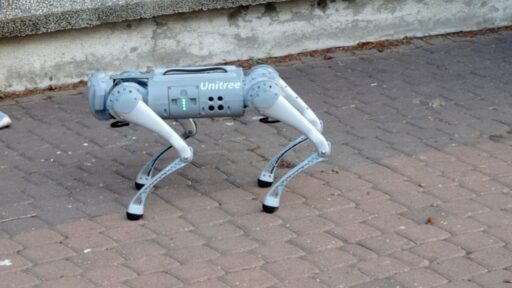
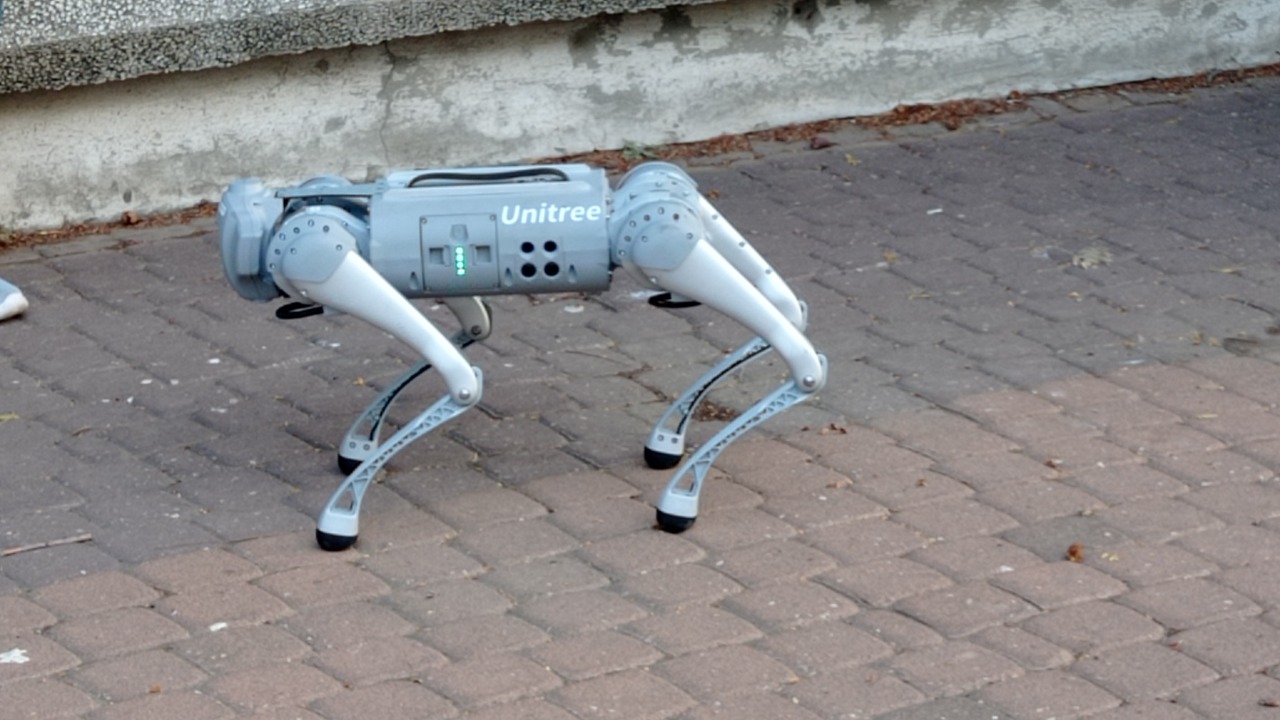
Video from the station shows a mix of machines moving through the same space, each with a distinct role that together forms a layered security presence. Humanoid robots stand near ticket gates and on platforms, gesturing and interacting with passengers in a way that mimics human staff, while quadruped robot dogs prowl closer to the track edge and even under the trains to check for anomalies, as seen in a Video of Robot. Above them, drones sweep through the station volume and tunnel entrances, using cameras to monitor crowds, spot obstacles, and feed back data that can flag potential hazards before they reach passengers.
Reports on the Hefei station highlight that these robots are not operating in isolation but instead are part of a coordinated cluster that shares tasks and information. The humanoid units focus on direct assistance and visible deterrence, the robot dogs specialize in close-up mechanical inspection of rail infrastructure, and the drones extend the system’s reach into overhead and hard-to-access spaces. This division of labor lets the cluster cover a wider area than a single type of robot could manage and provides redundancy if one unit is taken offline for charging or maintenance, a pattern emphasized across coverage of the Robot dogs and at the station.
A central AI brain and the vision of a “single organism” network
Behind the scenes, the Hefei experiment points toward a future in which all these machines are tied into a single data and control hub. Analysis of similar systems describes how video, thermal, acoustic, and LiDAR feeds can be piped into a “Central AI & Data Hub All” that processes the information together rather than as separate streams. One technical report on remote robotics explicitly labels a section “1.3 Central AI & Data Hub All drone feeds” and explains that such a system can make a distributed fleet of machines behave like a single coordinated organism, an idea that maps directly onto the way Hefei’s robot cluster is intended to operate through a 1.3 Central AI architecture.
In practice, that means the humanoids, robot dogs, and drones can share alerts and reassign tasks in near real time. If a drone spots congestion at one end of a platform, a humanoid could be redirected to guide passengers, while a robot dog might be sent to check whether a stopped train has a mechanical issue. This kind of orchestration depends on high-bandwidth links and a robust control center, but it also reflects a broader national push inside China to integrate artificial intelligence into public infrastructure. The Hefei trial becomes a concrete example of that strategy, showing how AI can move from abstract policy to physical robots that share a common digital brain.
Safety ambitions, public reaction, and the jobs question
Officials and engineers involved in the Hefei project present the robot cluster as a way to strengthen safety and efficiency in one of the most sensitive parts of urban life. Coverage of the deployment notes that the machines are intended to “redefine public transit safety” by providing constant monitoring of platforms, trains, and tunnels, with the goal of catching problems earlier and reducing the risk of accidents or security incidents through China’s new metro. The same reports emphasize that this is framed as a safety enhancement that works alongside human staff rather than a full replacement, at least in the current phase.
Passengers watching humanoids and robot dogs glide through the station appear both fascinated and cautious in early footage, which shows many people stopping to film the machines on their phones. Some coverage raises questions about how such systems might affect employment for security guards, cleaners, and maintenance crews if they scale beyond a single city. At the same time, proponents argue that a coordinated robot cluster can handle repetitive, high-risk work and free human workers to focus on complex judgment calls and customer service. That tension between automation and human labor is likely to shape how far similar projects spread beyond Hefei and into other parts of Robot led rail.
From sci-fi spectacle to everyday infrastructure
For now, the Hefei metro experiment still carries an element of spectacle, as seen in widely shared clips of robot dogs trotting beside trains and humanoids greeting riders. A widely circulated station video focuses on the novelty of seeing multiple robot types in one public space, and international coverage often frames the scene as a preview of what future train travel might look like. Yet beneath that visual drama sits a serious attempt to test how far robotics and AI can be embedded into the daily routines of a major transit system without disrupting passenger flow or undermining trust.
The broader question is whether this kind of integrated robot cluster will remain a high-profile pilot or evolve into standard infrastructure across robots on the and beyond. If the Hefei trial delivers fewer delays, faster incident response, and lower maintenance costs, transport planners in other cities may find it hard to ignore. For passengers, that would mean getting used to sharing platforms not only with staff and fellow commuters but also with a permanent cast of humanoids, robot dogs, and drones that quietly watch, inspect, and react in the background of every journey.