
NASA set out to map water on the Moon with a small, relatively low-cost orbiter, only to lose contact less than a day after liftoff. A new internal report now lays out how a software mistake, incomplete testing, and organizational choices combined to doom the Lunar Trailblazer mission almost as soon as it left Earth. The findings read less like a single catastrophic blunder and more like a chain of avoidable missteps that turned an ambitious experiment into a $72 million cautionary tale.
The probe was supposed to prove that a nimble spacecraft built on a tight budget could still deliver first-class science. Instead, the mission ended before Lunar Trailblazer could fire its main engine or see the Moon at all. The review offers a rare, detailed look at how modern space projects can fail and what NASA and its contractors say they will change before the next small spacecraft heads for deep space.
What Lunar Trailblazer was built to do
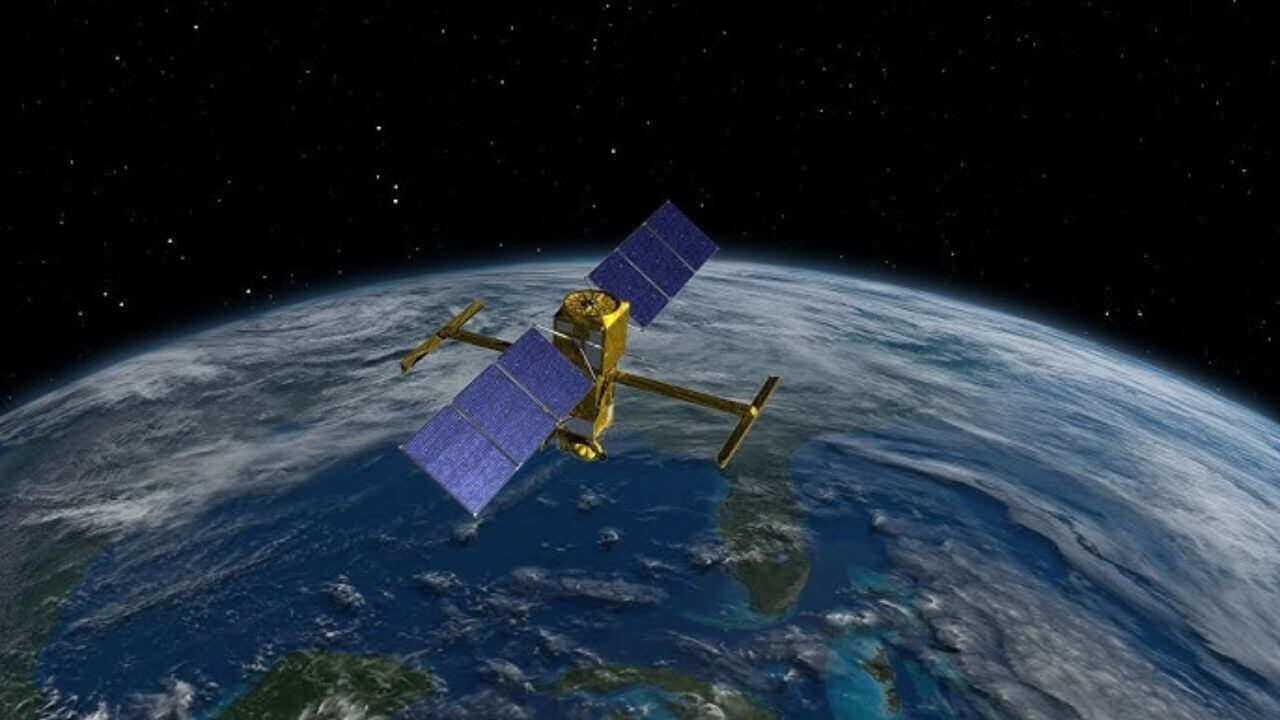
Lunar Trailblazer was conceived as a compact orbiter dedicated to one big question: where water hides on the Moon and how it behaves across the surface. NASA selected the mission to study how ice and hydroxyl move between sunlit and shadowed regions, information that future astronauts and robotic landers will need if they hope to treat lunar water as a resource. The Jet Propulsion Laboratory listed the probe in its Mission Statistics as an orbiter of Earth’s Moon, with a launch date of Feb. 26, 2025, and a plan to circle the Moon and map water signatures in unprecedented detail.
On February 26, 2025, a NASA probe called Lunar Trailblazer lifted off from Kennedy Space Center in Florida as a secondary payload, riding a larger rocket toward a transfer orbit that should have set it up for a lunar capture burn. According to mission descriptions, the spacecraft carried instruments to track how water and minerals are distributed and how they might be extracted as a resource, a key step toward sustainable exploration. The mission was also part of a broader effort to show that small, targeted spacecraft can move faster and cheaper than traditional flagships while still answering high-value science questions about the Moon.
The day the $72 million probe went dark
Trouble started almost immediately after Lunar Trailblazer separated from its ride and began operating on its own. Telemetry showed that the spacecraft deployed its solar panels and attempted to point them toward the Sun, a basic survival maneuver that every deep space probe must execute to keep its batteries charged. Instead of stabilizing, the probe began to drift into an orientation that starved its power system. Within roughly a day of launch, NASA lost contact with the orbiter and never regained it, a rapid failure that cut off any chance of reaching lunar orbit.
A new report by a NASA review panel, released through a Freedom of Information request, concludes that a software error in the pointing system caused the spacecraft to aim its solar arrays away from the Sun instead of toward it. One summary of the findings notes that NASA lost a lunar spacecraft one day after launch when the misconfigured code commanded the attitude control system to hold an orientation that gradually drained the batteries until the probe fell silent. The same review estimates the mission cost at $72 million, a figure echoed in a separate analysis that describes $72 million in hardware and operations lost less than 24 hours into flight.
Inside the pointing software failure
At the heart of the failure was a flaw in the flight software that handled how the spacecraft oriented itself in space. According to a report by a NASA review panel, the algorithm that translated sensor data into commands for the reaction wheels and thrusters contained an error that effectively flipped the logic for where the Sun should be relative to the solar panels. Instead of aligning the arrays toward the incoming light, the code gradually steered them away, a mistake that would have been survivable only if other layers of fault protection had caught the problem in time. The panel described this as a pointing software issue that directly caused the solar panels to from the Sun during the critical early hours of the mission.
The software did not fail in isolation. The review traces how assumptions baked into the design, incomplete simulations, and gaps in integrated testing left the bug undetected before launch. Engineers had verified individual components of the attitude control system, but the panel found that end-to-end tests that would have exercised the exact pointing sequence used after separation were either limited or missing. One section of the report notes that when a complicated system fails, it is usually more than one thing that went wrong, and Lunar Trailblazer fit that pattern, with the flawed code interacting with the spacecraft’s configuration in a way that the team had not fully rehearsed on the ground.
Lockheed Martin’s role and the limits of low cost missions
Lockheed Martin built the low-cost Lunar Trailblazer spacecraft under a contract that aimed to deliver a capable lunar orbiter on a relatively tight budget and schedule. The NASA panel says the company did not properly test the solar panel deployment and pointing behavior under realistic conditions, which meant the critical software error slipped through to flight. In one section of the review, NASA notes that Lockheed Martin’s processes for validating the attitude control system were not sufficient for a deep space mission, even one classified as lower cost, and that the company will need to adjust how it verifies similar systems in future projects. The same document highlights that Lockheed Martin built the spacecraft to move faster by design, a choice that brought both agility and risk.
The failure has sharpened debate inside NASA about how far the agency can push the idea of small, fast missions without eroding safety margins. The Lunar Trailblazer project was intended to show that a lean team could deliver cutting-edge lunar science, but the review suggests that compressed schedules and cost caps contributed to decisions that left vulnerabilities in the system. One passage describes how the mission’s classification as lower cost influenced how many tests could be run and how much redundancy could be built in, a tradeoff that became painfully clear when the single-string pointing software malfunctioned. The episode now serves as a case study in how low cost does not mean low consequence when a spacecraft is entrusted with a high-value science objective around the Moon.
What the NASA review panel found about culture and oversight
The review panel did not stop at technical details. It also examined how management structure, communication, and oversight affected the mission’s fate. NASA provided the report in response to a request under the Freedom of Information Act, and the document describes a culture in which concerns about the pointing system did not always travel cleanly between teams. One section notes that when a complicated system fails, it is usually more than one thing that went wrong, and in this case that included gaps in documentation, limited cross-checks between software and hardware groups, and an underestimation of how risky the initial pointing maneuver really was. The panel concluded that NASA’s internal reviews did not fully probe the assumptions behind the attitude control design before approving Lunar Trailblazer for launch.
Questions also emerged about how independent the oversight really was for a mission that relied heavily on a single contractor. The panel’s findings, summarized in one detailed narrative, suggest that NASA personnel sometimes relied on Lockheed Martin’s internal testing claims without insisting on independent verification. That dynamic is not unique to Lunar Trailblazer, but in this case it meant that a mission advertised as nimble and innovative did not receive the same depth of scrutiny as a flagship project, even though it faced the same unforgiving physics once it left Earth orbit.