
NASA is hitting pause on its lunar ambitions to rebuild confidence in how it flies astronauts to deep space. Under Administrator Jared Isaacman, the agency is shifting the Artemis program toward a slower but more methodical sequence that prioritizes safety checks, repeatable operations, and a realistic schedule. The first crewed landing is now targeted for 2028, a reset that trades speed for a higher probability that the next steps on the Moon will not be the last for a long time.
Rather than racing to plant a flag, NASA is reorganizing Artemis around fewer, clearer milestones and more rehearsal flights in lunar orbit. Isaacman is betting that a safety-focused overhaul, even at the cost of delay, will give astronauts, lawmakers, and the public greater trust in a program meant to run for decades instead of culminating in a single historic moment.
Isaacman’s safety case for slowing down
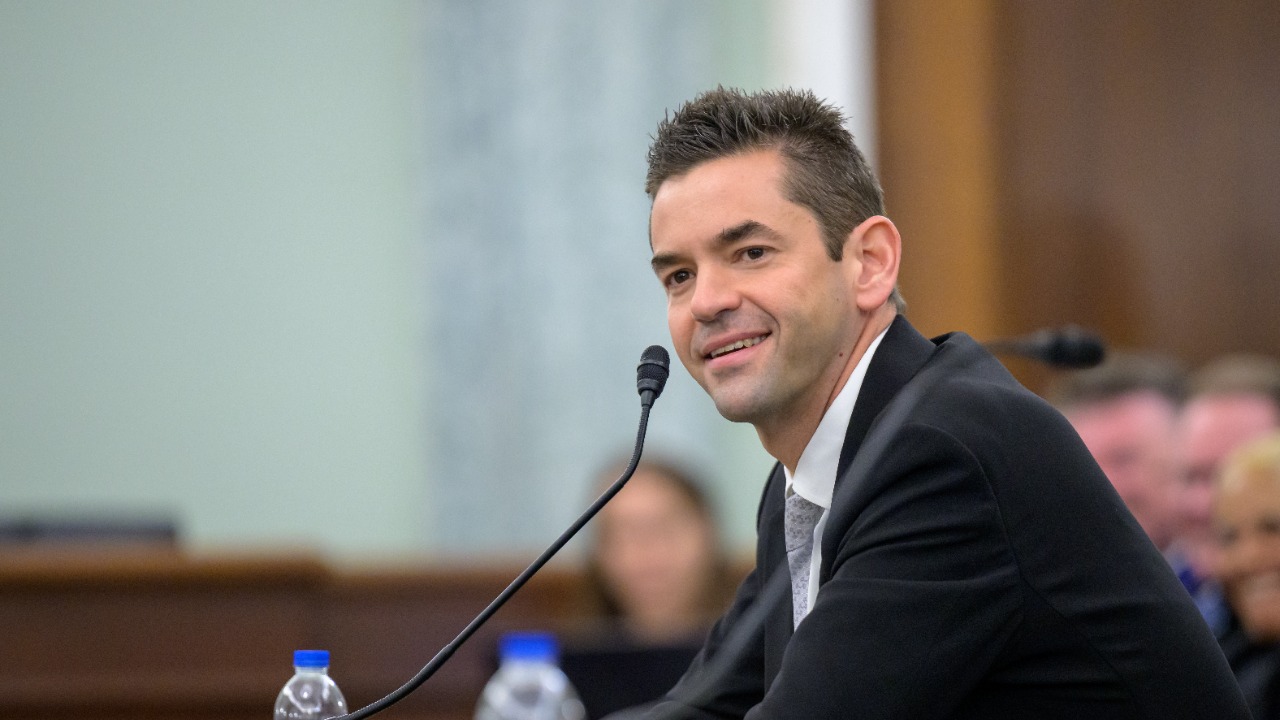
Isaacman has moved quickly to put his own stamp on the lunar effort, arguing that the current architecture is too fragile to support a sustainable presence on the Moon. The administrator has been described as frustrated with what he called a needlessly complicated sequence of missions, and he has now ordered a restructuring that puts safety and simplicity ahead of arbitrary dates. The decision to pivot toward a 2028 landing window reflects his view that a higher-confidence opportunity to land is more valuable than clinging to a schedule that engineering data no longer supports, a point he reinforced when he said that the entire sequence of Artemis flights needed to be rethought in order to meet NASA’s long-term objectives.
His own trajectory into the space sector shapes that argument. As a billionaire pilot who has flown privately funded missions and now serves as NASA administrator, he has built a reputation as a risk taker who still insists on rigorous test data and incremental buildup before committing crews to new vehicles. That dual identity, entrepreneur and government leader, gives him political cover to insist that Artemis accept delays after technical issues on the Space Launch System and Orion stack, including helium flow problems that pushed Artemis II into a later launch window. His public comments have emphasized that the agency cannot simply hope its way through those issues and that a revised cadence is the only way to protect astronauts and the program’s credibility, a stance supported by his profile as a high-visibility figure in both commercial and government spaceflight as seen in Jared Isaacman.
What changes in the new Artemis flight plan
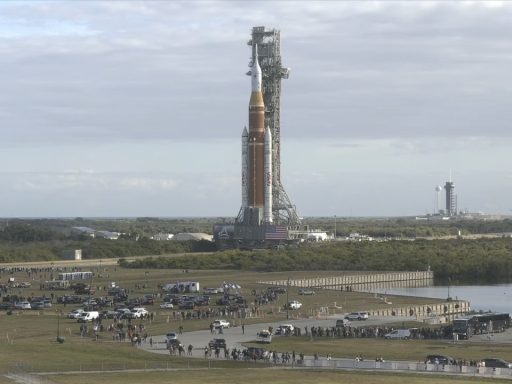
The overhaul reshapes the near-term mission list that had been built around a rapid push to a first landing. Artemis II, the first crewed flight of the Space Launch System and Orion, remains a lunar flyby that will test life support, navigation, and communications in deep space, but its launch has slipped after a failure in the helium flow system forced NASA to move the target from early March to a new window in April. That delay has knock-on effects for every mission that follows, and Isaacman has chosen to use the breathing room to insert an extra flight in lunar orbit next year, creating more time to validate systems before anyone attempts to descend to the surface.
The most visible shift is the redirection of Artemis III. Originally billed as the first crewed landing at the south pole of the Moon, it will now fly as a mission that remains in lunar orbit rather than touching down. Isaacman outlined that change as part of a broader reset that pushes the first surface expedition to 2028 and then aims for roughly one Moon mission per year after that. The Artemis IV and V missions, which had been conceived as follow-on landings with more complex infrastructure, are being rephased into this new timeline so that each step builds cleanly on the last instead of stacking unproven elements on top of one another, an approach detailed when Isaacman described how Isaacman outlined several to Artemis III and the follow-on flights.
Modeling Artemis after Apollo’s pace
Isaacman and his team are not hiding their inspiration. NASA officials have said they want Artemis to look more like the Apollo program in its cadence and discipline, with a series of increasingly demanding missions that each retire specific risks before the next leap. That means more flights that orbit the Moon, test docking procedures, and rehearse operations with the lunar landers before anyone attempts a landing, instead of trying to combine too many firsts into a single shot. It is a deliberate move away from what critics saw as a patchwork plan assembled around political deadlines rather than engineering logic, and it reflects a belief that a slower tempo can still feel dynamic if each mission has a clear purpose and visible progress.
The external environment, however, is very different from the 1960s. Elon Musk and Jeff Bezos, through SpaceX and Blue Origin, are racing to deliver human landing systems that will ferry crews from lunar orbit to the surface and back. Their schedules and test campaigns add both opportunity and pressure to NASA’s planning. By stretching the timeline to 2028, Isaacman is giving those companies more time to mature their vehicles and integrate with the agency’s systems, while also preserving NASA’s role as the integrator of a complex network of commercial and international partners. The agency has explicitly said it is revamping the lunar program by modeling it after a faster-paced Apollo-style approach even as it leans heavily on private landers, a balance described in coverage of how NASA is revamping Artemis while Elon Musk and Jeff Bezos accelerate work at SpaceX and Blue Origin.
From political slogan to long term program
Artemis began as a politically charged promise to return astronauts to the Moon on an aggressive timetable, with some early targets suggesting a landing far earlier than engineers believed was realistic. That origin left the program vulnerable to shifts in administrations and congressional priorities, as well as to criticism that it was more slogan than strategy. Isaacman’s reset attempts to turn Artemis into a durable exploration program that can survive electoral cycles by grounding it in a clear sequence of missions, a transparent schedule, and an explicit focus on safety and repeatability. The new plan also aligns more closely with NASA’s public description of Artemis as a campaign to build a long-term presence in lunar orbit and on the surface, a vision that includes the Gateway outpost and international contributions as spelled out in the agency’s Artemis overview.
Winning and keeping political support will still require more than technical arguments. Isaacman has already begun making the case that a slower path to the first landing is the only way to guarantee that the United States can maintain a steady cadence of one Moon mission per year once operations begin in earnest. That pitch is aimed at lawmakers who want to see tangible milestones and at a public that has to stay engaged through years of incremental progress. Reporting from Houston has described how NASA’s new administrator is working to line up support from Washington behind a makeover that adds an extra Artemis flight next year and then concentrates landings in 2028, a strategy laid out in coverage of how NASA’s Artemis program is getting a major makeover.