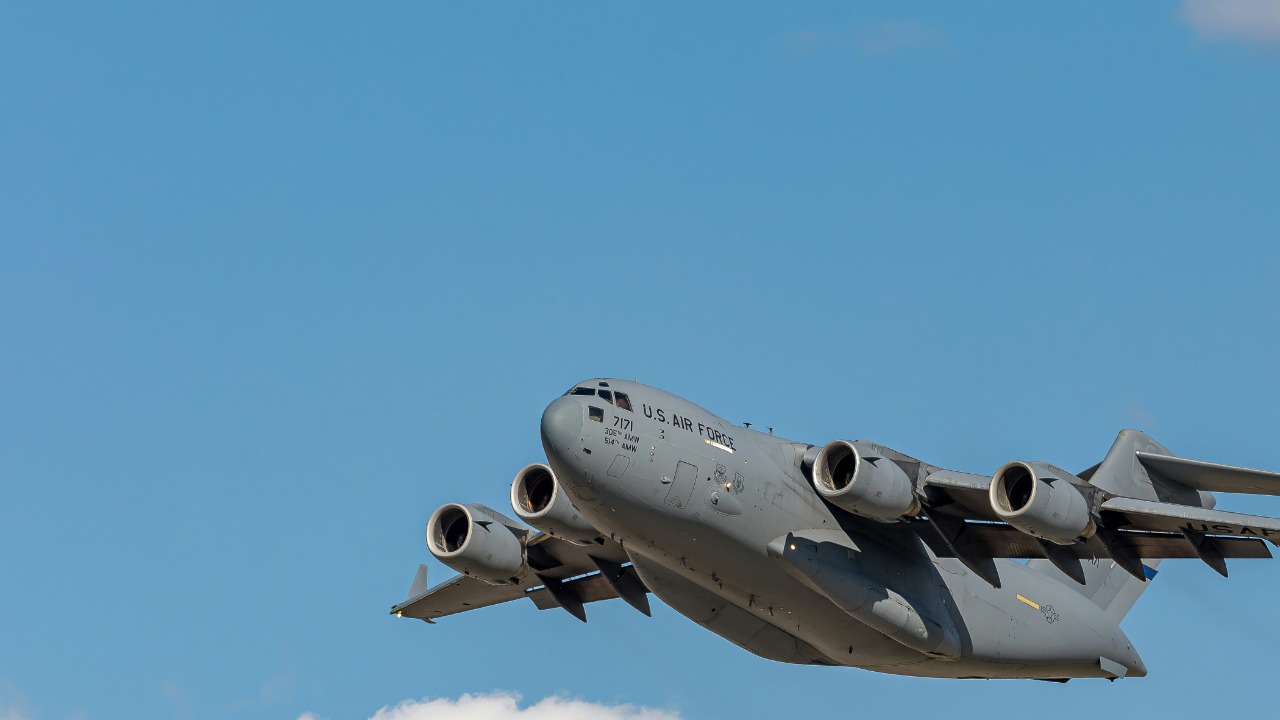

When President Donald Trump’s flight to the World Economic Forum was abruptly turned back to Washington, the incident instantly sharpened attention on the aging Air Force One fleet and the long delayed replacement program. The diversion was quickly attributed to a minor electrical issue, but the symbolism was far from minor for a White House that has already pushed hard for a new presidential jet. In the days since, officials have quietly updated expectations for the next generation aircraft, even as the current planes undergo fresh scrutiny.
The episode has become a real time stress test of the Air Force’s plan to keep the current VC-25A aircraft safe and reliable until the new VC-25B enters service. It has also exposed how technical glitches, procurement delays and political optics now intersect every time “Air Force One” lifts off with President Donald Trump on board.
The midair glitch that sent Air Force One back to Joint Base Andrews
According to the press pool traveling with President Donald Trump, the aircraft designated as Air Force One turned back to Joint Base Andrews roughly an hour into its overnight flight to Europe after crew members detected what officials later described as a minor electrical issue. Coverage from Washington noted that the jet, carrying the president to Davos in Switze, returned to the capital region instead of continuing across the Atlantic, a decision framed as a precaution rather than a sign of imminent danger to those on board, including senior aides and security staff Washington.
Other accounts described how the press cabin briefly lost power midflight, reinforcing the decision to abandon the original route and return to Joint Base Andrews instead of pressing on to Switzerland. Local television coverage captured the moment viewers were told that President Donald Trump’s plane, Air Force One, was returning to Joint Base Andrews after departing for Switzerland on Tuesday evening, underscoring how quickly a technical anomaly aboard the presidential jet becomes a national story President Donald Trump.
Inside the decision to divert and switch to a backup jet
From the Air Force perspective, the diversion was a textbook example of risk management on a mission that can never be routine. Reporting on the episode noted that Air Force One, operating from the East Coast on its way to Europe, diverted and ultimately forced a switch to a Backup Jet after the crew identified the electrical problem. The aircraft later parked on the flightline at Dobbins Air Rese while arrangements were made for the president and his team to continue the journey on a second, fully checked aircraft, a reminder that redundancy is built into every presidential movement Backup Jet.
Television and online coverage stressed that the White House described the issue as minor and emphasized that the return was made out of an abundance of caution, not because the president was in immediate danger. One network special report opened with Jan coverage from NBC, with News anchor Francis Rivera in New York explaining that Air Force One had turned around after a minor electrical issue, setting the tone for a night of rolling updates that treated the event as serious but not catastrophic Francis Rivera.
How the glitch revived scrutiny of an aging presidential fleet
The electrical fault landed at a politically sensitive moment, because President Donald Trump has already argued that the current Air Force One jets are overdue for replacement. A White House account of the incident said Air Force One experienced a “minor electrical issue” after takeoff at 10:20 p.m. and returned “out of an abundance of caution,” and that the glitch has revived the administration’s push for a faster transition to the new aircraft. Supporters of that view have pointed to the episode as proof that the president was right again to press for modernization of the presidential airlift fleet Air Force One.
At the same time, aviation specialists have cautioned that even brand new aircraft can suffer minor technical issues, and that the real story is the strain on a small, heavily modified fleet that must be ready around the clock. A Facebook account that tracked the diversion noted that the entire aircraft must undergo a full security sweep after such an event and that any outdated or foreign built technology will likely be removed and replaced, a process that adds cost and complexity on top of the roughly $400 million price tag of the jet itself entire aircraft.
The new VC-25B: delays, upgrades and a shifting delivery date
The diversion has inevitably focused attention on the VC-25B, the next generation presidential aircraft based on the Boeing 747 platform that is intended to replace the current VC-25A jets. Earlier coverage of the program described how the new Air Force One Boeing 747, known as the VC-25B, suffered another setback when Its first flight was pushed back by more than a year, with supplier bankruptcy and labor problems cited among the causes, and initial schedules that would have seen a 2024 entry into service slipping to a 2026 delivery at the earliest Air Force One.
More recent program updates show that the timeline has slipped again, even as the Air Force tries to frame the latest schedule as an improvement over earlier worst case scenarios. One detailed account explained that USAF Moves Up Air Force One Delivery and Acquires 2 Extra 747-8s for Parts and Training, but also made clear that the service now expects the contractor to deliver the new presidential airlift in 2028, not in the middle of this decade as once hoped USAF.
What the Air Force and White House now expect from the VC-25B
Behind the scenes, Air Force planners and White House staff have been recalibrating expectations for when the VC-25B will actually carry President Donald Trump. One defense focused report noted that After Trump voiced his displeasure earlier this year, Boeing and the Air Force worked to rescue the VC-25B program, which had been dogged by cost growth and schedule slips, and that officials now expect the first of the delayed Boeing Air Force One jets to arrive in mid 2028 if the current plan holds After Trump.
A separate account, citing Air Force and White House officials, similarly reported that Boeing’s first VC-25B Air Force One jet is now slated to enter service in mid 2028, a schedule that would give the Air Force some breathing room to complete testing and crew training but still requires the current fleet to remain in front line service for several more years. That same reporting underscored that the Air Force and the White House both see the VC-25B as essential to maintaining secure global mobility for the presidency well into the 2030s mid 2028.
Political optics, “palace in the sky” criticism and the Qatari angle
The latest Air Force One scare has also revived a parallel debate about the optics of presidential air travel at a time of domestic and international tension. Critics have seized on reports that Trump, President Donald Trump is reportedly set to accept a lavish widebody jet from a foreign benefactor, with one commentary urging readers to Look no further than the latest “gift” from the Qatari government, which Trump is reportedly set to accept and which could first be used as Air Force One, to argue that the president risks blurring the line between state necessity and personal luxury Look.
Supporters counter that the current VC-25A aircraft are already outfitted with extensive communications, radiation shielding and antimissile technology, and that any future platform, whether government purchased or foreign supplied, would be subject to the same rigorous security modifications and oversight. The recent diversion has given both sides new talking points, with critics highlighting the image of a presidential jet turning back over the Atlantic and allies emphasizing that the system worked as designed, with a safe return and a rapid switch to a backup aircraft Donald Trump.
What the diversion reveals about military aviation delays and readiness
Beyond the politics, the Air Force One incident fits a broader pattern of high profile aviation programs struggling with delays, developmental issues and budget pressure. A Navy aviation overview, for example, notes that with continued delays in the planned delivery quantities of new aircraft due to developmental issues, cost overruns and budget constraints, recapitalization of key fleets has been postponed further and further into the future, a description that could just as easily apply to the VC-25B as to carrier based jets continued delays.
Within that context, the Air Force has tried to present the VC-25B schedule as stabilizing rather than slipping, even as independent observers point out that the first of two VC-25Bs is now expected to reach the fleet in 2028. One aviation industry update described how The VC program has been dogged by delays almost from the start, with Boeing awarded a roughly $4 billion contract in 2016 to deliver the new presidential aircraft and officials now reluctant to revise the delivery date any further, a sign of how politically sensitive the program has become The VC.