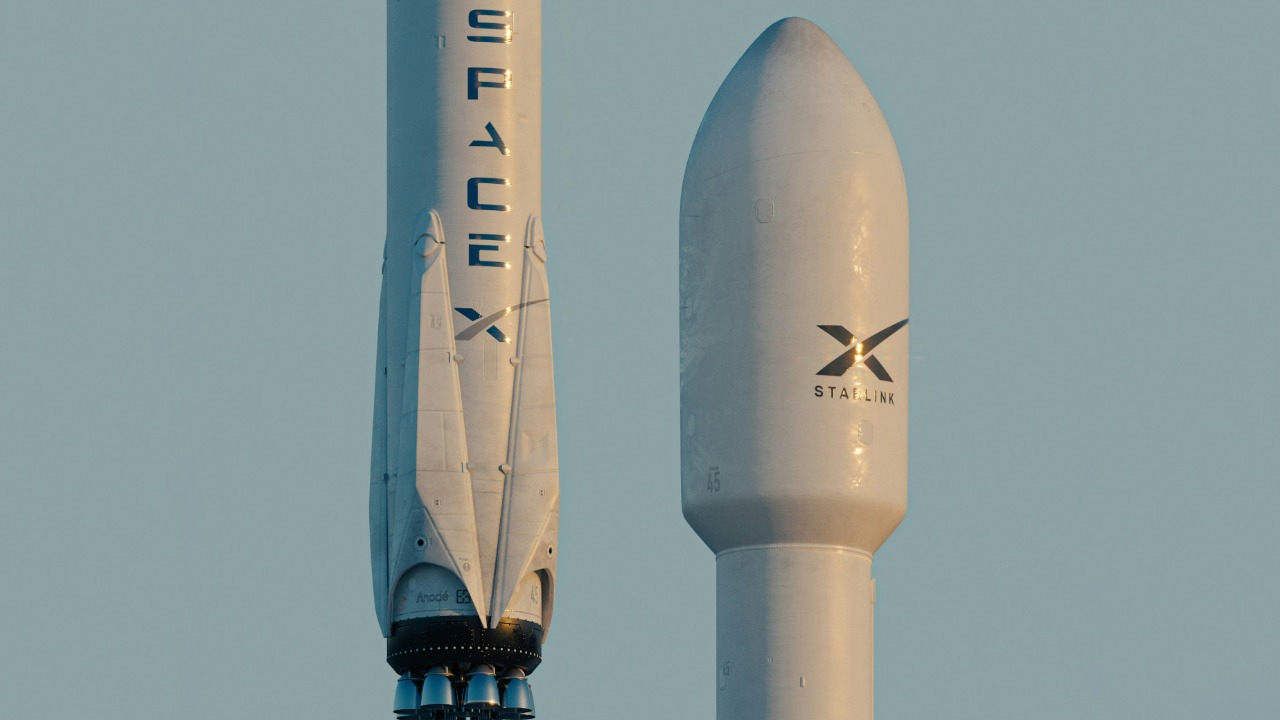

SpaceX’s satellite arm is no longer a side project. Starlink has become the company’s main growth engine, driving subscriber gains, new mobile services and a possible push into consumer hardware just as investors brace for a long‑anticipated public listing. The prospect of a dedicated phone and more direct‑to‑device internet offerings signals that the business is shifting from a niche rural broadband provider into a full‑spectrum connectivity platform.
That evolution matters far beyond the space industry. Starlink’s expansion into mobile networks, Internet of Things and higher‑capacity broadband is reshaping expectations for what satellite internet can deliver, and how much of SpaceX’s future value will be tied to it. The strategy is also testing how far the company can stretch into markets dominated by terrestrial carriers without triggering a backlash from partners or regulators.
Starlink’s subscriber surge and SpaceX’s IPO calculus
Starlink’s scale is now central to understanding SpaceX’s finances. At the end of 2023, the service counted 2.3 m paying subscribers, and 4.6 m by the end of 2024, a doubling that underscores how quickly the constellation has moved from early adopters to mass‑market users. That customer base now stretches across U.S., European, Australian and Canadian markets, giving SpaceX recurring revenue that is far less lumpy than launch contracts. Analysts looking at SpaceX’s valuation argue that this subscription engine is what will anchor the company’s cash flow as it heads toward a listing.
Financial projections circulating among investors suggest just how dominant Starlink could become inside the broader group. One analysis notes that in 2024 SpaceX is reported to have generated roughly half of its revenue from the satellite business, and that Starlink could account for as much as 80 percent of SpaceX’s total revenue. Another presentation on Importance of the 2026 IPO Timeline argues that Starlink’s growth trajectory is a key reason investors see that year as a milestone for the satellite sector’s maturity, with Altucher highlighting how recurring connectivity revenue can support higher valuations than one‑off launch deals.
From rural dishes to mobile phones and IoT
Starlink’s strategy now extends well beyond fixed dishes on rooftops. The company has positioned itself as “the global leader” in satellite broadband and is moving into Internet of Things, with an update outlining plans to support wide‑area IoT services in 2025. That same update details a new Space Situational Awareness system, branded Space Situational Awareness SSA and called Stargaze, which is designed to track objects in orbit and reduce collision risks as the constellation grows. These moves show how Starlink is trying to lock in both operational resilience and new revenue streams from connected devices.
The most visible expansion, however, is into mobile connectivity. Starlink has rolled out a “Direct to Cell” service that lets ordinary smartphones connect to its satellites for basic messaging and data. In the United States, a partnership with T‑Mobile, described as Mobile and Starlink to Officially Launch July 23, brings satellite texting to the carrier’s top‑tier plans at no extra cost. After six months of beta testing, that direct‑to‑cell messaging became widely available on AT&T, T‑Mobile and Verizon phones, with customers on lower‑tier plans able to add Aftermarket satellite texting from Starlink and Mobile for about 10 dollars a month. In the Philippines, a campaign branded STARLINK FOR MOBILE highlighted the debut of a dedicated site for Starlink Direct to Cell, underscoring how the mobile push is going global.
Direct‑to‑cell and the rumored “Starlink phone”
The next phase of that mobile strategy is unfolding on two tracks: deeper integration with existing carriers and the possibility of Starlink‑branded hardware. In the United Kingdom, the company has said that Starlink Direct to Cell will be the first satellite‑to‑mobile service in that market starting in early 2026, enabling data and voice coverage in areas that lack terrestrial signal. In the United States, the T‑Mobile partnership that was set to Officially Launch July 23 has been framed as a way to eliminate dead zones without requiring new phones, relying instead on updated network software and Starlink’s growing constellation.
At the same time, reports have surfaced that SpaceX is exploring a dedicated “Starlink phone” to offer direct‑to‑device internet services. People familiar with the matter told Reuters that SpaceX is considering such a device as part of its direct‑to‑device roadmap, with a separate analysis arguing that Entering the phone business could bolster revenues ahead of the IPO. That same report notes that But Elon Musk has publicly denied that SpaceX is developing a phone, a position echoed in another statement where he said the company is not working on such hardware. A separate piece on Financial and Structural and Risks notes that Because xAI is burning cash quickly, Musk has strong reasons to keep SpaceX focused on capital‑efficient growth as it eyes public markets.
The tension between those reports and Musk’s denials reflects a broader strategic dilemma. On one hand, a Starlink‑branded phone could give SpaceX a “gatekeeper” position in satellite connectivity, as one analysis of Entering the market suggests. On the other, telecom experts warn that it will likely be hard for Starlink to make a phone and compete with mobile network operators, with Armand arguing that other carriers would avoid using a rival’s device. For now, the company appears to be threading the needle by embedding satellite connectivity into existing phones through partners, while keeping the option of proprietary hardware open as a long‑term question.
Network upgrades, capacity and gigabit ambitions
Behind the consumer‑facing products, Starlink is racing to expand its technical backbone. A detailed FUTURE NETWORK CAPACITY update describes new satellites with more powerful antennas, upgraded ground stations and software improvements that together are expected to deliver an order‑of‑magnitude increase in throughput compared with the current network. The company says these advances will allow it to scale rapidly while improving reliability and latency, a prerequisite for supporting millions more fixed users alongside direct‑to‑cell traffic. For investors, that kind of capacity roadmap is crucial to assessing whether Starlink can sustain growth without degrading service quality.
On the user side, Starlink is promising much faster speeds. A roadmap for 2026 states that Starlink claims download speeds of up to 1 gigabit per second, with the goal of making satellite internet “indistinguishable” from traditional ISPs for many applications. If realized, that would move the service from a backup option for rural users into direct competition with fiber and cable in suburban markets. It would also support more demanding use cases, from cloud gaming to remote work, that are essential to justifying premium pricing and higher average revenue per user.
How Starlink’s growth reshapes SpaceX’s business mix
As Starlink’s services proliferate, they are reshaping the balance of power inside SpaceX. A detailed analysis of why the 2026 listing is “actually all about Starlink” notes that Note SpaceX is still privately owned and does not disclose full financials, but investor models increasingly treat launch as an enabler for the satellite network rather than the core profit center. Another breakdown of Joey Roulette WASHINGTON for Reuters describes how Starlink has become a vital profit driver within Elon Musk’s empire, with a planned IPO expected to crystallize that value.
Another detailed report on how Joey Roulette WASHINGTON framed the story notes that Starlink is already a “vital profit” engine, and that management expects it to contribute up to 80 percent of group revenue within a few years. A separate summary distributed through a brokerage platform emphasizes that Starlink is a vital profit contributor already, and that the company is exploring more internet services, including a potential device, even as Musk insists they are not developing a phone. That same brokerage note, which investors can Send to colleagues and Separate email addresses, underscores how closely the market is watching every hint of new consumer offerings.