

Poland’s e-commerce market has been jolted by a lawsuit that pits a fast-growing marketplace against the country’s dominant online platform. Erli has accused Allegro of manipulating prices and abusing its market power, turning a long-simmering rivalry into a test case for how far digital giants can go in shaping competition. The dispute reaches beyond two companies, raising pointed questions about how smaller platforms and independent merchants can survive when one player effectively sets the rules of the game.
At the heart of the case is a simple but explosive claim: that Allegro’s scale and control over key tools in Poland’s online retail ecosystem let it tilt the field in its own favor. As I see it, the outcome will help define whether aggressive pricing tactics are just hard-nosed competition or a form of gatekeeping that regulators and courts are increasingly willing to challenge.
The lawsuit that put Allegro’s dominance on trial
Erli has moved from private complaints to public confrontation, filing a lawsuit that accuses its larger rival of abusing a dominant position in Poland’s online retail market. The company argues that Allegro’s conduct amounts to price manipulation that distorts how goods are sold and discovered, making it harder for alternative platforms to attract both shoppers and merchants. In its legal filing, Erli frames the dispute not only as a commercial clash but as a systemic problem for Poland’s digital economy, where one marketplace’s decisions can ripple across thousands of sellers.
According to a detailed Quick Summary of the case, Erli has formally sued Allegro for alleged price manipulation in Poland, explicitly tying its claims to an accusation of abuse of a dominant position. The same summary notes that Allegro denies the allegations, underscoring how sharply the two sides differ on what constitutes legitimate competition. A related overview of the Claims of Price stresses that Erli sees the conduct as part of a broader pattern rather than isolated incidents, while Allegro insists its pricing and platform policies comply with competition rules.
How Erli says Allegro’s pricing power distorts the market
From Erli’s perspective, Allegro’s size and influence give it the ability to shape prices in ways that competitors simply cannot match. The lawsuit centers on the idea that Allegro can pressure or incentivize sellers to offer lower prices on its own marketplace than on rival platforms, effectively turning its dominance into a lever that squeezes margins elsewhere. If that claim holds, it would mean that smaller platforms like Erli are forced either to accept thinner profits or to lose out on key products that appear cheaper on Allegro, even when underlying costs are similar.
Reporting from GDANSK describes how Polish e-commerce platform Erli has taken the dispute to court, accusing Allegro of abusing its dominance in Poland’s online market. A parallel account of the case from Reuters similarly notes that Erli alleges price manipulation by Allegro of Poland’s e-commerce landscape, reinforcing the picture of a challenger that sees pricing as the core battleground. Another detailed report on how Erli accuses Allegro manipulating prices highlights that the complaint focuses on the treatment of sellers on Allegro’s platform, suggesting that the alleged distortions are embedded in the marketplace’s commercial terms rather than in one-off deals.
Allegro’s scale, revenue and history with regulators
To understand why Erli frames Allegro’s behavior as an abuse of dominance, it helps to look at the numbers and the regulatory record. Allegro is not just another marketplace in Poland, it is the central hub for online shopping in the country, with a scale that gives it enormous bargaining power over merchants and visibility with consumers. Financial data show that, According to Allegro, the company’s latest reports put its current revenue, measured on a TTM basis, at $3.03 Billion USD, a figure that underlines just how far ahead it sits of smaller rivals like Erli.
Regulators in Poland have already signaled concern about how such scale can translate into unfair advantages. The Polish Office of Competition and Consumer Protection previously Announced an investigation into Allegro for alleged abuse of dominance through self preferencing, focusing on how the company might favor its own offers over those of independent sellers. That process culminated in a decision in which Poland Issued a ruling against Allegro for abuse of dominance through self preferencing, ordering the company to cease anti competitive conduct. Erli’s lawsuit now lands in a context where Allegro is already under pressure to show that its platform rules and pricing strategies do not cross the line into exclusionary behavior.
Allegro’s firm denial and the battle for public perception
Allegro has responded to Erli’s accusations with a categorical rejection, arguing that its pricing practices are both lawful and beneficial to consumers. From Allegro’s standpoint, aggressive discounts and tight control over marketplace standards are part of delivering value in a fiercely competitive sector, not evidence of manipulation. The company is keenly aware that how it frames this dispute will matter not only in court but also in the eyes of merchants who rely on its platform and shoppers who associate its brand with convenience and low prices.
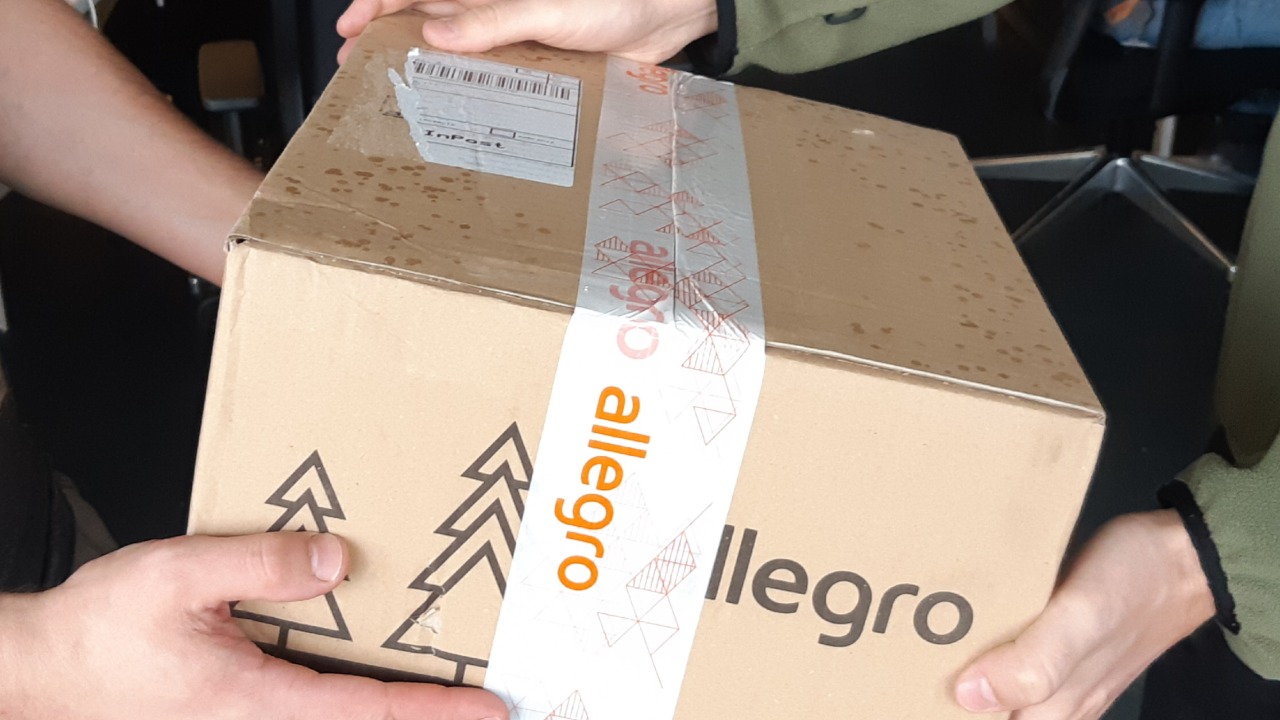
In comments reported on the case, Allegro has been quoted as saying that it “strongly disagree[s]” with Erli’s claims, a stance captured in coverage that notes how Erli and Allegro of Poland are locked in a sharp war of words over what counts as fair competition. Visuals accompanying the reporting, such as an image where the Allegro logo is seen on a smartphone screen, underline how central the platform has become to everyday shopping habits. For Allegro, the risk is that repeated references to investigations and lawsuits could erode trust, even if courts ultimately side with its interpretation of the rules.
What is at stake for Poland’s e-commerce future
For Erli, the lawsuit is as much about survival as it is about legal principle. Competing with a platform that commands such a large share of Poland’s online spending means trying to differentiate on service, selection or niche focus, but those efforts can be undermined if merchants feel compelled to prioritize Allegro’s marketplace for the best prices and visibility. By pushing the dispute into the courts, Erli is betting that a clear legal boundary on pricing tactics will give smaller platforms more room to innovate and negotiate on their own terms.
The broader Polish e-commerce ecosystem is watching closely, from independent retailers to logistics providers and payment firms that depend on a healthy mix of marketplaces. A comprehensive overview of the conflict notes that Erli has framed its case as a defense of fair competition in Poland, while Allegro insists that its conduct benefits consumers through lower prices and better service. As the legal process unfolds, the dispute will test how far competition law in Poland is willing to go in policing the behavior of digital gatekeepers, and whether a challenger like Erli can use the courts to rebalance a market that has long revolved around a single dominant platform.