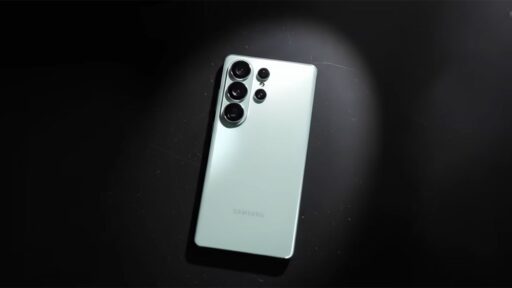


Samsung’s next flagship, the Galaxy S26 Ultra, is shaping up as the company’s most developer friendly phone in years, with strong signs it will finally match Google’s Pixel line by supporting a full Linux terminal on device. Leaked system logs, references to Android’s virtualization tools, and fresh reporting around Samsung’s software roadmap all point to a phone that can run a complete Linux environment without hacks or root. If that holds, the S26 Ultra could turn from a powerful Android slab into a pocketable workstation for coders, sysadmins, and tinkerers.
The move would also mark a quiet but important course correction after the Galaxy S25 Ultra skipped Google’s Linux Terminal feature, leaving power users to look enviously at Pixel phones. For Samsung, bringing proper Linux support back to its top-tier hardware would echo the ambition of its old Linux on DeX experiment, only this time built directly into Android rather than bolted on as a separate app.
From hidden Pixel feature to Android showcase
Google’s Linux Terminal started as a niche capability, but it has quickly become one of the most interesting things you can do with a modern Android phone. On recent Pixel devices, once you unlock developer settings and dig into the right menu, you can spin up a full Linux environment that behaves like a traditional shell, complete with package management and familiar command line tools. Guides walk users through enabling developer options, heading into hidden menus, and launching a terminal that runs on top of Android’s own virtualization stack.
Once that environment is active, Pixel owners can search inside Settings, tap through System and Developer Options, and find a toggle that literally reads “Run Linux terminal on Android.” That wording is not marketing fluff, it reflects the fact that Google is exposing a genuine Linux userland, not just a themed command prompt. For developers, it means they can install compilers, connect to remote servers, or test scripts directly on the phone, while power users can treat the device more like a tiny laptop than a locked down handset.
Why the Galaxy S26 Ultra looks ready for Linux
Hints that the Galaxy S26 Ultra will join this club are buried in its own software. Early firmware and diagnostic output for Samsung’s upcoming flagship include references to the Android Virtualization Framework, a low level component that Google uses to isolate and run the Linux Terminal environment. A teardown of the system apps tied to the S26 Ultra points to the same virtualization hooks that underpin Linux Terminal on Pixel phones, suggesting Samsung is preparing to expose the same feature rather than building its own parallel solution.
Separate reporting on the same codebase notes that a line in leaked log files explicitly ties Android’s Linux Terminal feature to the Galaxy S26 Ultra, reinforcing the idea that this is not a generic test build but a capability planned for the shipping device. One analysis of those logs highlights how the Android Virtualization Framework is called out alongside the phone’s model identifiers, a pairing that only really makes sense if Samsung intends to let users boot a Linux environment in a secure container.
Closing the gap with Pixel and fixing the S25 miss
For Samsung fans, the most striking part of this story is how directly it addresses a gap left by the Galaxy S25 Ultra. When Google introduced Linux Terminal to let Android devices run a complete Linux environment directly, the S25 Ultra did not ship with support, even though it was one of the most expensive Android phones on the market. Coverage of the new S26 Ultra points out that this omission left the previous model behind both Pixel phones and other devices that embraced the Linux system option.
Now, multiple reports describe the Galaxy S26 Ultra as likely to offer full Linux terminal support in a way that mirrors Pixel phones, effectively closing that feature gap. One outlet frames the new model as a chance for Samsung’s upcoming Galaxy Ultra to finally match Android’s own reference devices on this front, after the S25 Ultra missed out. For developers who prefer Samsung hardware, that shift could be enough to keep them from jumping to Pixel just to get first class Linux tools.
What full Linux on a Samsung phone could actually mean
Running Linux on a phone is not a theoretical exercise anymore, it is something enthusiasts already do with varying degrees of polish. Demonstrations of full native Linux on an Android 16 device, for example, show a user proving that root access is not installed, then launching a complete desktop style environment from a YouTube demo. In that clip, the phone behaves more like a tiny PC, running Linux apps in windows and connecting to external peripherals, all without tripping Android’s security model.
Google’s own approach is more conservative, focusing on a terminal environment rather than a full graphical desktop, but the underlying idea is the same. On Pixel, the Linux Terminal feature is accessed through Developer Options and is designed to keep Linux workloads sandboxed from the rest of the system. If Samsung adopts the same model, S26 Ultra owners could realistically use their phone to SSH into servers, compile code, or manage containers, all while keeping their regular Android apps and data isolated from whatever happens inside the Linux shell.
Samsung’s Linux history and the DeX detour
Samsung has flirted with Linux on phones before, and that history helps explain why the S26 Ultra’s rumored terminal support matters. The company once offered Linux on DeX, a project that let users run a full desktop Linux distribution when the phone was docked to a monitor, keyboard, and mouse. That experiment was eventually discontinued, with official documentation now stating clearly that Linux on DeX is no longer supported.
Analyses of that decision describe it as a straightforward business move, with Samsung concluding that maintaining a full desktop stack on top of Android was not worth the engineering cost. Official guidance now answers the question “Is Linux on DeX Still Available?” with a blunt “No,” and notes that the app is no longer supported. If the S26 Ultra does ship with Linux Terminal, it would signal that Samsung still sees value in Linux for power users, but prefers to lean on Android’s own virtualization framework rather than maintaining a separate desktop environment.