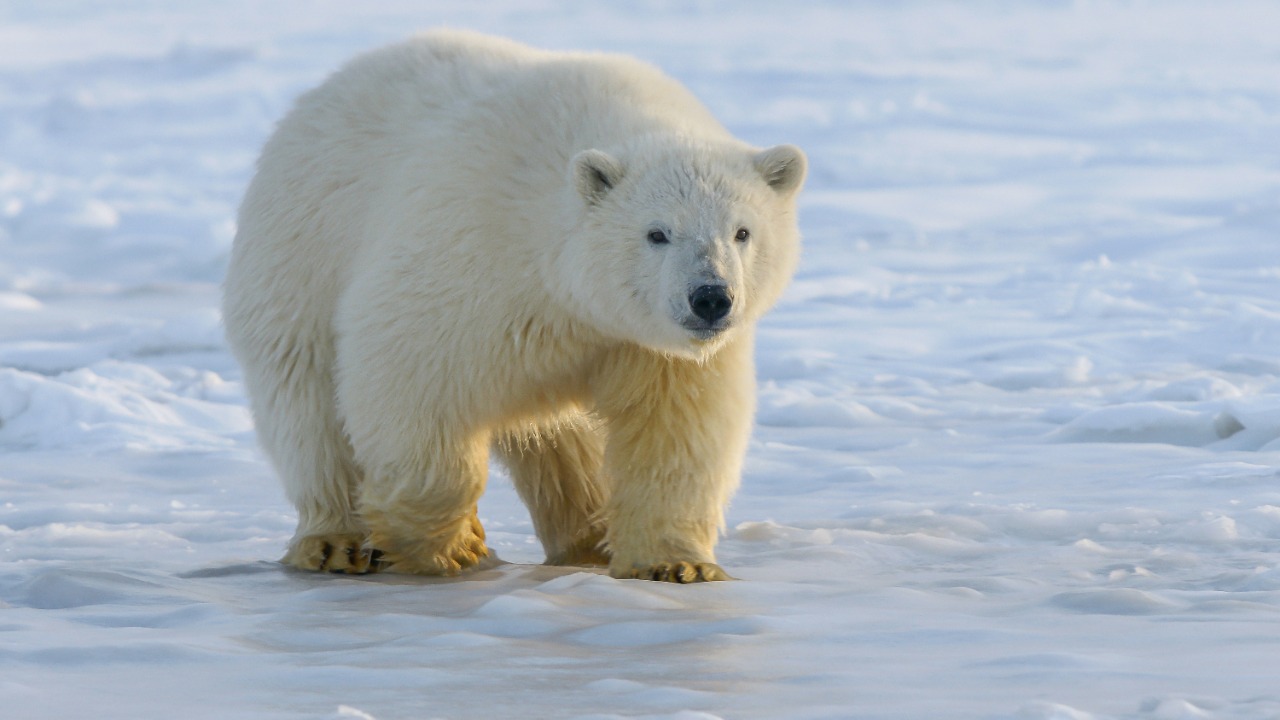

Polar bears are usually held up as the emaciated mascots of climate change, their shrinking sea ice habitat a stark warning of what unchecked warming can do. Yet in one corner of the Arctic, scientists have stumbled on a very different picture: a population that is not only hanging on, but piling on the pounds. The discovery of these unusually rotund bears is forcing researchers to rethink how adaptable the species might be, and how thin the margin of safety still is.
Instead of starving on vanishing ice, these predators are exploiting new food sources and novel hunting grounds, turning a rapidly changing environment into an unexpected buffet. Their success, however, is less a feel‑good twist than a complex case study in survival, with lessons that stretch from the fjords of Norway to the glaciers of Greenland.
The Arctic hotspot where polar bears are bulking up
The most striking example of thriving, heavyset bears comes from Norway’s Svalbard archipelago, a cluster of islands in the Barents Sea that has become a frontline for Arctic warming. Researchers tracking adult polar bears here expected to see thinner bodies and declining health as sea ice retreated, yet systematic monitoring has instead documented animals gaining body fat even as the ice season shrinks. Detailed fieldwork described how these predators, long dependent on ringed seals hauled out on sea ice, are now spending more time along coasts and islands, where they can scavenge carcasses and hunt alternative prey while still maintaining impressive condition.
In interviews about the work, polar bear specialist Jon Aars acknowledged that “some of us would predict that they should be in trouble already,” a sentiment echoed in coverage that highlighted how the bears in this one region are “thriving a lot” despite fast‑melting ice around Svalbard. That surprise is backed by body measurements and health assessments taken over multiple seasons, which show adults in the Barents Sea subpopulation staying fat rather than wasting away, a pattern also underscored in reports on Barents Sea bears more broadly.
Inside the “super fat” Svalbard study
To understand how unusual this is, it helps to look at how scientists actually weighed and evaluated the Svalbard animals. Teams working from helicopters and small boats captured adult bears, sedated them briefly, and recorded detailed metrics such as body length, girth, and fat thickness, then compared those figures with earlier datasets from the same region. Those measurements showed that, on average, adult bears were heavier and carried more fat reserves than expected for a population living through some of the fastest sea ice loss in the Arctic, a finding that has now been highlighted in multiple scientific and popular accounts.
Researchers then linked those body condition data to satellite records of sea ice and to observations of where the bears were spending their time. Instead of following the ice edge far offshore, many individuals remained closer to land, where they could exploit stranded marine mammals and shifting prey communities. Coverage of the work notes that these Svalbard bears are part of a broader pattern in which some Arctic predators are adjusting their foraging strategies as ice retreats, a theme also explored in analyses of adult polar bears in the region and in reports that describe how Norway’s Svalbard bears have gained body fat despite retreating sea ice.
What is making these bears so well fed?
The key to the Svalbard bears’ success appears to be a shift in diet and hunting tactics rather than any pause in climate change. As sea ice seasons shorten, carcasses of whales and other large marine mammals are becoming more accessible along shorelines, turning certain fjords into seasonal feeding hotspots. Reports on the region describe how polar bears in parts of Norway are “packing on” weight by targeting new food sources, a pattern that aligns with broader coverage of Arctic giants growing stronger in some areas even as ice shrinks around them. In Svalbard specifically, scientists have documented bears congregating at stranded carcasses and spending more time on land, where they can scavenge and occasionally prey on animals like reindeer, supplementing their traditional seal diet.
That flexibility helps explain why some individuals are now described as “super fat,” but it does not mean the underlying climate threat has eased. Analyses of the region emphasize that the Barents Sea has lost sea ice faster than almost anywhere else in the Arctic, a trend confirmed by The Arctic warming faster than anywhere else on the planet, according to the National Snow and Ice Data Center. In that context, the Svalbard bears’ ability to stay fat looks less like a permanent reprieve and more like a temporary advantage in a rapidly changing ecosystem, a point underscored in coverage that asks what is really going on when some polar bears get fatter as sea ice melts.
A second outlier: Greenland’s ice‑hunting bears
Svalbard is not the only place where polar bears are rewriting the rulebook on survival. In Southeast Greenland, scientists have identified a distinct group of bears that live with sea ice for only about four months of the year, between February and late May, far less than most Arctic populations. Instead of following the ice north, these bears hunt on chunks of freshwater glacier ice that calve off the Greenland Ice Sheet, using them as mobile platforms to ambush seals. That behavior, documented in detail by teams working in Southeast Greenland, has been described as a possible preview of how some polar bears might persist in a warmer Arctic with far less seasonal sea ice.
Audio and field reports from the region describe how a female bear and two cubs were observed using glacier ice as hunting platforms, a vivid example of the strategy that has allowed this isolated population to survive in a place with little sea ice. Coverage on NPR and related scientific summaries emphasize that these Polar bears have effectively found another way to hunt, relying on glacier fragments instead of the traditional sea ice platform. That adaptation has drawn intense interest because it hints at behavioral pathways that could help some groups endure even as the broader Arctic climate continues to warm.
Evolution at high speed: “jumping genes” and genetic hotspots
Beyond behavior, there are signs that polar bears in Greenland may also be changing at the genetic level to cope with their new reality. A recent study of animals in southern Greenland reported that these bears are using so‑called “jumping genes,” or transposons, to rapidly rewrite parts of their DNA in ways that may help them survive with less reliance on sea ice. Researchers compared transposon activity in two populations and linked those patterns with climate data, finding that, in the Southeastern population, certain genetic elements were more active, which could be helping the bears adjust to warmer conditions. The work, published in the journal Mobile DNA, suggests that these “jumping genes” could be making the bears less dependent on sea ice by tweaking traits linked to metabolism and stress response.
According to a university statement that summarized the findings, scientists “identified several genetic hotspots” in these Greenland bears, and the current research builds on a previous study by the University of Washington that first documented the Southeast Greenland population. That earlier work, highlighted by CIRES and related outlets, described a Newly documented group of polar bears in Greenland that sheds light on the species’ future in a warming Arctic. Follow‑up coverage on how They compared transposon activity in the two populations, and how, In the Southeastern group, those genes appear to be helping bears adjust to warmer conditions, has only deepened interest in how fast evolution can operate at the top of the world.