
Virtuix has chosen a volatile moment for virtual reality to step onto the public markets, listing its VR locomotion business on Nasdaq just as consumer enthusiasm for headsets is being tested. The company is betting that a more physical, full-body approach to VR can cut through the noise and turn a niche accessory into a mainstream platform. Its debut is not just a financing event, it is a referendum on whether immersive hardware beyond headsets still has room to grow.
At the center of that bet is the Omni One, a compact, in-home version of Virtuix’s multi-directional treadmill that lets players walk and run in any direction inside virtual worlds. The company is pitching the device as both entertainment and exercise, a way to make “healthy gaming” more than a slogan. That pitch now has to convince not only gamers and fitness enthusiasts, but also public investors who have seen VR cycles rise and fall before.
The Omni vision meets Wall Street
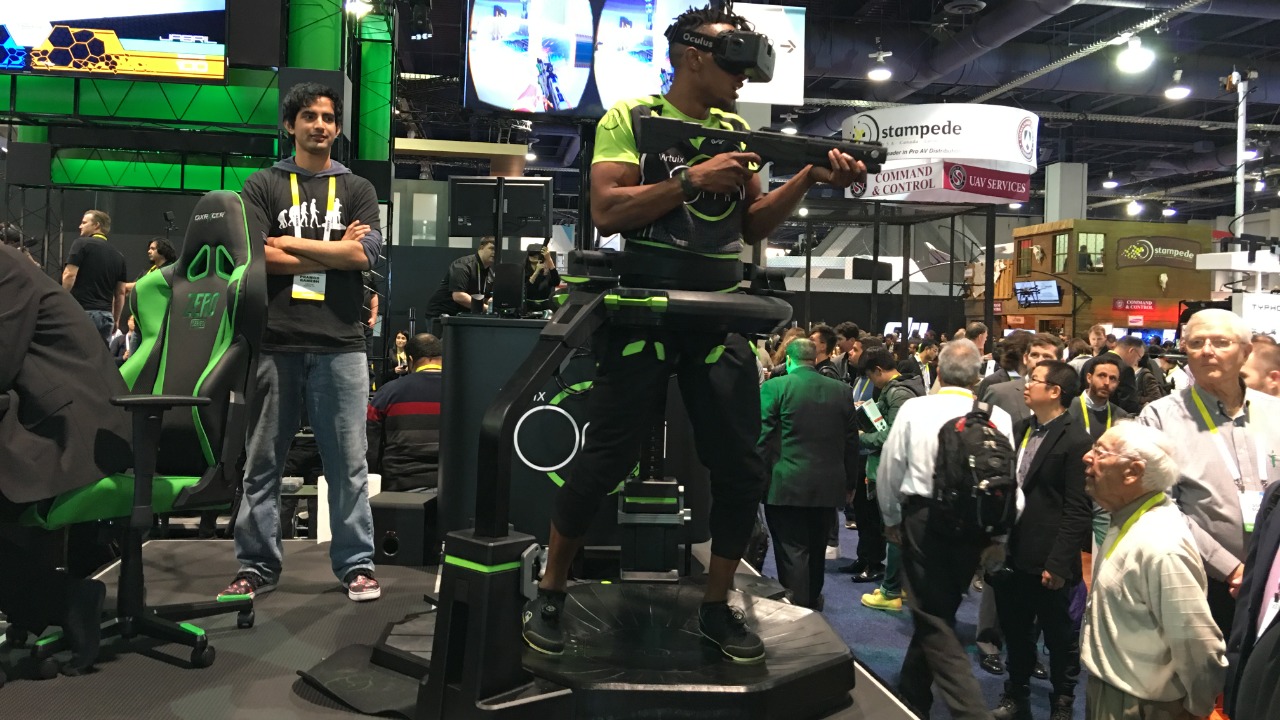
Virtuix, based in Austin, has spent years refining its Omni hardware from a bulky arcade installation into something that can fit in a living room. The original Omni multi-directional VR treadmills were designed for location-based venues, letting players move naturally inside a virtual world while their feet slid across a low-friction surface held in place by a support ring. With the Omni One, Virtuix is trying to shrink that experience into a consumer product that can ship in a box, pairing the treadmill with a headset and curated content so buyers get a complete system rather than a bare peripheral.
The company’s public listing is meant to fund that transition at scale. Virtuix has framed its move to the IPO on Nasdaq as a way to “take VR and healthy gaming to new heights,” positioning itself as both a hardware maker and a developer of full-body experiences. In parallel, coverage of its debut has highlighted how the Omni platform is meant to anchor a broader ecosystem of games and fitness apps, with Virtuix working with a few VR game studios to ensure there is content that justifies the treadmill’s footprint and price. The Omni One is not just another accessory, it is the core of Virtuix’s argument that VR should engage the whole body, not just the eyes.
A turbulent backdrop for consumer VR
Virtuix is going public at a time when the consumer VR market is in flux, with headset makers pushing mixed reality features while software studios wrestle with slower-than-hoped adoption. Analysts have described this as a turbulent moment for consumer VR, with some high-profile projects scaled back and independent, VR-only content studios hit the hardest by shifting platform priorities. That context makes Virtuix’s decision to lean into a specialized hardware category even more striking, because it is not riding a wave of obvious momentum so much as trying to create its own.
The company’s Omni One system, showcased in Omni One imagery, is being marketed as a way to deepen immersion at a time when many VR users are still getting used to room-scale movement and hand tracking. Virtuix is effectively arguing that the path forward for VR is not to retreat into lighter, more casual experiences, but to double down on presence by letting players physically walk, run, and turn 360 degrees. That is a bold stance in a market where even major platform holders are experimenting with cheaper, more accessible devices, and it raises the stakes for how Virtuix performs as a newly public company.
Inside the Nasdaq debut and early trading drama
Virtuix began trading on the Nasdaq Global Market under the ticker symbol VTIX, bringing its Austin hardware story into the same arena as much larger tech names. The company, described as the Austin based maker of the Omni multi-directional VR treadmills, is using the listing to raise growth capital and to give early backers liquidity. Its presence on the Nasdaq Global Market also puts a spotlight on VR locomotion as a distinct investment theme, separate from the headset makers that have dominated the space so far.
Early trading has been anything but calm. With a Tiny Float limiting the number of shares available, VTIX has seen Volatile Swings that have quickly put it on traders’ radar. Since the stock opened, it has traded in a wide intraday range, at one point spiking toward $24 before sliding to close near $11, a pattern that has drawn attention from short-term speculators as well as longer-term investors trying to understand the fundamentals. Coverage of Why Virtuix Is has emphasized how the limited float amplifies every buy and sell order, turning what might otherwise be a quiet small-cap debut into a high-beta trading vehicle.
Growth metrics and the AI-generated worlds pitch
Behind the stock chart, Virtuix is trying to make the case that its business has real momentum. In a shareholder communication tied to its debut, Virtuix Debuts on Nasdaq With 138% Year-over-Year Revenue Growth, a figure that the company is using as proof that demand for its hardware and services is accelerating rather than stalling. That same message highlights how Virtuix is Pioneering Movement in AI-Generated Worlds with its 360-Degree Treadmill, arguing that as generative tools make it easier to create vast virtual environments, the ability to physically traverse those spaces will become more valuable.
The company’s financing structure reflects that ambition. Virtuix Inc. has been linked to an equity line of credit that can provide additional capital as it scales production and marketing, complementing the roughly $11 million it raised as it began trading in its Nasdaq With Growth debut. Earlier coverage noted that Virtuix, a developer of full-body VR experiences, raised $11 million as it began trading in its IPO on Nasdaq, giving it a war chest to expand manufacturing and invest in software. Taken together, the revenue growth and fresh capital give Virtuix a stronger story than a pure concept stock, but they also set expectations that the company will keep scaling quickly in a challenging category.
Can Virtuix turn niche hardware into a platform?
Virtuix’s leadership has been explicit that going public is about more than a one-time cash infusion. In a statement tied to its listing, the company said that Going public provides us with access to capital to fund our growth and develop new products like Virtual Terrain Walk, a training tool that extends the Omni concept beyond entertainment. That reference to Virtual Terrain Walk signals that Virtuix sees opportunities in simulation, enterprise training, and possibly defense or industrial use cases, where realistic movement inside virtual environments can improve outcomes.
For public investors, the question is whether that broader platform vision can offset the inherent limits of a large, relatively expensive piece of hardware. The Omni One is not a casual purchase, and Virtuix will need to show that its installed base is engaged and spending on content, not just buying the treadmill as a novelty. I see a parallel here with high-end fitness hardware like connected bikes and rowers, where long-term success depends on recurring subscriptions and community features rather than one-off equipment sales. Virtuix is hinting at a similar model, but it will take time for quarterly filings, tracked through services that rely on Google Finance and other data providers, to reveal whether usage and revenue per user are trending in the right direction.