
Biologists like to say that life plays by a few simple rules, and reproduction is usually at the top of that list. Parents are supposed to produce offspring of their own species, and pregnancy or egg laying is expected to come with a heavy energy bill. A series of recent discoveries, from microscopic microbes to “walking” sharks and an ant queen with two kinds of heirs, now shows how fragile those assumptions really are.
Together, these findings reveal creatures that bend, blur, or outright ignore the textbook boundaries of sex, species, and heredity. I see them not as curiosities on the fringe of biology, but as case studies that force scientists to rethink what it means to pass life from one generation to the next.
The microbe that lives like a virus but builds like a cell
At the smallest scales, the neat line between viruses and cellular life has always been fuzzy, but a newly described microbe pushes that blur to an extreme. Researchers have identified Sukunaarchaeum, a tiny archaeal organism that behaves “like a virus” in how completely it depends on a host cell for basic tasks. It cannot manage many of its own metabolic chores and instead taps into a partner’s machinery, a lifestyle that would normally relegate it to the viral world. Yet it still qualifies as cellular life because it carries the genetic instructions to build its own ribosomes and messenger RNA, the core tools needed to read DNA and make proteins.
That combination, as described in more detail in a follow up on Scientists Just Discovered, makes Sukunaarchaeum a kind of hybrid between a parasite and a fully fledged cell. It reproduces only by clinging to and exploiting another organism, yet it still carries the hallmarks of independent life. For evolutionary biologists, that raises uncomfortable questions about where to draw the line between “alive” and “not quite,” and whether the classic categories used to describe reproduction still make sense for such borderline entities.
One queen ant, two species of offspring
If Sukunaarchaeum scrambles the definition of a living cell, an ant from the Iberian Peninsula scrambles the definition of family. In colonies of the Iberian harvester ant, known as Messor ibericus, scientists have documented queens that produce daughters of their own species and sons that belong to a different one. The study’s Abstract spells out the shock to a long standing rule: “Living organisms are assumed to produce same-species offspring,” yet here a single mother maintains two distinct evolutionary lineages through what the authors call obligate cross-species cloning.
Field work and genetic analysis show that these queens lay eggs that develop into female workers and queens of Iberian harvester ants, while their male offspring belong to a partner species that split off more than 5 million years ago. Reporting on the work notes that Living organisms were not expected to sustain such a system over evolutionary time, yet these colonies have turned it into a stable strategy. One analysis likens the arrangement to a kind of domestication, with Scientists describing how the queens effectively manage a workforce of one species while “farming” males of another.
A queen that runs a two-species household
Seen up close, the Iberian harvester ant’s social structure looks less like a simple colony and more like a two-species household. Coverage of the discovery explains that In the insect world, this kind of arrangement is so unusual that researchers reached for the term “allogeneic,” meaning “foreign birth,” to describe it. The queen’s daughters handle foraging and nest maintenance as typical workers, while her sons, genetically distinct, function as reproductive exports that carry the partner species’ lineage forward.
That pattern has led some Biologists to compare the queen to a farmer who has domesticated another species for reproductive labor. A detailed news feature notes that Much like humanity domesticating livestock, the ants appear to have “gained control” over another lineage and woven it into their life cycle. A separate explainer on how Reproduction works in these colonies underlines how far this goes beyond ordinary insect oddities, since the queen effectively propagates two species by herself.
Walking sharks that pay almost nothing to have babies
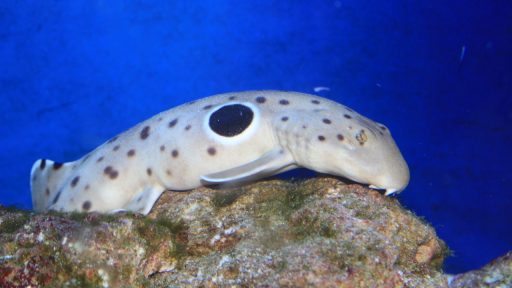
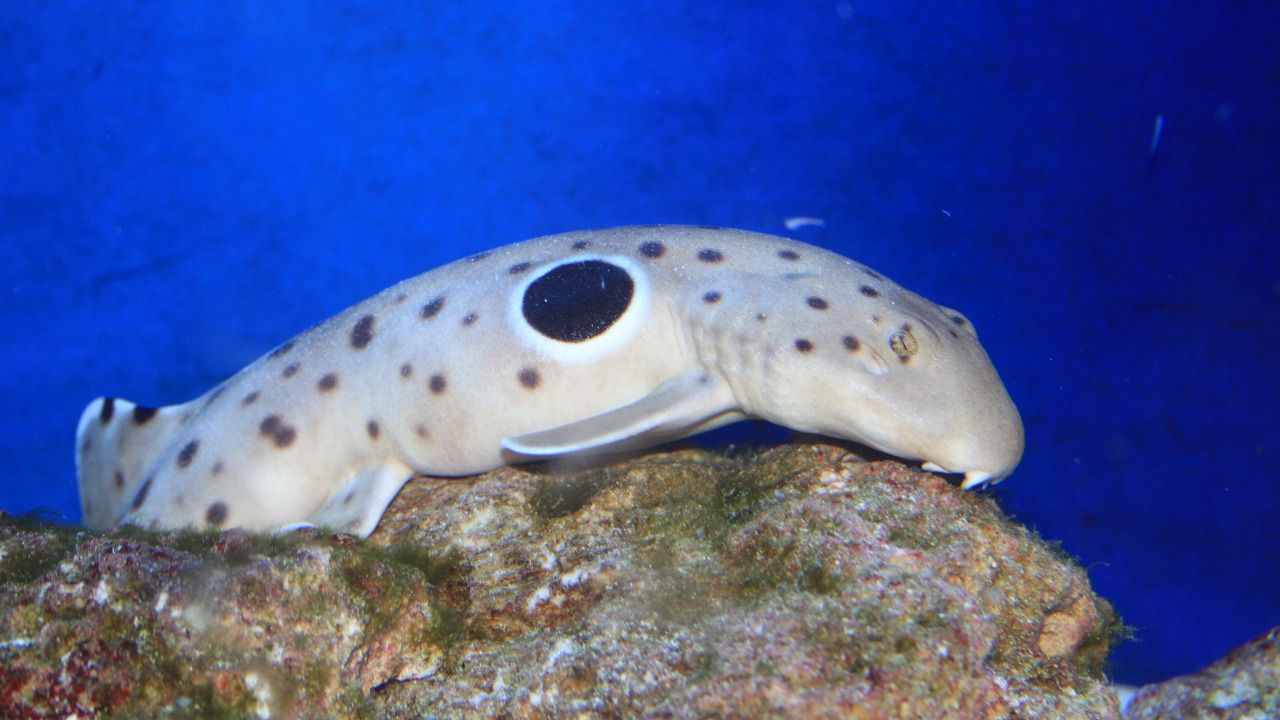
At the other end of the size spectrum, a small coastal shark is forcing marine biologists to revisit another supposed rule of reproduction: that making eggs or carrying young is energetically expensive. Studies of epaulette sharks, a group of “walking” sharks that use their fins to shuffle across reefs, show that females can lay eggs without any measurable increase in energy use. One summary of the work notes that Walking sharks break standard “biology reproduction rules” by avoiding the metabolic spike that researchers expected to see during egg production.
To test that, scientists carefully monitored oxygen consumption and activity in captive epaulette sharks as they cycled through mating and egg laying. The results, summarized in a report on sharks, showed no significant change in energy use between reproductive and nonreproductive periods. A complementary analysis of the same experiments, framed as Walking sharks that “break the rules of reproduction,” emphasizes how surprising it is to find a vertebrate that can produce eggs at essentially no extra metabolic cost.
Inside the shark experiment and why it matters
The team behind the epaulette shark work did not arrive at that conclusion lightly. They designed a detailed protocol, described as Inside the Study, to track each shark’s energy budget over time. By placing the animals in respirometry chambers and following them through courtship, egg laying, and recovery, they could calculate what one section of the report calls Measuring the True. The answer, at least for this species, was effectively zero, a result that left lead researcher Prof. Jodie Rummer saying the findings forced them to “go back to the drawing board.”
Follow up coverage highlights that Epaulette sharks can reproduce without the expected trade off between survival and reproduction, which could help them thrive on resource poor reefs. A separate breakdown of the data notes that the sharks’ energy use remained Stable across reproductive cycles, suggesting that their physiology has evolved to tuck the cost of egg production into their normal daily budget. For conservationists, that resilience matters because these “walking” sharks play a role in keeping their underwater habitat healthy, a point underscored in explainers that frame them as a key part of reef ecosystems.