
Urban explorers expect peeling paint, broken glass and the odd feral animal. What one visitor found instead, after tossing a stone into a stagnant zoo pond, was the kind of jolt that turns a casual video into viral nightmare fuel. His discovery, and the story of another infamous abandoned predator, exposes how forgotten attractions can become macabre time capsules of our relationship with captive wildlife.
At a shuttered zoo in Thailand and a defunct wildlife park in Victoria, Australia, cameras have captured scenes that look ripped from a horror film: a pond that suddenly moves, and a 16‑foot great white shark suspended in a rotting chemical tank. I want to trace how those images came to exist, what they reveal about neglect, and why they keep pulling viewers back even after the initial shock wears off.
The explorer, the pond and a jolt in Phuket
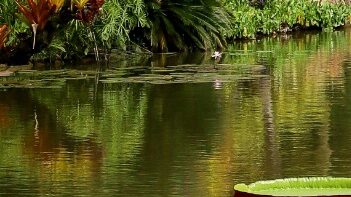
When I look at the footage from Thailand, what stands out is how ordinary the moment seems until it is not. Urban explorer Sean King was walking through the grounds of the now‑defunct Phuket Zoo, a site in Thailand that had already gained a reputation for poor animal welfare, when he stopped at a murky pond and casually threw something into the water. The surface erupted, and the video shows him recoil as a large reptile, apparently still living in the abandoned enclosure, surged toward the disturbance, a scene later described as the shock of a lifetime for a man who thought he was filming only decay and silence. That sequence, captured as Sean King explored the grounds, underlines how quickly a forgotten zoo can flip from dead space to something that feels actively menacing.
The same visit has been described in a second account that emphasizes how the abandoned Phuket Zoo became a symbol of controversy long before King arrived. In that telling, a man identified again as Sean King went to investigate the closed attraction in Thailand after years of criticism over the welfare of the animals kept there, only to find that at least one inhabitant still lurked beneath the opaque water. His startled reaction, and the way viewers fixated on the pond suddenly coming alive, echo the broader unease around facilities that shut their gates without a clear plan for every creature inside, a concern that has already turned Phuket Zoo into a cautionary tale for animal advocates who watched the saga unfold in Thailand.
Rosie the Shark, frozen in time in Victoria
If the Phuket pond clip is a jump scare, the story of Rosie the Shark is a slow‑burn nightmare. In Victoria, Australia, a forgotten 16‑foot great white was left floating in a dark tank at an abandoned wildlife park, her body preserved in a deteriorating bath of formaldehyde. The shark, later widely known as Rosie, had been accidentally caught in the 1990s and moved to Wildlife Wonderland Park in Victoria, Australia, where she became a centerpiece exhibit for visitors who came to see a five‑meter predator suspended in liquid. According to one detailed account, the great white, introduced with the phrase Meet Rosie, had made the wildlife park her home for over twenty years before the gates finally closed.
When Wildlife Wonderland Park shut down in 2012 for operating without the necessary permits, its live animals were confiscated and rehomed, but Rosie was not moved. Instead, she sat in a shed filled with other discarded items, her tank sealed and largely forgotten as the structure decayed around her. That limbo lasted until 2018, when Australian YouTuber Luke McPherson, described simply as Luke, entered the abandoned site in Victoria, Australia and discovered the shark still suspended in her formaldehyde tank, a moment later shared through a dedicated page for Australian fans. Another detailed timeline notes that the forgotten 16‑foot great white shark in Victoria was rediscovered when a viral explorer video showed her deteriorating formaldehyde tank, turning a local oddity into a global talking point about how a predator could be left behind in a defunct wildlife park in Victoria.
From viral horror to vandalism and rescue
Once the first eerie images of Rosie’s tank hit the internet, the story shifted from neglect to something more chaotic. One account describes how, after Wildlife Wonderland shut down in 2012 and Rosie was left behind, an urban explorer’s YouTube video drew an audience of 17 million people, more than watched the last Olympic opening ceremony, and turned the shark into one of the world’s most famous fish. The attention had a dark side: people broke into the shed, took the lid off her display, stole teeth from her mouth, dropped televisions into the tank, graffitied the glass and even removed formaldehyde, leaving Rosie in increasingly poor condition as However, Rosie deteriorated. Another detailed report on the same period notes that the footage did not just draw curiosity, it unleashed a surge of trespassers who descended on the abandoned park, smashing the tank’s glass and throwing debris into the green, chemical‑filled liquid that had once preserved the shark in a pristine state, a pattern of vandalism described in a separate section on people throwing debris.
Rosie’s story did not end in that vandalized shed. Conservation‑minded collectors eventually stepped in to move her to a new home, and one detailed account explains that she was relocated to the Crystal World Exhibition Centre for cleaning and preservation. In that version, the shark, named Rosie, had been preserved after being caught in the 1990s and left behind when the park shut down in 2012, then later transported so specialists could stabilize her remains at the Crystal World Exhibition Centre for cleaning and preservation, a process highlighted in a short Rosie clip. Another social media post summarizing the saga notes that her name was Rosie, that she had been preserved after being accidentally caught in the 1990s, left behind when the park closed its doors in 2012, and eventually rescued and relocated to Crystal World, where the hazardous formaldehyde was replaced with a safer preservation solution so that her tank could be restored and she could be displayed in a more respectful setting, a transformation captured in a caption that begins with the words Her and Rosie and continues through the phrase Preserved.
Why nightmare zoo clips keep going viral
There is a reason these images, from a lunging reptile in Phuket to a half‑decayed shark in Victoria, feel like they belong in a horror franchise. They sit at the intersection of fear, guilt and fascination, tapping into the same unease that makes viewers replay footage of a humpback whale engulfing a kayaker before spitting him out. In that incident, a man identified as Simancas later described the experience as terrifying, a word that could just as easily apply to the moment an explorer realizes a pond is not empty or a dark tank still holds a predator’s remains, a parallel that emerges in coverage of the whale encounter featuring Simancas. The same emotional pull is visible in a very different kind of wildlife clip from Antarctica, where a documentary sequence shows an Adélie penguin ignoring its colony and the sea, then marching inland toward certain death, a scene that a penguin expert suggests may be the result of disorientation but that viewers remember because it feels like watching an animal walk deliberately into oblivion, a haunting moment referenced in a caption that opens with the words In the.