
Sleep, it turns out, is not a luxury reserved for animals with big brains and busy calendars. New research shows that jellyfish, which lack any brain at all, cycle through a nightly rest period that looks strikingly like human sleep and even includes a midday nap. The finding pushes the origins of sleep far deeper in evolutionary time and suggests that the need to switch off is woven into the biology of even the simplest animals.
By tracking jellyfish around the clock, scientists have found that these gelatinous drifters log roughly eight hours of shut-eye, mostly at night, then slow down again for a one to two hour siesta around the middle of the day. For a creature often dismissed as a passive blob, the discovery that it keeps something like a human schedule forces a rethink of what sleep is for and how it first evolved.
How a brainless blob was caught napping
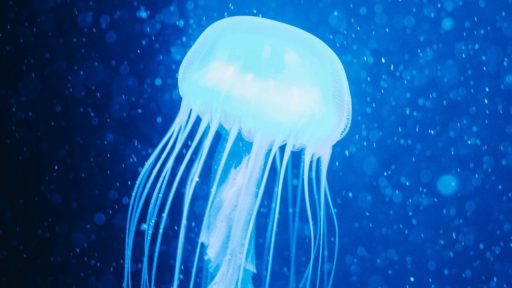
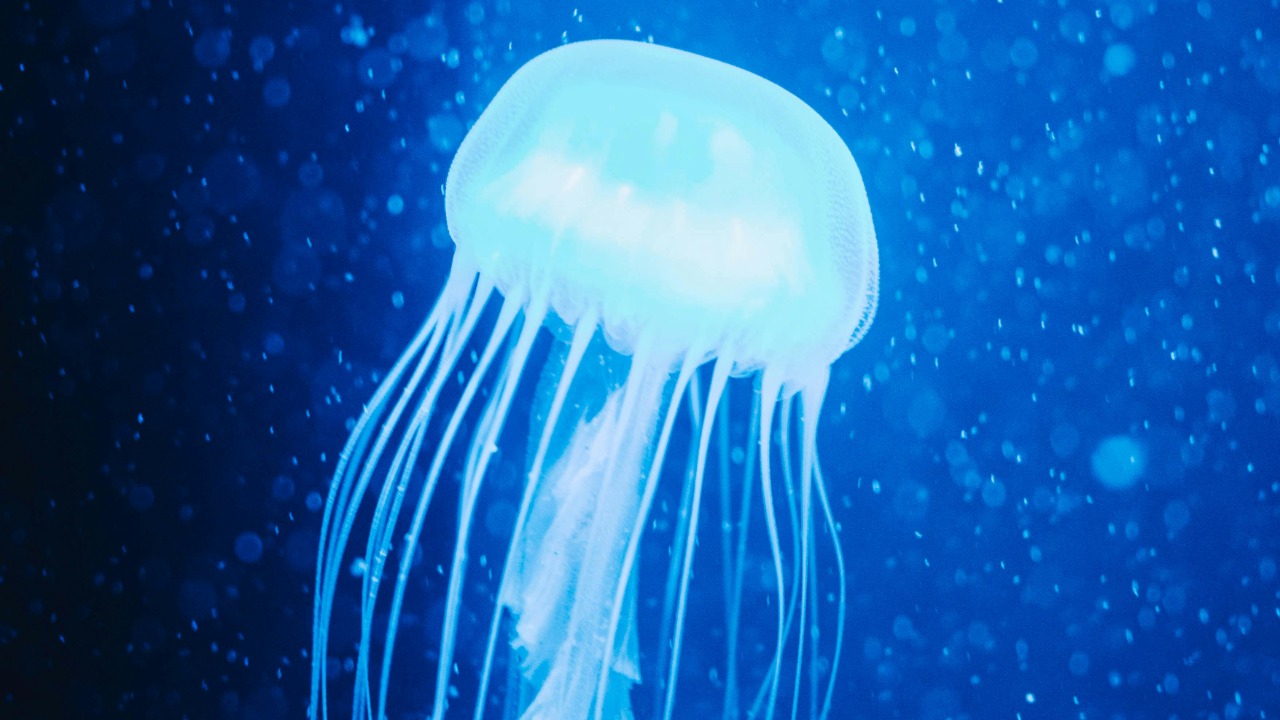
The starting point for this work is a deceptively simple question: how do you prove that an animal without a brain actually sleeps. Researchers working with the upside-down jellyfish Cassiopea andromeda watched how its pulsing movements changed over 24 hour cycles and found that activity dropped sharply at night, then rebounded when lights returned. In the lab and in outdoor tanks, the animals consistently spent about eight hours in a low activity state at night, then added a short midday nap of roughly one to two hours, a pattern that closely mirrors human rest, according to Jan. The team then gently disturbed the jellyfish with puffs of water or changes in light and saw that responses were slower during this quiet phase, one of the classic hallmarks scientists use to define sleep.
Crucially, the animals also showed what sleep researchers call “homeostasis,” the biological drive to make up for lost rest. When the jellyfish were kept active with repeated disturbances, they compensated by sleeping more and more deeply later on, a rebound effect that is a defining feature of true sleep in humans and other animals. In both controlled tanks and more natural settings, the pattern held: most of the jellyfish’s sleep occurs at night-time, with a smaller but consistent nap in the middle of the day, as described in detail by Jellyfish. Put together, the reduced responsiveness, the rebound after deprivation and the daily rhythm meet the standard criteria that sleep scientists use, even though there is no centralized brain to switch on or off.
What jellyfish naps reveal about the origins of sleep
Once you accept that a creature without a brain sleeps, the evolutionary stakes become hard to ignore. Cassiopea andromeda belongs to the Cnidaria, a group that also includes sea anemones and hydra, and that split from the lineage that led to humans hundreds of millions of years ago. Earlier work had already hinted that hydra and jellyfish enter sleep-like states, and the new experiments extend that by showing that these ancient animals not only rest but follow a daily schedule that includes night-time sleep and a midday nap, as highlighted in What. If such a pattern is present in Cnidaria, which sit very close to the base of the animal family tree, then sleep likely emerged long before complex brains and may be one of the most ancient biological rhythms.
That idea is reinforced by parallel observations in related species. Sea anemones, which also lack a centralized brain, enter their own extended rest period from dawn through the day, while jellyfish sleep at night and take short naps during daylight, according to Jellyfish. Earlier work on more complex animals had already shown that every complex animal, from the humblest fruit fly to the largest blue whale, sleeps, a pattern that was documented using species ranging from Drosophila to mammals in studies summarized by Every. The new jellyfish data extend that continuity down to animals with only diffuse nerve nets, suggesting that sleep is not a late add-on to sophisticated brains but a core feature of animal life itself.
Inside the experiments: DNA damage, neurons and a daily reset
To move beyond behavior and into mechanism, the researchers turned to the jellyfish nervous system and its genetic wear and tear. They focused on neurons in Cassiopea andromeda and asked what happens to these cells when the animal is awake versus asleep. Crucially, further analysis revealed that DNA damage accumulates in C. andromeda’s neurons while it is awake, but sleep seems to repair that DNA. When the team increased environmental stress so that neuronal DNA damage went up, the jellyfish responded by sleeping more, a direct link between cellular damage and the drive to rest.
That connection echoes work in vertebrates that suggests humans began sleeping as a way to reduce DNA damage in nerve cells, a hypothesis developed by scientists at Bar-Ilan University in Israel who found that neuronal DNA is repaired during sleep, as reported in DNA. In the jellyfish study, the team also showed that when they interfered with normal rest, the resulting build-up of damage could impair neurons, a relationship described in more detail by analysis. Taken together, the findings support the idea that sleep, even in brainless animals, is a daily maintenance window when fragile genetic material in nerve cells is inspected and repaired, and that missing that window has immediate cellular costs.
From jellyfish tanks to human bedrooms
For all their alien appearance, jellyfish are now helping neuroscientists think about very human problems, from insomnia to memory loss. In an interview about the work, researcher Galit APPELBAUM explained that earlier studies had already shown a sleep-like state in jellyfish and in hydra, and that her group was the first to demonstrate a clear nap of one or two hours layered on top of a longer nightly rest, a point she emphasized in a conversation transcribed by APPELBAUM. The fact that such a simple animal uses both a main sleep period and a shorter daytime rest suggests that splitting sleep into chunks is not just a cultural habit but may be rooted in biology. It also hints that the brain circuits that control human napping could be tapping into very old molecular programs.
Those programs are already being mapped in other species. Work in Drosophila melanogaster has shown that a single pair of neurons can link sleep to memory consolidation, with specific inhibitory cells that both promote sleep and help stabilize new memories, as detailed in Sleep. In humans, clinicians now routinely remind patients that sleep is the time when the brain recharges and gets rid of harmful waste products, a point underscored in guidance that urges people to remember that sleep is a key factor doctors always screen for when evaluating cognitive health, as summarized in Remember. The jellyfish data, by tying sleep directly to DNA repair in neurons, give that clinical advice a deep evolutionary backstory and suggest that when humans cut sleep short, they are fighting against a repair system that predates the brain itself.
Why kids, clinicians and curious minds should care
The story of sleeping jellyfish is already filtering into classrooms and public science explainers, where it is being used to show that even animals without brains share basic needs with us. Educational coverage has framed the discovery with the simple line “No brain? No problem,” and has asked what jellyfish and people have in common before answering that both sleep in a similar way, a hook used to introduce how sleep may have originated and evolved, as laid out in What. Short news videos have echoed that message, with presenters like Vixen describing jellyfish as “boneless gelatinous” creatures that nonetheless need rest, in segments such as Vixen and. For younger audiences, the idea that something as simple as a jellyfish needs sleep can make the case for regular bedtimes more compelling than any lecture about test scores.