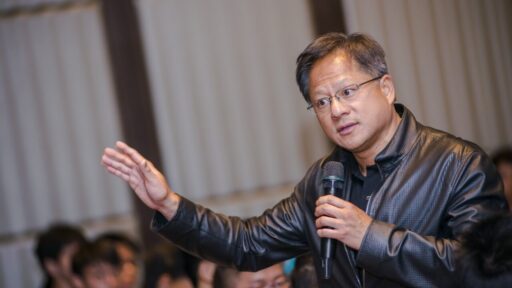
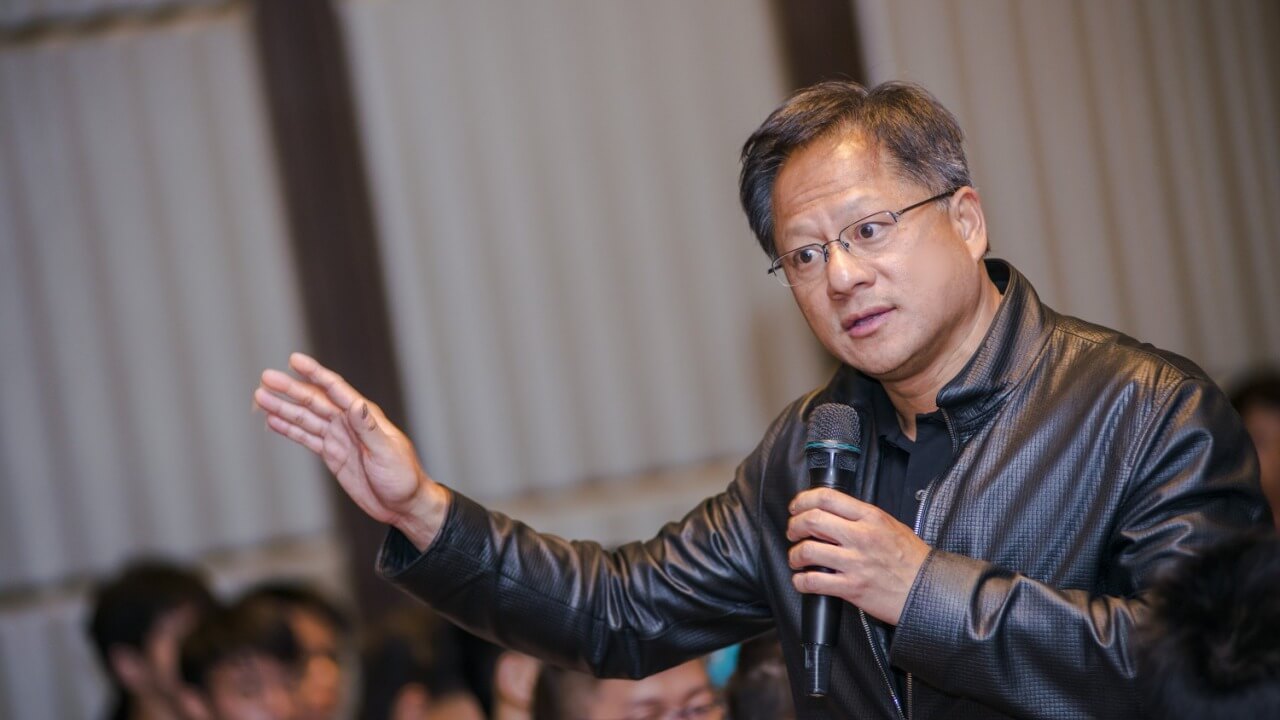

Nvidia Chief Executive Jensen Huang has arrived in Shanghai just as China tightens the screws on foreign AI chip suppliers, turning a routine staff visit into a high‑stakes diplomatic and commercial mission. His trip, which will take him from the city’s offices and wet markets to corporate galas and meetings in other Chinese hubs, comes while regulators weigh whether Nvidia’s most advanced data‑center chips can keep flowing into the world’s second‑largest economy. The outcome will help determine not only Nvidia’s growth trajectory but also how far Beijing is willing to go in curbing reliance on U.S. technology.
I see Huang’s presence on the ground as a calculated bet that personal engagement can still move the needle in a market where policy, geopolitics and industrial strategy now matter as much as raw performance. The visit is framed as an internal celebration and listening tour, yet every stop he makes is being read as a signal about how Nvidia intends to navigate China’s regulatory headwinds and how Chinese authorities plan to balance control with access to cutting‑edge AI hardware.
Why Shanghai, and why now
Huang’s decision to start his first China trip of the year in Shanghai is not accidental. The city is a showcase for China’s ambitions in finance, semiconductors and artificial intelligence, and it hosts a major Nvidia office that anchors the company’s local engineering and sales presence. According to people familiar with his schedule, Nvidia Chief Executive Jensen Huang is in Shanghai as the company works through unresolved questions over approvals for its AI chips, a sign that the regulatory environment has become too important to manage from afar and now demands direct engagement from the top.
Earlier this week, reports indicated that Nvidia CEO Jensen Huang planned a broader visit to China as he tries to reopen and stabilize a market that has been repeatedly disrupted by export controls and local restrictions. Those plans have now materialized in Shanghai, where he is meeting staff and attending events while Beijing’s decision on Nvidia’s H200 AI chip sales remains pending, a sequence that underscores how closely his travel is tied to the regulatory calendar rather than just internal corporate rituals.
A carefully choreographed first stop
The choreography of Huang’s Shanghai program reflects how U.S. tech leaders now try to blend soft diplomacy with hard business objectives. On the afternoon of Jan 24, Huang’s team arranged for him to start his China trip from the Shanghai office and then visit a local wet market, a curated local experience that has become common for visiting executives in China. In the evening, he is scheduled to attend Nvidia’s Shanghai annual gala, an internal celebration that doubles as a morale booster for staff who have spent the past year navigating shifting rules and uncertain product roadmaps tied to export limits.
These events are not just photo opportunities. Over the past few years, visits to China by top executives from U.S. tech giants have often featured similar cultural stops, but in Huang’s case they are layered on top of intense strategic discussions about Nvidia’s major developments in 2025 and beyond. The Shanghai gala gives him a platform to brief employees on how the company is adapting its AI portfolio for Chinese customers while staying within U.S. and Chinese rules, a balancing act that has required significant planning by his team as they weigh technical compromises against market access.
Regulatory crossfire over H200 chips
The backdrop to Huang’s trip is a tightening regulatory vise around Nvidia’s most advanced AI accelerators. Chinese customs authorities have blocked shipments of the company’s H200 AI chips, creating fresh uncertainty over whether these flagship products will be allowed to enter the country at all. One report framed his arrival as Nvidia CEO Jensen Huang landing in Shanghai amid a ban on H200 chips, with China signaling that it wants to reduce dependence on Nvidia and prioritize domestic chips, a move that would directly threaten the company’s dominant position in AI data centers.
At the same time, there are signs that Beijing may be looking for a compromise. A person briefed on the matter said Nvidia CEO Jensen Huang is in Shanghai as Chinese authorities are poised to approve imports of the H200 chips, a potential green light that would reassure both Nvidia and its Chinese customers that their procurement plans for 2025 will not skip a beat. That report, datelined from BEIJING, captures the ambiguity of the moment: customs blocks on the ground, but political signals that some level of access to Nvidia’s H200 may still be in the cards if the company can satisfy regulatory and political concerns.
From staff parties to power corridors
Huang’s Shanghai stop is only the first leg of a broader itinerary that will take him deeper into China’s political and tech power centers. He is expected to attend an Nvidia party in Shanghai on Saturday before traveling to Beijing, Shenzhen and then Taiwan, a route that threads together the mainland’s political capital, its southern hardware hub and one of the world’s most important semiconductor bases. The travel plan, described by a person familiar with his schedule, shows how Huang is using this trip to touch every major node in Nvidia’s regional ecosystem, from engineers and sales teams to regulators and manufacturing partners in Shanghai and beyond.
Local media in China have framed his annual Shanghai visit for employee celebrations as a likely prelude to higher level meetings. One report noted that Nvidia CEO Jensen Huang’s staff meet in Shanghai is likely to lead to visits to Beijing and perhaps surprise engagements after Chinese customs blocked H200 chips and moved to restrict imports, a sequence that has drawn attention from investors and Chinese tech firms alike. That same account, illustrated with a Reuters / Steve Marcus / File Photo, emphasized how closely Chinese platforms such as Tencent News are tracking his movements, underlining the political and commercial weight attached to every stop on his Shanghai‑centered tour.
Reopening a critical market
For Nvidia, the stakes in China are existential enough that Huang is personally leading the effort to keep the door open. Earlier this year, reports said Nvidia CEO Huang planned to visit China as he seeks to reopen the market, with Bloomberg cited as describing his push to maintain sales despite tightening U.S. export controls. Another account, attributed to Reuters, referred to Nvidia CEO Jensen Hu in the context of these plans, underscoring how central he has become to the company’s China strategy and how closely his moves are being watched by financial markets that trade Nvidia stock.
Those same reports noted that Huang has previously spoken to members of the media in Beijing, China, about his desire to keep serving local customers within the boundaries of U.S. rules, a message he is now reinforcing in person. In parallel, another detailed account explained that the Chinese government seems to have put curbs on shipments of Nvidia’s latest AI hardware and that as a result it is expected that Huang will meet Chinese authorities, something local media expects him to do as he moves beyond Shanghai. That analysis, focused on how The Chinese government is shaping the AI hardware landscape, highlights why Huang’s current visit is framed as the company prepares to adjust its China product mix.