
British Airways’ sudden decision to halt flights to Bahrain has turned a simmering regional crisis into an immediate headache for travelers and a vivid reminder of how quickly geopolitics can upend global aviation. The move, triggered by escalating tension between Iran and the United States, briefly severed a key link to the Gulf state that hosts the US Navy’s Fifth Fleet and exposed how fragile air connectivity has become across the Middle East. I see the episode as a case study in how airlines now treat security risk as a moving target, adjusting routes and schedules almost in real time.
The suspension was short, and services have already restarted, but the disruption offers a revealing snapshot of the new normal for carriers operating near contested airspace. From Iran’s temporary closure of its skies to European airlines’ continued avoidance of Iranian and Iraqi routes, the Bahrain pause slots into a wider pattern of caution that is reshaping how passengers, businesses and even militaries move around the region.
Why British Airways pulled the plug on Bahrain
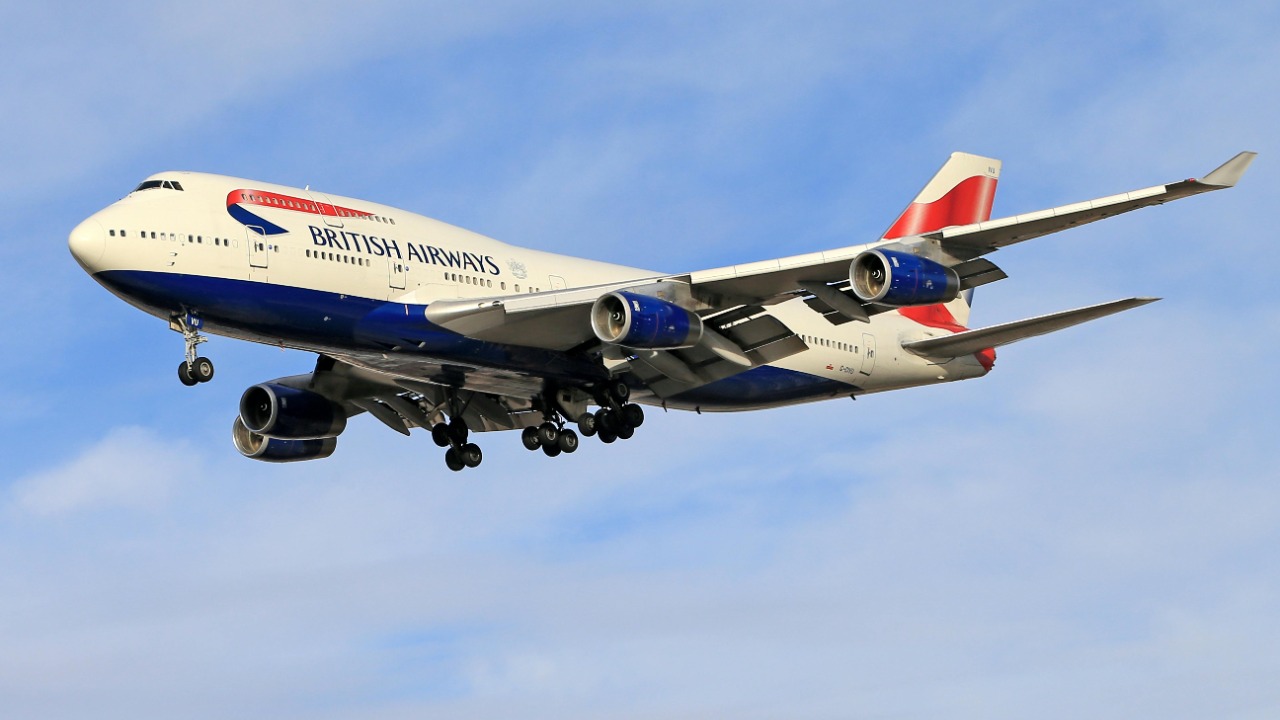
The British flag carrier did not ease into its decision, it abruptly halted flights to Bahrain for several days, cutting off a route that links London to the Gulf hub that is home to the US Navy’s Fifth Fleet. According to the airline, services were paused through Jan. 20 as a direct response to rising security concerns tied to Iran and the United States, a rare move for a destination that is not itself a conflict zone but sits close to sensitive maritime and air corridors. The suspension meant that passengers booked on the route suddenly found themselves rebooked, rerouted or stranded while The British carrier reassessed the risk profile of flying into Bahrain at a moment when military assets and political rhetoric were both intensifying.
The decision did not come in isolation. Other reporting on the same pause underscored that British Airways had effectively frozen operations to Bahrain amid Iran and US tensions, reinforcing that the airline saw a direct link between the regional standoff and the safety of its crews and passengers. One account stressed that flights to Bahrain were paused while the situation evolved, highlighting how quickly commercial schedules can be reshaped by developments that originate far from the check-in desk. In effect, the airline treated the Gulf state’s proximity to Iran and to the US Navy’s operations as enough to justify a temporary retreat from the market.
A wider pattern of airline caution around Iran
British Airways’ move fits into a broader wave of airline risk aversion around Iran and its neighbors. Earlier this month, Austrian Airlines extended its suspension of flights between Vienna and Tehran, citing security concerns that it did not believe had eased sufficiently to justify resuming the route. That decision came as other carriers weighed similar choices, and it was noted that British Airways, which does not currently operate to Tehran, had instead opted to suspend flights to Bahrain amid rising regional tensions. I see that as a telling choice, suggesting that airlines are now mapping risk not just to specific countries but to entire corridors of airspace and nearby hubs.
European carriers have been particularly cautious. Even after Iran briefly closed and then reopened its airspace, airlines such as Wizz Air, Lufthansa and British Airways continued to avoid both Iranian and Iraqi skies, preferring longer routings that keep their aircraft away from potential flashpoints. Reports from LONDON described how these European airlines maintained detours despite the formal reopening, underlining that regulatory clearance is no longer enough to convince operators that a route is safe. In parallel, Iranian authorities ordered a temporary closure of national airspace that disrupted global routes, with the Airways Newsroom noting at 10:37 that TEHRAN’s decision forced carriers to improvise in line with standard safety practice as Iranian controllers halted overflights.
Protests, politics and the security calculus
The aviation decisions are unfolding against a backdrop of intense political unrest and military brinkmanship. Live coverage of demonstrations inside Iran has chronicled how domestic anger and international pressure have combined to create a volatile environment, with one update logged at 7:59 p.m. PST noting that Our reporting on the Iran protests had wrapped for the day while tensions remained high. That same coverage highlighted how the standoff with the United States was feeding into broader regional anxiety, a context that helps explain why airlines are treating any escalation around Iran as a direct operational concern rather than a distant diplomatic drama.
Corporate risk teams are also watching how Iran uses its airspace as a strategic lever. One detailed account from inside the country noted that Iran closed its skies for nearly five hours on Wednesday before reopening them, yet airlines still chose alternative routes. British Airways’ owner IAG was cited as saying that it would not use Iranian airspace due to operational risk, a statement that dovetails with the Bahrain suspension and reinforces the idea that carriers are now building their own red lines, sometimes stricter than those set by regulators. In my view, that shift marks a quiet but significant transfer of responsibility, with airlines effectively becoming frontline security actors in their own right.
From abrupt halt to rapid restart
For passengers and Bahrain’s tourism sector, the most important development is that the disruption did not last long. After several days of uncertainty, British Airways made a swift U-turn, with one update noting that British Airways makes a U-turn and that After a brief pause due to regional tensions, the UK’s flagship airline was set to resume flights. That upbeat message, shared alongside local enthusiasm, underlined how quickly the carrier moved from risk-off to cautiously re-engaged, and it showed how closely Bahrain’s connectivity is tied to the decisions of a handful of major international airlines. The social media post capturing that moment of relief linked the restart to British Airways’ assessment that conditions had stabilized enough to restore the route.
Further confirmation came from local outlets in Bahrain, which reported that British Airways has officially resumed its flights to Bahrain following a brief temporary suspension earlier this month. That phrasing matters, it frames the episode as a short, targeted response rather than a long term withdrawal, and it reassures both business travelers and tourists that the London link is back in place. The same coverage stressed that British Airways had moved quickly once its security teams were satisfied, a reminder that suspensions can be as fleeting as they are disruptive.
What the Bahrain pause reveals about modern air travel
Stepping back, I see the Bahrain episode as part of a broader transformation in how airlines manage geopolitical risk. One analysis framed the situation as UK Airlines Suspend Flights to Bahrain Amid Regional Tensions, setting out Background and Context that linked the decisions directly to heightened military activity in the Gulf region. That reporting made clear that British Airways was not alone in reassessing its exposure, and that other UK carriers were also weighing whether to adjust or suspend services as the security picture shifted. The same account emphasized that Airlines Suspend Flights when they see a credible threat, even if governments have not formally restricted the routes.
At the same time, the operational reality on the ground, and in the air, is increasingly complex. Flight tracking data for BA7195, a British Airways service, shows how tools like BA7195 Flight Tracker allow passengers and analysts to Track the real time status of British Airways BA flights using a Global Flight Trac platform, making any diversion or cancellation instantly visible to the public. Travelers heading to the Gulf must also navigate shifting entry rules, with one advisory stressing that Entry rules are subject to change at short notice and urging passengers to check Bahrain’s latest COVID 19 decisions and the Bahr authorities’ updates before departure. Those warnings, captured in guidance on Entry restrictions, show that even when flights are operating, the regulatory landscape can shift just as quickly as the security one.