
After 46 years of continuous service, Denmark has formally retired its F-16 Fighting Falcon fleet and shifted its combat aviation focus to the F-35. The move closes a chapter that began with the country’s early embrace of the multirole jet and opens another in which stealth, sensors, and data sharing define airpower. It also turns a national workhorse into an export asset, as retired airframes head abroad and into Ukraine’s war.
The final salute to a 46-year workhorse
The Royal Danish Air Force marked the end of its F-16 era with a carefully choreographed farewell that balanced ceremony with operational pride. On 18 January 2026, the Royal Danish Air Force formally bid farewell to the F-16 Fighting Falcon after 46 years of continuous service, a milestone that underscored how deeply the type has been woven into Denmark’s defense posture since the late Cold War. Official tributes highlighted how the fleet evolved to the F-16AM/BM standard and remained combat relevant for decades, a point underscored by detailed accounts of the 46 years of upgrades and deployments that kept the jets on the front line.
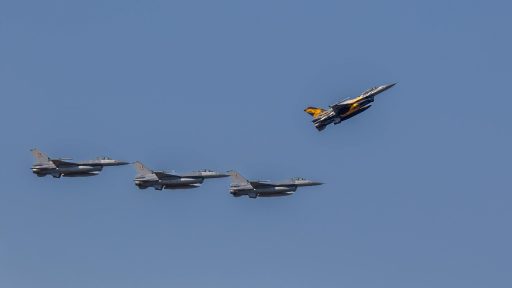
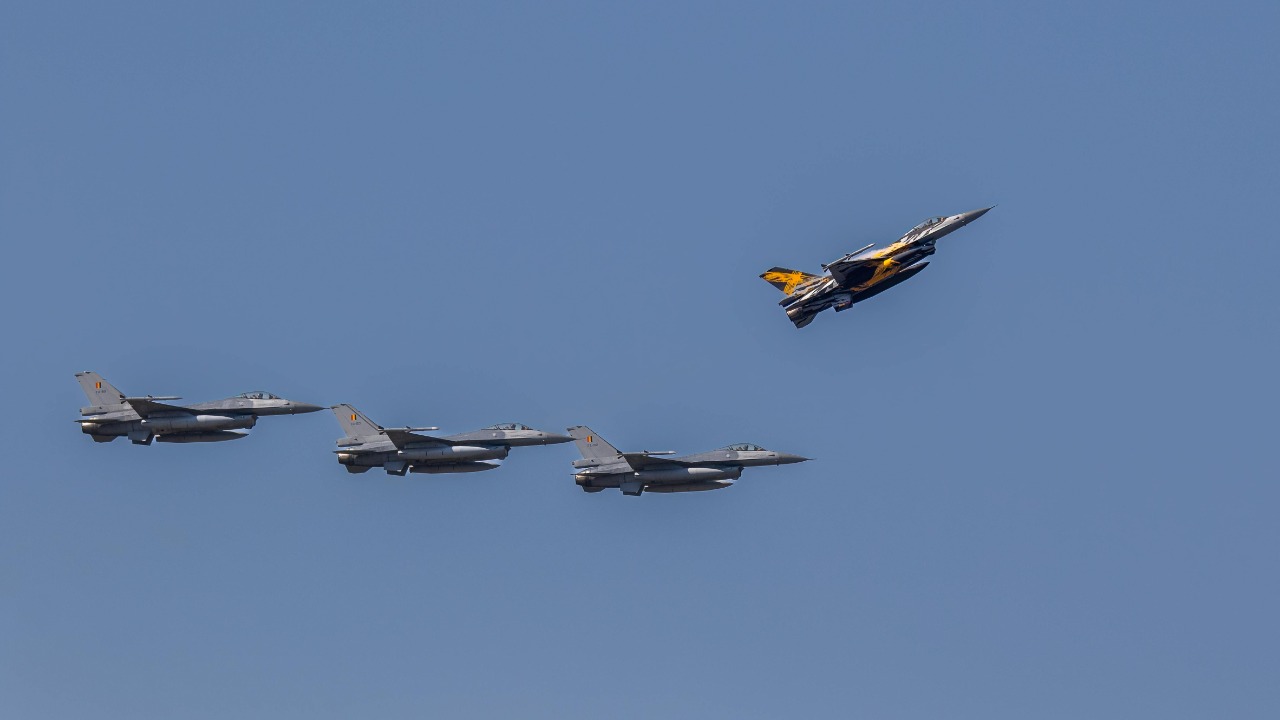
Imagery and eyewitness reports from the farewell flight showed multiple jets tracing a final route over Danish bases and population centers, giving citizens a last look at an aircraft that has become visually synonymous with national airpower. The Royal Danish Air Force used the occasion to emphasize continuity as well as nostalgia, presenting the F-16’s retirement not as a drawdown but as a handover to a new generation of fighters. Social media posts and photo essays from the farewell highlighted the jets in tight formation and on the ramp, framed as veterans of multiple conflicts and international missions rather than museum pieces.
From Cold War buy-in to NATO frontline missions
Denmark’s F-16 story began with a strategic bet on allied standardization. The country was one of the four original European Participating Air For partners that joined the United States in procuring the type, a decision that tied Danish airpower to a broader NATO ecosystem of training, logistics, and tactics. Over its service life, Danish F-16s flew sovereignty missions over Greenland and took on rotational duties in Baltic Air Policing and Iceland Air Policing, placing Danish pilots at the sharp end of alliance deterrence on the northern flank. Those roles are documented in operational retrospectives that trace how the jets shifted from pure air defense to multirole work, including strike and reconnaissance, as the security environment changed around Greenland and the Baltic region.
The F-16’s long tenure also reflected Denmark’s willingness to invest in incremental modernization rather than constant fleet churn. Reports on the retirement note that the aircraft remained in frontline service for more than four decades, with avionics, weapons, and structural upgrades extending their relevance well beyond the original design horizon. Analysts point out that this approach allowed Denmark to field a capable force of around 35 aircraft while spreading costs over time, a figure cited in technical breakdowns of the 35 airframes that formed the core of the fleet at the end of its life. That history of careful husbandry helps explain why so many of the jets are still viable for transfer abroad rather than being scrapped.
F-35 arrival and a fully fifth-generation fleet
The retirement of the F-16s is inseparable from the arrival of the F-35, which has now become the centerpiece of Danish airpower. The Royal Danish Air Force has converted to a fighter inventory fully comprised of fifth generation aircraft, making it the third service in the world to reach that benchmark. Commentators describe this as a qualitative leap rather than a simple replacement, with stealth, sensor fusion, and networked operations redefining how Danish pilots will fight and train. Analyses of the transition stress that the move to a fully fifth generation fleet is intended to keep pace with evolving threats on NATO’s eastern flank and to ensure that Denmark can plug seamlessly into allied air campaigns built around the F-35’s data-sharing capabilities, a point underscored in assessments of how Royal Danish Air is restructuring its squadrons.
The symbolism of the handover has been carefully managed. During the retirement events, Danish F-35s took on a prominent role, including high-profile flights to remote territories that had previously only seen F-16s. One detailed account notes that it was the first time Danish F-35s had flown to the territory in question, highlighting both the aircraft’s range and the political message of presence. Strategic commentary links these flights to a broader pattern of NATO reassurance missions, arguing that the F-35’s advanced sensors and low observability give Denmark new options for monitoring and deterring activity in the High North and Arctic approaches. Technical write-ups on the transition emphasize that the shift from F-16 to F-35 is not just about replacing airframes but about retooling doctrine, maintenance, and training pipelines around a more software-driven jet, a theme that recurs in coverage of how Danish crews are adapting.
Farewell flights, public reaction, and aviation culture
For aviation enthusiasts and ordinary Danes alike, the F-16’s departure has been as much an emotional moment as a strategic one. Videos and photos of the farewell flight circulated widely, with enthusiasts tracking the route and sharing cockpit and air-to-air imagery. Posts from communities focused on aviation history captured the Royal Danish Air Force F-16 farewell flight on 18 January 2026, inviting viewers to relive the formation passes and low-level segments that showcased the jets’ agility one last time. In those discussions, the F-16 is often described as a bridge between analog and digital eras of flight, a theme that surfaces repeatedly in threads documenting the Royal Danish Air send-off.
Specialist communities dedicated to modern fighter jets have also treated the retirement as a case study in how small air forces manage generational change. Commenters dissected the final paint schemes, squadron markings, and formation compositions, while also debating the trade-offs between keeping upgraded fourth generation jets and moving fully into fifth generation designs. One prominent fighter-focused forum highlighted the same farewell flight, using it as a jumping-off point to discuss tactics, equipment, and unit histories associated with the Danish F-16 squadrons. That conversation, anchored around the Fighting Falcon farewell, underscores how deeply the type has penetrated aviation culture, from model builders and spotters to former pilots who trained on the jet.
New life abroad and the road to Ukraine
Retirement from Danish service does not mean the F-16s are headed straight to static displays. A significant portion of the fleet is being prepared for transfer to other air forces, with a particular focus on supporting Ukraine’s defense against Russia. Denmark and the Netherlands were the first nations to pledge deliveries of F-16 fighters to Ukraine after rounds of negotiations, positioning the Danish jets for what could be their most demanding combat missions yet. Analysts note that the airframes’ long service life and robust maintenance history make them attractive candidates for rapid integration into Ukrainian units, a point reinforced in coverage of how Denmark and the structured their pledges.
Transfers are already under way. Denmark has handed over 12 of the 19 promised F-16s to Ukraine, according to detailed reporting that tracks each batch of aircraft and associated training packages. Those figures highlight both the scale of Denmark’s contribution and the practical limits of what a relatively small air force can spare while transitioning to a new platform. The handover is part of a broader pattern in which retired Western jets find a second life in active conflict zones, but the intensity of the fighting in Ukraine means these particular airframes may face their toughest war after leaving home service. Coverage of the deliveries notes that Denmark is coordinating closely with partners on pilot training and sustainment to ensure the jets can be kept flying under combat conditions.