
All Nippon Airways is preparing for a busier international network in the next few years, targeting a 5 percent increase in overseas capacity as it rebuilds long haul demand and leans into cargo growth. To support that push, the airline is turning again to the Boeing 787 family, planning additional 787-9s as part of a broader fleet refresh that also brings in Airbus and Embraer jets. The strategy ties ANA’s long haul passenger ambitions directly to its role as Japan’s largest combination carrier, with passenger and freight planning now moving in lockstep.
ANA’s FY2026 schedule and the 5% international push
ANA Group has laid out a more assertive flight plan for the 2026 financial year, with international capacity set to rise by about 5 percent as the carrier restores long haul connectivity and adds frequencies on key trunk routes. The company is positioning this growth as part of a wider network rethink that balances premium demand on transpacific and Europe services with the need to rebuild regional links across Asia. In its latest schedule update, the airline underscores that it will further strengthen its role As Japan’s largest combination carrier, a reminder that passenger decisions are now inseparable from cargo strategy.
That dual focus is especially visible in how ANA plans to deploy widebodies in FY2026. The airline notes that the ANA Group intends to concentrate freighters on Asia routes while using belly capacity on passenger aircraft to respond to diverse shipper requirements on longer sectors. A 5 percent lift in international seats and cargo space may sound modest, but for a network of ANA’s scale it signals a clear shift from cautious restoration to measured expansion, and it sets the stage for the next wave of fleet investment.
A 77-aircraft order book and the role of Boeing widebodies
To underpin that growth, ANA Holdings has committed to a sweeping fleet order that reshapes both its domestic and international operations. The group has confirmed new orders for a total of 77 aircraft, a package that includes 68 confirmed units and additional options. In that announcement, ANAHD highlights that the mix spans Airbus, Boeing and Embraer types, signaling a multi-pronged approach that pairs long haul widebodies with a new generation of narrowbodies and regional jets. The order also explicitly references a “Including a Technologically Advanced Regional” component, underscoring how seriously the group takes connectivity beyond its main hubs.
Separate reporting on the same decision notes that Key Takeaways from the move include the end of a long pause in fleet growth and a renewed commitment by All Nippon Airways to invest in both premium and low cost brands. Another account of the order emphasizes that ANA Holdings is buying aircraft from the three major manufacturers to expand its international and domestic fleet, with a focus on lower fuel consumption and reduced noise emissions. Across these reports, Boeing widebodies are clearly part of the mix, but the exact breakdown by model and the delivery timing relative to FY2026 are not fully detailed, so any link between specific 787-9 units and that single financial year remains unverified based on available sources.
Why the 787 family remains central to ANA’s long haul strategy
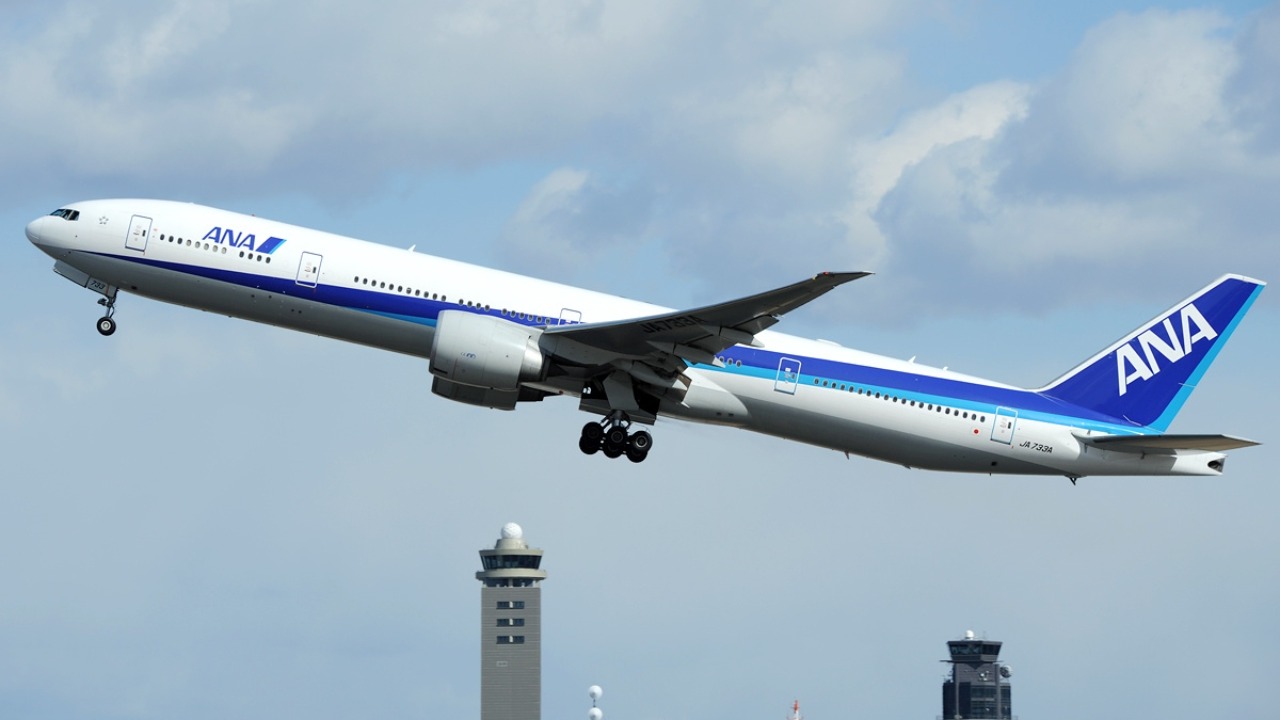
Even without a public model-by-model breakdown of the new order, it is clear that the Boeing 787 platform remains at the heart of ANA’s long haul strategy. The airline was an early adopter of the type and continues to refine its onboard product around the 787’s economics and cabin flexibility. Recent cabin plans show how ANA is using the Boeing 787-9 as a showcase for its latest business class, adapting concepts that first appeared on the larger 777-300ER. That continuity matters because it allows ANA to offer a consistent premium experience across different aircraft sizes while still matching capacity to demand on thinner routes.
The new business cabin on the 787-9 is built around the carrier’s existing “THE Room” concept, which debuted on the Boeing 777-300ER and is now being scaled to a mid size aircraft. By transplanting that design to the 787-9, ANA can deploy a flagship-grade product on routes that do not justify a larger widebody, which is particularly useful as it adds back frequencies and experiments with new city pairs in the run up to and through FY2026. The focus on supersized seats and privacy also aligns with the airline’s broader push to differentiate itself in a crowded transpacific and intra Asia premium market.
Domestic, regional and low cost links that feed the long haul network
International expansion on the scale ANA is targeting only works if the domestic and regional feed keeps pace, and the 77 aircraft order is designed with that in mind. The inclusion of a Technologically Advanced Regional points to a renewed focus on secondary Japanese cities and short haul cross border markets that can funnel passengers into ANA’s hubs. At the same time, the mix of Airbus and Embraer types highlighted in the After years of suspended growth narrative suggests ANA is standardizing around fuel efficient narrowbodies that can support both high frequency business routes and leisure oriented services.
The group’s low cost arm, Peach, is also part of the equation, with reporting noting that it will receive aircraft suitable for medium to long haul operations as part of the same order package. That gives ANA a way to segment demand more finely, reserving its most premium Boeing 787-9 and 777-300ER cabins for high yield markets while letting Peach chase price sensitive travelers on overlapping routes. When combined with the freighter focused strategy in Asia and the 5 percent international capacity uplift planned for FY2026, the picture that emerges is of a group using every part of its fleet, from regional jets to widebodies, to rebuild scale without sacrificing profitability. What remains unverified based on available sources is the exact number of new 787-9 aircraft tied specifically to FY2026 deliveries, but the strategic direction toward more 787 flying on international routes is unmistakable.